
Books Recommended by Founders
Category75 books curated2,152 recommendations totalThe books startup founders recommend most — company building, product, hiring, fundraising and the histories of firms that got there first. Including picks from Paul Graham, Elon Musk and Peter Thiel.
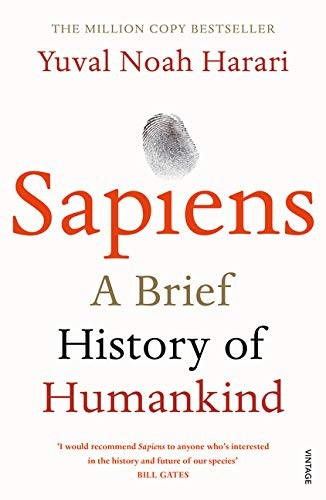
A Brief History of Humankind
A sweeping narrative history of Homo sapiens from the Cognitive Revolution to the present. Harari argues that what makes humans dominate the planet is not physical strength but collective myths: shared fictions like money, religion, and nations that allow millions of strangers to cooperate. The book moves fast through 70,000 years, making big, debatable claims about agriculture, empire, capitalism, and happiness. It is less a history textbook than a provocative essay in chronological form, and best read as an argument rather than a reference.
“Available recommendation signals cluster around Social Sciences, NonFiction, Holocaust lists, suggesting this book may fit readers looking for decision-making, behavior, or human motivation. Treat this as discovery context, not a quality guarantee.”
Notes on Startups, or How to Build the Future
A contrarian manifesto on building startups that create new categories rather than competing in existing ones. Thiel draws from PayPal and his investments in Facebook to argue that the best businesses are monopolies that avoid competition entirely. The book revolves around one question—What important truth do you believe that very few people agree with?—and uses it to interrogate everything from sales culture to the energy crisis. It reads like a sharp dinner argument with someone often right in a way that is uncomfortable to admit.
“Available recommendation signals cluster around Social Sciences, Finance, Clear, Thinking, Behavioral lists, suggesting this book may fit readers looking for decision-making, behavior, or human motivation. Treat this as discovery context, not a quality guarantee.”
Building a Business When There Are No Easy Answers
“Available recommendation signals cluster around Business, Ceo, NonFiction, Entrepreneurship, Entrepreneur lists, suggesting this book may fit readers looking for business judgment, leadership, or practical strategy. Treat this as discovery context, not a quality guarantee.”
An Easy & Proven Way to Build Good Habits & Break Bad Ones
A practical system for behavior change built on the idea that tiny, incremental improvements compound into remarkable results. Clear avoids motivation-based advice and instead focuses on environment design, habit stacking, and identity-based change—making good habits frictionless while making bad ones inconvenient. The book is structured in short, actionable chapters, each ending with a cheat sheet, so you can skip around based on what you are trying to fix. It cares less about the psychology of why you procrastinate and more about the engineering of making procrastination harder.
A sprawling ideological novel set in a dystopian America where productive industrialists and creators go on strike against a society that shackles them with regulation and collective guilt. The plot follows railroad executive Dagny Taggart as she fights to keep her company running while the most capable minds mysteriously disappear. At well over a thousand pages, it is less a novel than a philosophical argument dressed in fiction—the characters deliver extended speeches on individualism, rational self-interest, and the moral evil of altruism. It polarizes because it demands you take a side.
Do you feel stuck in life, not knowing how to make it more successful? Do you wish to become more popular? Are you craving to earn more? Do you wish to expand your horizon, earn new clients and win people over with your ideas? How to Win Friends and Influence People is a well-researched and comprehensive guide that will help you through these everyday problems and make success look easier. You can learn to expand your social circle, polish your skill set, find ways to put forward your thoughts more clearly, and build mental strength to counter all hurdles that you may come across on the path to success. Having helped millions of readers from the world over achieve their goals, the clearly listed techniques and principles will be the answers to all your questions.
A Roman emperor's private journal in which Marcus Aurelius wrestles with anger, mortality, duty, and the difficulty of staying calm while running an empire. The book is a collection of fragmentary reflections organized into twelve short books, each a conversation with himself about not being derailed by other people's frustrations or the fear of death. It reads like a Stoic devotional—repetitive by design, since Marcus was reminding himself of the same truths daily. There is no plot, no system. There is a man trying not to lose himself to the weight of the job.
Why Helping Others Drives Our Success
“Available recommendation signals cluster around Social Sciences, Leadership, NonFiction, Business, Personal Development lists, suggesting this book may fit readers looking for decision-making, behavior, or human motivation. Treat this as discovery context, not a quality guarantee.”
The New Psychology of Success
“Available recommendation signals cluster around Business, Social Sciences, NonFiction, Habit lists, suggesting this book may fit readers looking for decision-making, behavior, or human motivation. Treat this as discovery context, not a quality guarantee.”
What the New Science of Psychedelics Teaches Us About Consciousness, Dying, Addiction, Depression, and Transcendence
“Pollan keeps you turning the pages . . . cleareyed and assured.” —New York Times A #1 New York Times Bestseller, New York Times Book Review 10 Best Books of 2018, and New York Times Notable Book A brilliant and brave investigation into the medical and scientific revolution taking place around psychedelic drugs--and the spellbinding story of his own life-changing psychedelic experiences When Michael Pollan set out to research how LSD and psilocybin (the active ingredient in magic mushrooms) are being used to provide relief to people suffering from difficult-to-treat conditions such as depression, addiction and anxiety, he did not intend to write what is undoubtedly his most personal book. But upon discovering how these remarkable substances are improving the lives not only of the mentally ill but also of healthy people coming to grips with the challenges of everyday life, he decided to explore the landscape of the mind in the first person as well as the third. Thus began a singular adventure into various altered states of consciousness, along with a dive deep into both the latest brain science and the thriving underground community of psychedelic therapists. Pollan sifts the historical record to separate the truth about these mysterious drugs from the myths that have surrounded them since the 1960s, when a handful of psychedelic evangelists inadvertently catalyzed a powerful backlash against what was then a promising field of research. A unique and elegant blend of science, memoir, travel writing, history, and medicine, How to Change Your Mind is a triumph of participatory journalism. By turns dazzling and edifying, it is the gripping account of a journey to an exciting and unexpected new frontier in our understanding of the mind, the self, and our place in the world. The true subject of Pollan's "mental travelogue" is not just psychedelic drugs but also the eternal puzzle of human consciousness and how, in a world that offers us both suffering and joy, we can do our best to be fully present and find meaning in our lives.
How Today's Entrepreneurs Use Continuous Innovation to Create Radically Successful Businesses
“Available recommendation signals cluster around Business, NonFiction, Entrepreneurship, Entrepreneur, Plan lists, suggesting this book may fit readers looking for business judgment, leadership, or practical strategy. Treat this as discovery context, not a quality guarantee.”
Why Some Companies Make The Leap and Others Don't
“Available recommendation signals cluster around Business, Leadership, Hiring, Recruiting, NonFiction lists, suggesting this book may fit readers looking for business judgment, leadership, or practical strategy. Treat this as discovery context, not a quality guarantee.”
40th Anniversary Edition (Oxford Landmark Science)
“Available recommendation signals cluster around Biology, NonFiction, Evolutionary, Psychology, Genetics lists, suggesting this book may fit readers looking for decision-making, behavior, or human motivation. Treat this as discovery context, not a quality guarantee.”
Unlocking the Power of Sleep and Dreams
“Available recommendation signals cluster around Social Sciences, Health, Biohacking, NonFiction, Science lists, suggesting this book may fit readers looking for decision-making, behavior, or human motivation. Treat this as discovery context, not a quality guarantee.”
Adventures of a Curious Character
“Available recommendation signals cluster around NonFiction, Physics, Science lists, suggesting this book may fit readers looking for big-picture nonfiction and accessible learning. Treat this as discovery context, not a quality guarantee.”
Deluxe Edition
“Available recommendation signals cluster around Fiction, Science Fiction, Fantasy, Science, For lists, suggesting this book may fit readers looking for imaginative storytelling, atmosphere, or character-driven reflection. Treat this as discovery context, not a quality guarantee.”
“Available recommendation signals cluster around NonFiction, Business, Biography, Entrepreneurship lists, suggesting this book may fit readers looking for business judgment, leadership, or practical strategy. Treat this as discovery context, not a quality guarantee.”
Why We Do What We Do in Life and Business
NEW YORK TIMES BESTSELLER • This instant classic explores how we can change our lives by changing our habits. NAMED ONE OF THE BEST BOOKS OF THE YEAR BY The Wall Street Journal • Financial Times In The Power of Habit, award-winning business reporter Charles Duhigg takes us to the thrilling edge of scientific discoveries that explain why habits exist and how they can be changed. Distilling vast amounts of information into engrossing narratives that take us from the boardrooms of Procter & Gamble to the sidelines of the NFL to the front lines of the civil rights movement, Duhigg presents a whole new understanding of human nature and its potential. At its core, The Power of Habit contains an exhilarating argument: The key to exercising regularly, losing weight, being more productive, and achieving success is understanding how habits work. As Duhigg shows, by harnessing this new science, we can transform our businesses, our communities, and our lives. With a new Afterword by the author “Sharp, provocative, and useful.”—Jim Collins “Few [books] become essential manuals for business and living. The Power of Habit is an exception. Charles Duhigg not only explains how habits are formed but how to kick bad ones and hang on to the good.”—Financial Times “A flat-out great read.”—David Allen, bestselling author of Getting Things Done: The Art of Stress-Free Productivity “You’ll never look at yourself, your organization, or your world quite the same way.”—Daniel H. Pink, bestselling author of Drive and A Whole New Mind “Entertaining . . . enjoyable . . . fascinating . . . a serious look at the science of habit formation and change.”—The New York Times Book Review

“Available recommendation signals cluster around Social Sciences, Conservative, Fiction, Philosophy lists, suggesting this book may fit readers looking for decision-making, behavior, or human motivation. Treat this as discovery context, not a quality guarantee.”
“Available recommendation signals cluster around Social Sciences, Spirituality, NonFiction, Fiction, Philosophy lists, suggesting this book may fit readers looking for decision-making, behavior, or human motivation. Treat this as discovery context, not a quality guarantee.”

“Available recommendation signals cluster around Business, ManagementLeadership, NonFiction, Entrepreneur lists, suggesting this book may fit readers looking for business judgment, leadership, or practical strategy. Treat this as discovery context, not a quality guarantee.”
The foundational and wildly popular go-to resource for influence and persuasion—a renowned international bestseller, with over 5 million copies sold—now revised adding: new research, new insights, new examples, and online applications. In the new edition of this highly acclaimed bestseller, Robert Cialdini—New York Times bestselling author of Pre-Suasion and the seminal expert in the fields of influence and persuasion—explains the psychology of why people say yes and how to apply these insights ethically in business and everyday settings. Using memorable stories and relatable examples, Cialdini makes this crucially important subject surprisingly easy. With Cialdini as a guide, you don’t have to be a scientist to learn how to use this science. You’ll learn Cialdini’s Universal Principles of Influence, including new research and new uses so you can become an even more skilled persuader—and just as importantly, you’ll learn how to defend yourself against unethical influence attempts. You may think you know these principles, but without understanding their intricacies, you may be ceding their power to someone else. Cialdini’s Principles of Persuasion: Reciprocation Commitment and Consistency Social Proof Liking Authority Scarcity Unity, the newest principle for this edition Understanding and applying the principles ethically is cost-free and deceptively easy. Backed by Dr. Cialdini’s 35 years of evidence-based, peer-reviewed scientific research—including a three-year field study on what leads people to change—Influence is a comprehensive guide to using these principles to move others in your direction.
Ten Reasons We're Wrong About the Worldand Why Things Are Better Than You Think
Readers of Factfulness: Ten Reasons We're Wrong About the World--and Why Things Are Better Than You Think seeking engagement for all reading groups can gain further insight with this essential resource as a guide to aid your discussions. New York Times bestselling book Factfulness: Ten Reasons We're Wrong About the World--and Why Things Are Better Than You Think is written by the global TED phenomenon Hans Rosling. He defines factfulness as 'the stress-reducing habit of only carrying opinions for which you have strong supporting facts.' In Factfulness, Rosling, a Professor of International Health, offers a radically new explanation to the simple questions about global trends. He explains why this happens. He also reveals the ten instincts that collectively distort our perspective. Bill Gates says that Factfulness: Ten Reasons We're Wrong About the World--and Why Things Are Better Than You Think is "one of the most important books I've ever read." Gates says that this book is "an indispensable guide to thinking clearly about the world." In this comprehensive look into Factfulness: Ten Reasons We're Wrong About the World--and Why Things Are Better Than You Think, you'll be equipped to prepare with the following: Discussion aid which includes a wealth of prompts and information Overall plot synopsis and author biography Thought-provoking discussion questions for a deeper examination Creative exercises to foster alternate "if this was you" discussions And much more! Note to readers: This is a companion guide based on Factfulness: Ten Reasons We're Wrong About the World--and Why Things Are Better Than You Think. This is meant to enhance and aid your reading experience, not to replace it. We strongly encourage you to purchase the original book before purchasing this unofficial companion guide.
The Wit and Wisdom of Charles T. Munger
“Available recommendation signals suggest this title has discovery traction, but there is not enough safe category context to make a stronger reader-fit claim.”
Making Smarter Decisions When You Don't Have All the Facts
“Available recommendation signals cluster around Social Sciences, NonFiction, Decision, Making, Entrepreneur lists, suggesting this book may fit readers looking for decision-making, behavior, or human motivation. Treat this as discovery context, not a quality guarantee.”
The Power of Introverts in a World That Can't Stop Talking
“Available recommendation signals cluster around Social Sciences, NonFiction, Enneagram, Introvert lists, suggesting this book may fit readers looking for decision-making, behavior, or human motivation. Treat this as discovery context, not a quality guarantee.”
The Fates of Human Societies
Why has human history unfolded so differently across the globe? And what can it teach us about our current crisis? Jared Diamond puts the case that geography and biogeography, not race, moulded the contrasting fates of Europeans, Asians, Native Americans, sub-Saharan Africans, and aboriginal Australians. An ambitious synthesis of history, biology, ecology and linguistics, Guns, Germs and Steel is a ground-breaking and humane work of popular science that can provide expert insight into our modern world. 'The most absorbing account on offer of the emergence of a world divided between have and have-nots... Never before put together so coherently, with such a combination of expertise, charm and compassion' The Times
How NonConformists Move the World
“Available recommendation signals cluster around Social Sciences, Leadership, NonFiction, Business, Personal Development lists, suggesting this book may fit readers looking for decision-making, behavior, or human motivation. Treat this as discovery context, not a quality guarantee.”
A Novel
“Available recommendation signals cluster around Fiction, Science Fiction, Adventure, Introverts, Science lists, suggesting this book may fit readers looking for imaginative storytelling, atmosphere, or character-driven reflection. Treat this as discovery context, not a quality guarantee.”
Lessons Learned from 15 Years as CEO of the Walt Disney Company
“Available recommendation signals cluster around Leadership, NonFiction, Business lists, suggesting this book may fit readers looking for business judgment, leadership, or practical strategy. Treat this as discovery context, not a quality guarantee.”
Shackleton's Incredible Voyage
“Available recommendation signals cluster around NonFiction, Fiction, Adventure, History, Action lists, suggesting this book may fit readers looking for imaginative storytelling, atmosphere, or character-driven reflection. Treat this as discovery context, not a quality guarantee.”

A Brief History of Tomorrow
Step into the future with Yuval Noah Harari’s groundbreaking book, Homo Deus: A Brief History of Tomorrow. Discover how humanity’s next chapter may be defined by the pursuit of immortality, artificial intelligence, and ultimate happiness, as we attempt to transcend our biological limitations. Harari challenges everything we know about the future of humankind, revealing the possibility that we might soon become gods ourselves. As technology advances, what role will we play in shaping a world where biological survival is no longer the priority?But here’s the pressing question: What happens when we no longer fear death and have the power to create our own future? Will our mastery over life and mind lead us to salvation, or are we setting ourselves up for disaster? In this compelling exploration, Harari confronts humanity’s most profound dilemmas, such as the ethical implications of artificial intelligence, genetic engineering, and bio-enhancements. This book will make you rethink not only the future but also your place in it. Are you ready to understand the future of humankind? In Homo Deus, Harari offers a thought-provoking analysis that will leave you questioning everything you know.Don’t miss your chance to explore tomorrow’s possibilities. Purchase Homo Deus: A Brief History of Tomorrow today and unlock the secrets of our future!
Why Violence Has Declined
'The most inspiring book I've ever read' Bill Gates, 2017 'A brilliant, mind-altering book ... Everyone should read this astonishing book' Guardian 'Will change the way you see the world' Daily Mail Shortlisted for the Samuel Johnson Prize 2012 Wasn't the twentieth century the most violent in history? In his extraordinary, epic book Steven Pinker shows us that this is wrong, telling the story of humanity in a completely new and unfamiliar way. From why cities make us safer to how books bring about peace, Pinker weaves together history, philosophy and science to examine why we are less likely to die at another's hand than ever before, how it happened and what it tells us about our very natures. 'May prove to be one of the great books of our time ... he writes like an angel' Economist 'Masterly, a supremely important book ... For anyone interested in human nature, it is engrossing' The New York Times 'Marvellous ... riveting and myth-destroying' New Statesman 'A marvellous synthesis of science, history and storytelling, written in Pinker's distinctively entertaining and clear personal style ... I was astonished by the extent to which violence has declined in every shape, form and scale' Financial Times 'An outstandingly fruitful read, with fascinating nuggets on almost every page' Sunday Times, Books of the Year
Marketing and Selling HighTech Products to Mainstream Customers
“Available recommendation signals cluster around Business, NonFiction, Entrepreneurship, Entrepreneur lists, suggesting this book may fit readers looking for business judgment, leadership, or practical strategy. Treat this as discovery context, not a quality guarantee.”
Hitchhiker's Guide to the Galaxy, Book 1
“Available recommendation signals cluster around Comedy, Fiction, Science Fiction, Humor, Fantasy lists, suggesting this book may fit readers looking for imaginative storytelling, atmosphere, or character-driven reflection. Treat this as discovery context, not a quality guarantee.”
Things That Gain from Disorder (Incerto)
“Available recommendation signals cluster around Social Sciences, Finance, NonFiction, Philosophy, Business lists, suggesting this book may fit readers looking for decision-making, behavior, or human motivation. Treat this as discovery context, not a quality guarantee.”
The Three-Body Problem, Book 1
“Available recommendation signals cluster around About, China, Fiction, First, Contact lists, suggesting this book may fit readers looking for imaginative storytelling, atmosphere, or character-driven reflection. Treat this as discovery context, not a quality guarantee.”
"In a world where freedom is a forgotten word, and individuality is sacrificed for stability, humanity has traded its soul for comfort and control. Genetic engineering determines your fate, and the soothing grip of 'soma' keeps you blissfully compliant. But what happens when a man from outside this perfect society begins to question its foundations? Through the eyes of 'John the Savage,' Aldous Huxley explores a chilling dystopia where progress and happiness come at the ultimate cost: our humanity. Brave New World is a haunting vision of the future that forces us to confront the price of utopia."
How Prosperity Evolves (P.S.)
Matt Ridley, acclaimed author of the classics Genome and Nature via Nurture, turns from investigating human nature to investigating human progress. In The Rational Optimist Ridley offers a counterblast to the prevailing pessimism of our age, and proves, however much we like to think to the contrary, that things are getting better.
The Tactics, Routines, and Habits of Billionaires, Icons, and World-Class Performers
Jocko Willink covered this book in "Jocko Podcast" Ep. 50
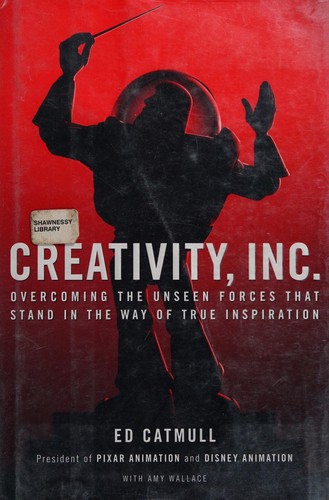
Overcoming the Unseen Forces That Stand in the Way of True Inspiration
“Available recommendation signals cluster around Business, Leadership, NonFiction, Entrepreneur lists, suggesting this book may fit readers looking for business judgment, leadership, or practical strategy. Treat this as discovery context, not a quality guarantee.”
The Case for Reason, Science, Humanism, and Progress
“Available recommendation signals cluster around Social Sciences, NonFiction, Philosophy, History, Science lists, suggesting this book may fit readers looking for decision-making, behavior, or human motivation. Treat this as discovery context, not a quality guarantee.”
ONE OF THE WORLD'S MOST FAMOUS BOOKS AND WINNER OF THE NOBEL PRIZE FOR LITERATURE _______________________________ 'Many years later, as he faced the firing squad, Colonel Aureliano Buendía was to remember that distant afternoon when his father took him to discover ice' Gabriel García Márquez's great masterpiece is the story of seven generations of the Buendía family and of Macondo, the town they built. Though little more than a settlement surrounded by mountains, Macondo has its wars and disasters, even its wonders and its miracles. A microcosm of Columbian life, its secrets lie hidden, encoded in a book, and only Aureliano Buendía can fathom its mysteries and reveal its shrouded destiny. Blending political reality with magic realism, fantasy and comic invention, One Hundred Years of Solitude is one of the most daringly original works of the twentieth century. _______________________________ 'As steamy, dense and sensual as the jungle that surrounds the surreal town of Macondo!' Oprah, Featured in Oprah's Book Club 'Should be required reading for the entire human race' The New York Times 'The book that sort of saved my life' Emma Thompson 'No lover of fiction can fail to respond to the grace of Márquez's writing' Sunday Telegraph
A Memoir of the Craft
The author shares his insights into the craft of writing and offers a humorous perspective on his own experience as a writer.
How U.S. Navy SEALs Lead and Win
“Available recommendation signals cluster around Leadership, NonFiction, Business, Personal Development, For lists, suggesting this book may fit readers looking for business judgment, leadership, or practical strategy. Treat this as discovery context, not a quality guarantee.”
The Timeless Art of Turning Trials into Triumph
“Available recommendation signals cluster around Business, Social Sciences, NonFiction, Philosophy, Entrepreneur lists, suggesting this book may fit readers looking for decision-making, behavior, or human motivation. Treat this as discovery context, not a quality guarantee.”
“Available recommendation signals suggest this title has discovery traction, but there is not enough safe category context to make a stronger reader-fit claim.”
'If you really want to hear about it, the first thing you'll probably want to know is where I was born and what my lousy childhood was like, and how my parents were occupied and all before they had me, and all that David Copperfield kind of crap, but I don't feel like going into it, if you want to know the truth.' The first of J. D. Salinger's four books to be published, The Catcher in the Rye is one of the most widely read and beloved of all contemporary American novels. 'The handbook of the adolescent heart' The New Yorker
A Novel
“Available recommendation signals cluster around Fiction, Science Fiction, Science lists, suggesting this book may fit readers looking for imaginative storytelling, atmosphere, or character-driven reflection. Treat this as discovery context, not a quality guarantee.”
Secrets and Lies in a Silicon Valley Startup
NATIONAL BESTSELLER • The gripping story of Elizabeth Holmes and Theranos—one of the biggest corporate frauds in history—a tale of ambition and hubris set amid the bold promises of Silicon Valley, rigorously reported by the prize-winning journalist. With a new Afterword covering her trial and sentencing, bringing the story to a close. “Chilling ... Reads like a thriller ... Carreyrou tells [the Theranos story] virtually to perfection.” —The New York Times Book Review In 2014, Theranos founder and CEO Elizabeth Holmes was widely seen as the next Steve Jobs: a brilliant Stanford dropout whose startup “unicorn” promised to revolutionize the medical industry with its breakthrough device, which performed the whole range of laboratory tests from a single drop of blood. Backed by investors such as Larry Ellison and Tim Draper, Theranos sold shares in a fundraising round that valued the company at more than $9 billion, putting Holmes’s worth at an estimated $4.5 billion. There was just one problem: The technology didn’t work. Erroneous results put patients in danger, leading to misdiagnoses and unnecessary treatments. All the while, Holmes and her partner, Sunny Balwani, worked to silence anyone who voiced misgivings—from journalists to their own employees.
The Ancient Art of Stoic Joy
“Available recommendation signals cluster around Social Sciences, NonFiction, Philosophy, Entrepreneur, Personal Development lists, suggesting this book may fit readers looking for decision-making, behavior, or human motivation. Treat this as discovery context, not a quality guarantee.”
Explanations That Transform the World
“Available recommendation signals cluster around Social Sciences, NonFiction, Philosophy, Physics, Science lists, suggesting this book may fit readers looking for decision-making, behavior, or human motivation. Treat this as discovery context, not a quality guarantee.”
How to Nurture the Crazy Ideas That Win Wars, Cure Diseases, and Transform Industries
“Available recommendation signals cluster around Leadership, NonFiction, Business, Science lists, suggesting this book may fit readers looking for business judgment, leadership, or practical strategy. Treat this as discovery context, not a quality guarantee.”
How Great Leaders Inspire Everyone to Take Action
The inspiring, life-changing bestseller by the author of LEADERS EAT LAST and TOGETHER IS BETTER In 2009, Simon Sinek started a movement to help people become more inspired at work, and in turn inspire their colleagues and customers. Since then, millions have been touched by the power of his ideas, including more than 28 million who have watched his TED Talk based on Start With Why -- the third most popular TED video of all time. Sinek opens by asking some fundamental questions: Why are some people and organizations more innovative, more influential, and more profitable than others? Why do some command greater loyalty from customers and employees alike? Even among the successful, why are so few able to repeat their success over and over? Start With Why shows that the leaders who've had the greatest influence in the world--think Martin Luther King Jr., Steve Jobs, and the Wright Brothers--all think, act, and communicate the same way -- and it's the opposite of what everyone else does. Sinek calls this powerful idea 'The Golden Circle,' and it provides a framework upon which organizations can be built, movements can be led, and people can be inspired. And it all starts with WHY.
His Life and Universe
“Available recommendation signals cluster around NonFiction, Biographies, History, Physics, Science lists, suggesting this book may fit readers looking for big-picture nonfiction and accessible learning. Treat this as discovery context, not a quality guarantee.”
How Google, Bono, and the Gates Foundation Rock the World with OKRs
INSTANT NEW YORK TIMES BESTSELLER 'For anyone interested in becoming a better manager' - Bill Gates -------- Discover the revolutionary movement behind the explosive growth of Intel, Google, Amazon and Uber. In 1999, legendary venture capitalist John Doerr invested nearly $12 million in a small 40-person startup that had amazing technology, entrepreneurial energy and sky-high ambitions, but no real business plan. Doerr introduced the founders to his system of Objectives and Key Results (OKRs) and, with those principles at the foundation of their management, the startup grew at an exponential rate. Today, that same startup - Google - has more than 70,000 employees with a market cap exceeding $600 billion. Doerr has introduced OKRs to more than fifty companies, helping tech giants and charities exceed all expectations. In the OKR model, objectives define what we seek to achieve and key results are how those top priority goals will be attained. They focus effort, foster coordination and enhance workplace satisfaction. For the first time in Measure What Matters, Doerr shares a broad range of first-person, behind-the-scenes case studies, with narrators including Bono and Bill Gates, to demonstrate the agility and explosive growth that OKRs have spurred at so many great organizations. With a foreword by Larry Page, and contributions from Bono and Bill Gates, this book will show you how to collect timely, relevant data to track progress - to measure what matters. It will help any organization or team aim high, move fast, and excel. -------- 'Management magic....Measure What Matters is a must read for anyone motivated to improve their organization' - Former Vice President Al Gore, chairman of the Climate Reality Project 'Measure What Matters shows how any organization or team can aim high, move fast, and excel' - Sheryl Sandberg, Facebook COO 'Measure What Matters deserves to be fully embraced by every person responsible for performance in any walk of life' - Jim Collins, author of Good to Great -------- ***SPEED & SCALE - THE NEW ENVIRONMENTAL GUIDE TO SAVE THE PLANET FROM BESTSELLING AUTHOR AND VENTURE CAPITALIST JOHN DOERR - NOW AVAILABLE***
An Antidote to Chaos
OVER TEN MILLION COPIES SOLD #1 INTERNATIONAL BESTSELLER What are the most valuable things that everyone should know? Acclaimed clinical psychologist Jordan B Peterson has influenced the modern understanding of personality, and now he has become one of the world's most popular public thinkers, with his lectures on topics from the Bible to romantic relationships to mythology drawing tens of millions of viewers. In an era of unprecedented change and polarizing politics, his frank and refreshing message about the value of individual responsibility and ancient wisdom has resonated around the world. In this book, he provides twelve profound and practical principles for how to live a meaningful life, from setting your house in order before criticising others to comparing yourself to who you were yesterday, not someone else today. Happiness is a pointless goal, he shows us. Instead we must search for meaning, not for its own sake, but as a defence against the suffering that is intrinsic to our existence. Drawing on vivid examples from the author's clinical practice and personal life, cutting-edge psychology and philosophy, and lessons from humanity's oldest myths and stories, 12 Rules for Life offers a deeply rewarding antidote to the chaos in our lives: eternal truths applied to our modern problems.
“There are at least two kinds of games,” states James P. Carse as he begins this extraordinary book. “One could be called finite; the other infinite. A finite game is played for the purpose of winning, an infinite game for the purpose of continuing the play.” Finite games are the familiar contests of everyday life; they are played in order to be won, which is when they end. But infinite games are more mysterious. Their object is not winning, but ensuring the continuation of play. The rules may change, the boundaries may change, even the participants may change—as long as the game is never allowed to come to an end. What are infinite games? How do they affect the ways we play our finite games? What are we doing when we play—finitely or infinitely? And how can infinite games affect the ways in which we live our lives? Carse explores these questions with stunning elegance, teasing out of his distinctions a universe of observation and insight, noting where and why and how we play, finitely and infinitely. He surveys our world—from the finite games of the playing field and playing board to the infinite games found in culture and religion—leaving all we think we know illuminated and transformed. Along the way, Carse finds new ways of understanding everything, from how an actress portrays a role to how we engage in sex, from the nature of evil to the nature of science. Finite games, he shows, may offer wealth and status, power and glory, but infinite games offer something far more subtle and far grander. Carse has written a book rich in insight and aphorism. Already an international literary event, Finite and Infinite Games is certain to be argued about and celebrated for years to come. Reading it is the first step in learning to play the infinite game.
Rules for Focused Success in a Distracted World
“Available recommendation signals cluster around Business, Social Sciences, NonFiction, Affiliate, Marketing lists, suggesting this book may fit readers looking for decision-making, behavior, or human motivation. Treat this as discovery context, not a quality guarantee.”
In twenty-one bite-sized lessons, Yuval Noah Harari explores what it means to be human in an age of bewilderment. How can we protect ourselves from nuclear war, ecological cataclysms and technological disruptions? What can we do about the epidemic of fake news or the threat of terrorism? What should we teach our children? The world-renowned historian and intellectual Yuval Noah Harari takes us on a thrilling journey through today's most urgent issues. The golden thread running through his exhilarating new book is the challenge of maintaining our collective and individual focus in the face of constant and disorienting change. Faced with a litany of existential and real crises, are we still capable of understanding the world we have created? '[Harari] has teed up a crucial global conversation about how to take on the problems of the 21st century' Bill Gates, New York Times '21 Lessons is, simply put, a crucial book' Adam Kay, author of Undoctored
The Definitive Guide to Getting the Right Things Done (Harperbusiness Essentials)
“Available recommendation signals cluster around Business, Leadership, Management, NonFiction, Entrepreneur lists, suggesting this book may fit readers looking for business judgment, leadership, or practical strategy. Treat this as discovery context, not a quality guarantee.”
The Power of Passion and Perseverance
“Available recommendation signals cluster around Social Sciences, NonFiction, Entrepreneur, Business, Personal Development lists, suggesting this book may fit readers looking for decision-making, behavior, or human motivation. Treat this as discovery context, not a quality guarantee.”

The LightningFast Path to Building Massively Valuable Companies
Foreword by Bill Gates LinkedIn cofounder, legendary investor, and host of the award-winning Masters of Scale podcast reveals the secret to starting and scaling massively valuable companies. What entrepreneur or founder doesn’t aspire to build the next Amazon, Facebook, or Airbnb? Yet those who actually manage to do so are exceedingly rare. So what separates the startups that get disrupted and disappear from the ones who grow to become global giants? The secret is blitzscaling: a set of techniques for scaling up at a dizzying pace that blows competitors out of the water. The objective of Blitzscaling is not to go from zero to one, but from one to one billion –as quickly as possible. When growing at a breakneck pace, getting to next level requires very different strategies from those that got you to where you are today. In a book inspired by their popular class at Stanford Business School, Hoffman and Yeh reveal how to navigate the necessary shifts and weather the unique challenges that arise at each stage of a company’s life cycle, such as: how to design business models for igniting and sustaining relentless growth; strategies for hiring and managing; how the role of the founder and company culture must evolve as the business matures, and more. Whether your business has ten employees or ten thousand, Blitzscaling is the essential playbook for winning in a world where speed is the only competitive advantage that matters.
An American Life
“Available recommendation signals cluster around NonFiction, Biographies, History, American, Revolutions lists, suggesting this book may fit readers looking for big-picture nonfiction and accessible learning. Treat this as discovery context, not a quality guarantee.”
Master Your Mind and Defy the Odds
“Available recommendation signals cluster around NonFiction, Personal Development, For, Men lists, suggesting this book may fit readers looking for self-improvement and practical behavior change. Treat this as discovery context, not a quality guarantee.”
An Eternal Golden Braid
A scientist and mathematician explores the mystery and complexity of human thought processes from an interdisciplinary point of view

“Available recommendation signals cluster around Social Sciences, NonFiction, Philosophy, Entrepreneur, Personal Development lists, suggesting this book may fit readers looking for decision-making, behavior, or human motivation. Treat this as discovery context, not a quality guarantee.”
Public Discourse in the Age of Show Business
What happens when media and politics become forms of entertainment? As our world begins to look more and more like Orwell's 1984, Neil's Postman's essential guide to the modern media is more relevant than ever. "It's unlikely that Trump has ever read Amusing Ourselves to Death, but his ascent would not have surprised Postman.” -CNN Originally published in 1985, Neil Postman’s groundbreaking polemic about the corrosive effects of television on our politics and public discourse has been hailed as a twenty-first-century book published in the twentieth century. Now, with television joined by more sophisticated electronic media—from the Internet to cell phones to DVDs—it has taken on even greater significance. Amusing Ourselves to Death is a prophetic look at what happens when politics, journalism, education, and even religion become subject to the demands of entertainment. It is also a blueprint for regaining control of our media, so that they can serve our highest goals. “A brilliant, powerful, and important book. This is an indictment that Postman has laid down and, so far as I can see, an irrefutable one.” –Jonathan Yardley, The Washington Post Book World

Greatness Isn't Born. It's Grown.
“Available recommendation signals cluster around Social Sciences, Hiring, Recruiting, NonFiction, Business lists, suggesting this book may fit readers looking for decision-making, behavior, or human motivation. Treat this as discovery context, not a quality guarantee.”

Being Human in the Age of Artificial Intelligence,
“Available recommendation signals cluster around Social Sciences, ificial, Intelligence, NonFiction, Artificial lists, suggesting this book may fit readers looking for creative discipline, craft, or artistic motivation. Treat this as discovery context, not a quality guarantee.”

“Available recommendation signals suggest this title has discovery traction, but there is not enough safe category context to make a stronger reader-fit claim.”

“Available recommendation signals cluster around Social Sciences, Spirituality, NonFiction, Fiction, Philosophy lists, suggesting this book may fit readers looking for decision-making, behavior, or human motivation. Treat this as discovery context, not a quality guarantee.”
Negotiating As If Your Life Depended On It
“Available recommendation signals cluster around Business, Social Sciences, Communication, Skills, NonFiction lists, suggesting this book may fit readers looking for decision-making, behavior, or human motivation. Treat this as discovery context, not a quality guarantee.”
Built from recommendation data, category signals, and source-backed book records. Use this list as a starting point; open any book to see proof, context, and Amazon options where available.
Explore more lists
Best Startup Books
79 booksThe startup books founders recommend most — lean methodology, venture funding, product-market fit and hiring. Plus the company histories worth reading before you repeat them.
Best Leadership Books
98 booksThe leadership books founders, executives and military officers recommend most — management, decision-making and organisational culture. Ranked by how many people recommended each title, not by publisher marketing.
Best Productivity Books
22 booksThe productivity books people actually finish and apply — focus, habits, time management and attention. Ranked by how many people recommended each title, with the source behind every pick.
Best Sales Books
98 booksThe sales books that quota-carriers and founders actually recommend — prospecting, negotiation and pricing. Ranked by how many people recommended each title, not by publisher marketing.
Best Memoirs
71 booksThe memoirs people recommend most — lives told by the person who lived them, from sport and science to business and war. Each pick links back to who recommended it and where they said it.
Best Psychology Books
58 booksThe psychology books clinicians, researchers and writers recommend most — cognitive bias, behavioural economics, memory and trauma. Including the original studies behind the popular science, with a source for every recommendation.
About this list
This list aggregates books that appear in public recommendation sources, reader-interest signals, and category data. Books are ranked by their position from the source list; recommendation counts and ratings are shown where available. Open any book to see source-backed recommendation proof, editorial context, and Amazon options — the per-book detail page is where the trust signals live.
Who recommended these books
The people whose recommendations shaped this list.


