by James Carse
More Recommenders

British/American author and motivational speaker
Recommended by 10 notable people, including Nat Eliason and Stewart Brand
Check price on AmazonRecommended by public sources
Amazon availability
See customer reviews on Amazon →Recommended by 20 sources and appears in Books Recommended by Writers, Books Recommended by Founders, and Most Recommended Books.
“There are at least two kinds of games,” states James P. Carse as he begins this extraordinary book. “One could be called finite; the other infinite. A finite game is played for the purpose of winning, an infinite game for the purpose of continuing the play.” Finite games are the familiar contests of everyday life; they are played in order to be won, which is when they end. But infinite games are more mysterious. Their object is not winning, but ensuring the continuation of play. The rules may change, the boundaries may change, even the participants may change—as long as the game is never allowed to come to an end. What are infinite games? How do they affect the ways we play our finite…
Check formats, pricing, and current availability directly.
Why recommended
Recommended by 20 sources and appears in Books Recommended by Writers, Books Recommended by Founders, and Most Recommended Books.
People and public figures who have recommended this book.
Recommendation proof is sourced from public posts, interviews, reading lists, and cited references.
Check formats, pricing, and availability options directly on Amazon.
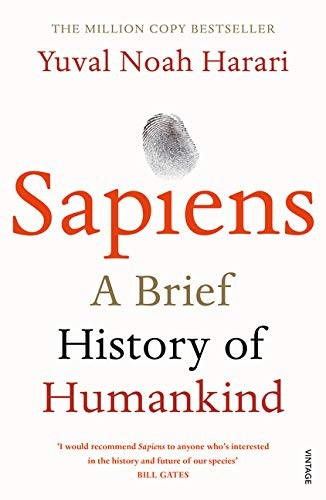
Consider Sapiens by Yuval Noah Harari. Recommended by 101 sources.
“A sweeping narrative history of Homo sapiens from the Cognitive Revolution to the present. Harari argues that what makes humans dominate the planet is not physical strength but collective myths: shared fictions like money, religion, and nations that allow millions of strangers to cooperate. The book moves fast through 70,000 years, making big, debatable claims about agriculture, empire, capitalism, and happiness. It is less a history textbook than a provocative essay in chronological form, and best read as an argument rather than a reference.”
Each recommendation is collected from a public source — interviews, articles, or curated lists — and linked to its original URL. Books with many verifiable recommendations from respected people rank higher.