BookMentionsBookMentions
Guns, Germs, and Steel
27 recommendations

Guns, Germs, and Steel

The Fates of Human Societies

by Jared Diamond

Bill GatesDerek SiversStewart Brand
Recommended by Bill Gates, Derek Sivers +
10 more

More Recommenders

Stewart Brand

Writer; founder of the Whole Earth Catalog

@MiaFarrow One of the classic nonfictions is Rats, Lice, and History, by Hans Zinnser. Guns, Germs and Steel also does pandemics, as does 1491: about what the Americas were like before (and during) the wipeout caused by European microbes + viruses. | @MiaFarrow One of the classic nonfictions is Rats, Lice, and History, by Hans Zinnser. Guns, Germs and Steel also does pandemics, as does 1491: about what the Americas were like before (and during) the wipeout caused by European microbes viruses. | @wongsk35 That's a GREAT suggestion. Guns Germs and Steel is an amazing book. Thanks for the idea! | A brilliant Pulitzer Prizewinning book about how the modern world was formed, analyzing how societies developed differently on different continents. I like how this is written from a biologist’s point of view rather than purely based on history or anthropology. | Fascinating. Lays a foundation for understanding human history. | Gave a big eye opening on why certain people of the world are more advanced than others and behave a certain way, as opposed to just genetics and this person is smarter because of this or that. | Helped rid me of the nagging incompleteness in my understood connection between the successes and failings of ancient and modern civilizations. | I?m a fan of books that challenge our assumptions, and Diamond offers us a new and remarkably simple way of looking at our world. Learning to challenge existing assumptions is core to effective leadership for it trains us to keep an open mind. | I’m a fan of books that challenge our assumptions, and Diamond offers us a new and remarkably simple way of looking at our world. Learning to challenge existing assumptions is core to effective leadership for it trains us to keep an open mind. | Why did the people of certain continents succeeded in invading other continents and conquering or displacing their people Fascinating world history. Winner of the Pulitzer Prize. See the notes.

Source →
J

@MiaFarrow One of the classic nonfictions is Rats, Lice, and History, by Hans Zinnser. Guns, Germs and Steel also does pandemics, as does 1491: about what the Americas were like before (and during) the wipeout caused by European microbes + viruses. | @MiaFarrow One of the classic nonfictions is Rats, Lice, and History, by Hans Zinnser. Guns, Germs and Steel also does pandemics, as does 1491: about what the Americas were like before (and during) the wipeout caused by European microbes viruses. | @wongsk35 That's a GREAT suggestion. Guns Germs and Steel is an amazing book. Thanks for the idea! | A brilliant Pulitzer Prizewinning book about how the modern world was formed, analyzing how societies developed differently on different continents. I like how this is written from a biologist’s point of view rather than purely based on history or anthropology. | Fascinating. Lays a foundation for understanding human history. | Gave a big eye opening on why certain people of the world are more advanced than others and behave a certain way, as opposed to just genetics and this person is smarter because of this or that. | Helped rid me of the nagging incompleteness in my understood connection between the successes and failings of ancient and modern civilizations. | I?m a fan of books that challenge our assumptions, and Diamond offers us a new and remarkably simple way of looking at our world. Learning to challenge existing assumptions is core to effective leadership for it trains us to keep an open mind. | I’m a fan of books that challenge our assumptions, and Diamond offers us a new and remarkably simple way of looking at our world. Learning to challenge existing assumptions is core to effective leadership for it trains us to keep an open mind. | Why did the people of certain continents succeeded in invading other continents and conquering or displacing their people Fascinating world history. Winner of the Pulitzer Prize. See the notes.

Source →
James Clear

Author of Atomic Habits

@MiaFarrow One of the classic nonfictions is Rats, Lice, and History, by Hans Zinnser. Guns, Germs and Steel also does pandemics, as does 1491: about what the Americas were like before (and during) the wipeout caused by European microbes + viruses. | @MiaFarrow One of the classic nonfictions is Rats, Lice, and History, by Hans Zinnser. Guns, Germs and Steel also does pandemics, as does 1491: about what the Americas were like before (and during) the wipeout caused by European microbes viruses. | @wongsk35 That's a GREAT suggestion. Guns Germs and Steel is an amazing book. Thanks for the idea! | A brilliant Pulitzer Prizewinning book about how the modern world was formed, analyzing how societies developed differently on different continents. I like how this is written from a biologist’s point of view rather than purely based on history or anthropology. | Fascinating. Lays a foundation for understanding human history. | Gave a big eye opening on why certain people of the world are more advanced than others and behave a certain way, as opposed to just genetics and this person is smarter because of this or that. | Helped rid me of the nagging incompleteness in my understood connection between the successes and failings of ancient and modern civilizations. | I?m a fan of books that challenge our assumptions, and Diamond offers us a new and remarkably simple way of looking at our world. Learning to challenge existing assumptions is core to effective leadership for it trains us to keep an open mind. | I’m a fan of books that challenge our assumptions, and Diamond offers us a new and remarkably simple way of looking at our world. Learning to challenge existing assumptions is core to effective leadership for it trains us to keep an open mind. | Why did the people of certain continents succeeded in invading other continents and conquering or displacing their people Fascinating world history. Winner of the Pulitzer Prize. See the notes.

Source →
M

@MiaFarrow One of the classic nonfictions is Rats, Lice, and History, by Hans Zinnser. Guns, Germs and Steel also does pandemics, as does 1491: about what the Americas were like before (and during) the wipeout caused by European microbes + viruses. | @MiaFarrow One of the classic nonfictions is Rats, Lice, and History, by Hans Zinnser. Guns, Germs and Steel also does pandemics, as does 1491: about what the Americas were like before (and during) the wipeout caused by European microbes viruses. | @wongsk35 That's a GREAT suggestion. Guns Germs and Steel is an amazing book. Thanks for the idea! | A brilliant Pulitzer Prizewinning book about how the modern world was formed, analyzing how societies developed differently on different continents. I like how this is written from a biologist’s point of view rather than purely based on history or anthropology. | Fascinating. Lays a foundation for understanding human history. | Gave a big eye opening on why certain people of the world are more advanced than others and behave a certain way, as opposed to just genetics and this person is smarter because of this or that. | Helped rid me of the nagging incompleteness in my understood connection between the successes and failings of ancient and modern civilizations. | I?m a fan of books that challenge our assumptions, and Diamond offers us a new and remarkably simple way of looking at our world. Learning to challenge existing assumptions is core to effective leadership for it trains us to keep an open mind. | I’m a fan of books that challenge our assumptions, and Diamond offers us a new and remarkably simple way of looking at our world. Learning to challenge existing assumptions is core to effective leadership for it trains us to keep an open mind. | Why did the people of certain continents succeeded in invading other continents and conquering or displacing their people Fascinating world history. Winner of the Pulitzer Prize. See the notes.

Source →
R

@MiaFarrow One of the classic nonfictions is Rats, Lice, and History, by Hans Zinnser. Guns, Germs and Steel also does pandemics, as does 1491: about what the Americas were like before (and during) the wipeout caused by European microbes + viruses. | @MiaFarrow One of the classic nonfictions is Rats, Lice, and History, by Hans Zinnser. Guns, Germs and Steel also does pandemics, as does 1491: about what the Americas were like before (and during) the wipeout caused by European microbes viruses. | @wongsk35 That's a GREAT suggestion. Guns Germs and Steel is an amazing book. Thanks for the idea! | A brilliant Pulitzer Prizewinning book about how the modern world was formed, analyzing how societies developed differently on different continents. I like how this is written from a biologist’s point of view rather than purely based on history or anthropology. | Fascinating. Lays a foundation for understanding human history. | Gave a big eye opening on why certain people of the world are more advanced than others and behave a certain way, as opposed to just genetics and this person is smarter because of this or that. | Helped rid me of the nagging incompleteness in my understood connection between the successes and failings of ancient and modern civilizations. | I?m a fan of books that challenge our assumptions, and Diamond offers us a new and remarkably simple way of looking at our world. Learning to challenge existing assumptions is core to effective leadership for it trains us to keep an open mind. | I’m a fan of books that challenge our assumptions, and Diamond offers us a new and remarkably simple way of looking at our world. Learning to challenge existing assumptions is core to effective leadership for it trains us to keep an open mind. | Why did the people of certain continents succeeded in invading other continents and conquering or displacing their people Fascinating world history. Winner of the Pulitzer Prize. See the notes.

Source →
C

@MiaFarrow One of the classic nonfictions is Rats, Lice, and History, by Hans Zinnser. Guns, Germs and Steel also does pandemics, as does 1491: about what the Americas were like before (and during) the wipeout caused by European microbes + viruses. | @MiaFarrow One of the classic nonfictions is Rats, Lice, and History, by Hans Zinnser. Guns, Germs and Steel also does pandemics, as does 1491: about what the Americas were like before (and during) the wipeout caused by European microbes viruses. | @wongsk35 That's a GREAT suggestion. Guns Germs and Steel is an amazing book. Thanks for the idea! | A brilliant Pulitzer Prizewinning book about how the modern world was formed, analyzing how societies developed differently on different continents. I like how this is written from a biologist’s point of view rather than purely based on history or anthropology. | Fascinating. Lays a foundation for understanding human history. | Gave a big eye opening on why certain people of the world are more advanced than others and behave a certain way, as opposed to just genetics and this person is smarter because of this or that. | Helped rid me of the nagging incompleteness in my understood connection between the successes and failings of ancient and modern civilizations. | I?m a fan of books that challenge our assumptions, and Diamond offers us a new and remarkably simple way of looking at our world. Learning to challenge existing assumptions is core to effective leadership for it trains us to keep an open mind. | I’m a fan of books that challenge our assumptions, and Diamond offers us a new and remarkably simple way of looking at our world. Learning to challenge existing assumptions is core to effective leadership for it trains us to keep an open mind. | Why did the people of certain continents succeeded in invading other continents and conquering or displacing their people Fascinating world history. Winner of the Pulitzer Prize. See the notes.

Source →
S

@MiaFarrow One of the classic nonfictions is Rats, Lice, and History, by Hans Zinnser. Guns, Germs and Steel also does pandemics, as does 1491: about what the Americas were like before (and during) the wipeout caused by European microbes + viruses. | @MiaFarrow One of the classic nonfictions is Rats, Lice, and History, by Hans Zinnser. Guns, Germs and Steel also does pandemics, as does 1491: about what the Americas were like before (and during) the wipeout caused by European microbes viruses. | @wongsk35 That's a GREAT suggestion. Guns Germs and Steel is an amazing book. Thanks for the idea! | A brilliant Pulitzer Prizewinning book about how the modern world was formed, analyzing how societies developed differently on different continents. I like how this is written from a biologist’s point of view rather than purely based on history or anthropology. | Fascinating. Lays a foundation for understanding human history. | Gave a big eye opening on why certain people of the world are more advanced than others and behave a certain way, as opposed to just genetics and this person is smarter because of this or that. | Helped rid me of the nagging incompleteness in my understood connection between the successes and failings of ancient and modern civilizations. | I?m a fan of books that challenge our assumptions, and Diamond offers us a new and remarkably simple way of looking at our world. Learning to challenge existing assumptions is core to effective leadership for it trains us to keep an open mind. | I’m a fan of books that challenge our assumptions, and Diamond offers us a new and remarkably simple way of looking at our world. Learning to challenge existing assumptions is core to effective leadership for it trains us to keep an open mind. | Why did the people of certain continents succeeded in invading other continents and conquering or displacing their people Fascinating world history. Winner of the Pulitzer Prize. See the notes.

Source →
J

@MiaFarrow One of the classic nonfictions is Rats, Lice, and History, by Hans Zinnser. Guns, Germs and Steel also does pandemics, as does 1491: about what the Americas were like before (and during) the wipeout caused by European microbes + viruses. | @MiaFarrow One of the classic nonfictions is Rats, Lice, and History, by Hans Zinnser. Guns, Germs and Steel also does pandemics, as does 1491: about what the Americas were like before (and during) the wipeout caused by European microbes viruses. | @wongsk35 That's a GREAT suggestion. Guns Germs and Steel is an amazing book. Thanks for the idea! | A brilliant Pulitzer Prizewinning book about how the modern world was formed, analyzing how societies developed differently on different continents. I like how this is written from a biologist’s point of view rather than purely based on history or anthropology. | Fascinating. Lays a foundation for understanding human history. | Gave a big eye opening on why certain people of the world are more advanced than others and behave a certain way, as opposed to just genetics and this person is smarter because of this or that. | Helped rid me of the nagging incompleteness in my understood connection between the successes and failings of ancient and modern civilizations. | I?m a fan of books that challenge our assumptions, and Diamond offers us a new and remarkably simple way of looking at our world. Learning to challenge existing assumptions is core to effective leadership for it trains us to keep an open mind. | I’m a fan of books that challenge our assumptions, and Diamond offers us a new and remarkably simple way of looking at our world. Learning to challenge existing assumptions is core to effective leadership for it trains us to keep an open mind. | Why did the people of certain continents succeeded in invading other continents and conquering or displacing their people Fascinating world history. Winner of the Pulitzer Prize. See the notes.

Source →
D

@MiaFarrow One of the classic nonfictions is Rats, Lice, and History, by Hans Zinnser. Guns, Germs and Steel also does pandemics, as does 1491: about what the Americas were like before (and during) the wipeout caused by European microbes + viruses. | @MiaFarrow One of the classic nonfictions is Rats, Lice, and History, by Hans Zinnser. Guns, Germs and Steel also does pandemics, as does 1491: about what the Americas were like before (and during) the wipeout caused by European microbes viruses. | @wongsk35 That's a GREAT suggestion. Guns Germs and Steel is an amazing book. Thanks for the idea! | A brilliant Pulitzer Prizewinning book about how the modern world was formed, analyzing how societies developed differently on different continents. I like how this is written from a biologist’s point of view rather than purely based on history or anthropology. | Fascinating. Lays a foundation for understanding human history. | Gave a big eye opening on why certain people of the world are more advanced than others and behave a certain way, as opposed to just genetics and this person is smarter because of this or that. | Helped rid me of the nagging incompleteness in my understood connection between the successes and failings of ancient and modern civilizations. | I?m a fan of books that challenge our assumptions, and Diamond offers us a new and remarkably simple way of looking at our world. Learning to challenge existing assumptions is core to effective leadership for it trains us to keep an open mind. | I’m a fan of books that challenge our assumptions, and Diamond offers us a new and remarkably simple way of looking at our world. Learning to challenge existing assumptions is core to effective leadership for it trains us to keep an open mind. | Why did the people of certain continents succeeded in invading other continents and conquering or displacing their people Fascinating world history. Winner of the Pulitzer Prize. See the notes.

Source →
M

@MiaFarrow One of the classic nonfictions is Rats, Lice, and History, by Hans Zinnser. Guns, Germs and Steel also does pandemics, as does 1491: about what the Americas were like before (and during) the wipeout caused by European microbes + viruses. | @MiaFarrow One of the classic nonfictions is Rats, Lice, and History, by Hans Zinnser. Guns, Germs and Steel also does pandemics, as does 1491: about what the Americas were like before (and during) the wipeout caused by European microbes viruses. | @wongsk35 That's a GREAT suggestion. Guns Germs and Steel is an amazing book. Thanks for the idea! | A brilliant Pulitzer Prizewinning book about how the modern world was formed, analyzing how societies developed differently on different continents. I like how this is written from a biologist’s point of view rather than purely based on history or anthropology. | Fascinating. Lays a foundation for understanding human history. | Gave a big eye opening on why certain people of the world are more advanced than others and behave a certain way, as opposed to just genetics and this person is smarter because of this or that. | Helped rid me of the nagging incompleteness in my understood connection between the successes and failings of ancient and modern civilizations. | I?m a fan of books that challenge our assumptions, and Diamond offers us a new and remarkably simple way of looking at our world. Learning to challenge existing assumptions is core to effective leadership for it trains us to keep an open mind. | I’m a fan of books that challenge our assumptions, and Diamond offers us a new and remarkably simple way of looking at our world. Learning to challenge existing assumptions is core to effective leadership for it trains us to keep an open mind. | Why did the people of certain continents succeeded in invading other continents and conquering or displacing their people Fascinating world history. Winner of the Pulitzer Prize. See the notes.

Source →

Recommended by 12 notable people, including Bill Gates and Derek Sivers

Check price on Amazon

Proof-backed recommendation

Amazon availability

Reading Profile

Length:Medium(419 pages)

Should I read this?

Recommended by 27 sources and appears in Geography, Infectious Diseases, and Development Economics.

Why has human history unfolded so differently across the globe? And what can it teach us about our current crisis? Jared Diamond puts the case that geography and biogeography, not race, moulded the contrasting fates of Europeans, Asians, Native Americans, sub-Saharan Africans, and aboriginal Australians. An ambitious synthesis of history, biology, ecology and linguistics, Guns, Germs and Steel is a ground-breaking and humane work of popular science that can provide expert insight into our modern world. 'The most absorbing account on offer of the emergence of a world divided between have and have-nots... Never before put together so coherently, with such a combination of expertise, charm and…

Looking for Kindle, hardcover, paperback, or audiobook editions?

Check formats, pricing, and current availability directly.

Check availability on Amazon

Why recommended

Recommended by 27 sources and appears in Geography, Infectious Diseases, and Development Economics.

Recommended by notable people

People and public figures who have recommended this book.

Recommendation Signals

Recommendation proof is sourced from public posts, interviews, reading lists, and cited references.

J

Joe Rogan

@MiaFarrow One of the classic nonfictions is Rats, Lice, and History, by Hans Zinnser. Guns, Germs and Steel also does pandemics, as does 1491: about what the Americas were like before (and during) the wipeout caused by European microbes + viruses. | @MiaFarrow One of the classic nonfictions is Rats, Lice, and History, by Hans Zinnser. Guns, Germs and Steel also does pandemics, as does 1491: about what the Americas were like before (and during) the wipeout caused by European microbes viruses. | @wongsk35 That's a GREAT suggestion. Guns Germs and Steel is an amazing book. Thanks for the idea! | A brilliant Pulitzer Prizewinning book about how the modern world was formed, analyzing how societies developed differently on different continents. I like how this is written from a biologist’s point of view rather than purely based on history or anthropology. | Fascinating. Lays a foundation for understanding human history. | Gave a big eye opening on why certain people of the world are more advanced than others and behave a certain way, as opposed to just genetics and this person is smarter because of this or that. | Helped rid me of the nagging incompleteness in my understood connection between the successes and failings of ancient and modern civilizations. | I?m a fan of books that challenge our assumptions, and Diamond offers us a new and remarkably simple way of looking at our world. Learning to challenge existing assumptions is core to effective leadership for it trains us to keep an open mind. | I’m a fan of books that challenge our assumptions, and Diamond offers us a new and remarkably simple way of looking at our world. Learning to challenge existing assumptions is core to effective leadership for it trains us to keep an open mind. | Why did the people of certain continents succeeded in invading other continents and conquering or displacing their people Fascinating world history. Winner of the Pulitzer Prize. See the notes.
View sources (9) ▾80%

Appears In

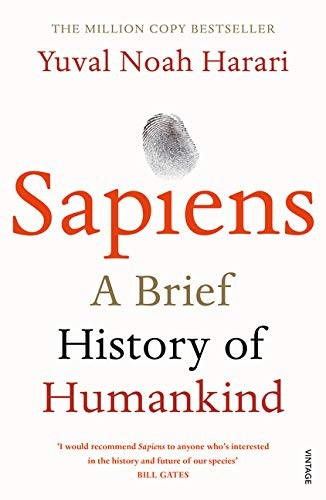
Sapiens
Try This Instead

Not sure if this is the right fit?

Consider Sapiens by Yuval Noah Harari. Recommended by 101 sources.

A sweeping narrative history of Homo sapiens from the Cognitive Revolution to the present. Harari argues that what makes humans dominate the planet is not physical strength but collective myths: shared fictions like money, religion, and nations that allow millions of strangers to cooperate. The book moves fast through 70,000 years, making big, debatable claims about agriculture, empire, capitalism, and happiness. It is less a history textbook than a provocative essay in chronological form, and best read as an argument rather than a reference.

Similar books

How recommendation signals are reviewed

Each recommendation is collected from a public source — interviews, articles, or curated lists — and linked to its original URL. Books with many verifiable recommendations from respected people rank higher.


Guns, Germs, and Steel

Guns, Germs, and Steel

View on Amazon →