More Recommenders


American actor and film producer (born 1956)
American economist
Recommended by 12 notable people, including Bill Gates and Nat Eliason
Check price on AmazonRecommended by public sources
Amazon availability
See customer reviews on Amazon →The Martian pins you inside astronaut Mark Watney's head as he thinks his way through disaster, rationing potatoes and hacking life support with relentless ingenuity. It reads as a cascade of near-misses and resource math, delivered in a voice that’s equal parts engineer and wisecrack. This is problem-solving fiction at its most accessible—every obstacle becomes a mental puzzle. The limitation: Watney's unflagging cheer and the pattern of crisis-solution can start to feel repetitive, leaving little room for internal darkness or the messier realities of isolation.
This summary and audience guidance are AI-generated from the book's description and its recommendation history, last updated May 2026. Recommendations, quotes and sources elsewhere on this page come from published material and are not generated.
Stranded on Mars by a duststorm that compromised his space suit and forced his crew to leave him behind, astronaut Mark Watney struggles to survive in spite of minimal supplies and environmental challenges that test his ingenuity.
Difficulty:hard
Length:385 pages (Medium)
Check formats, pricing, and availability options for Kindle, physical print, or audiobooks directly.
View available editions on AmazonWhy recommended
Recommended by 26 sources and appears in Science Fiction, Books Recommended by Bill Gates, and Books Recommended by Billionaires.
People and public figures who have recommended this book.
Recommendation proof is sourced from public posts, interviews, reading lists, and cited references.
Check formats, pricing, and availability options directly on Amazon.
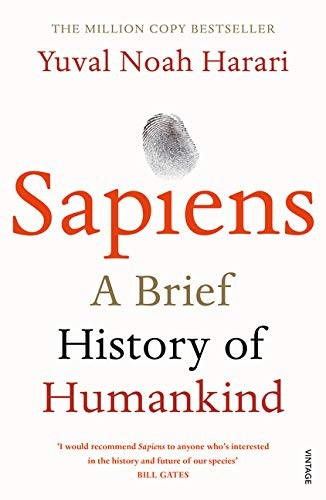
Consider Sapiens by Yuval Noah Harari. Recommended by 101 sources.
“A sweeping narrative history of Homo sapiens from the Cognitive Revolution to the present. Harari argues that what makes humans dominate the planet is not physical strength but collective myths: shared fictions like money, religion, and nations that allow millions of strangers to cooperate. The book moves fast through 70,000 years, making big, debatable claims about agriculture, empire, capitalism, and happiness. It is less a history textbook than a provocative essay in chronological form, and best read as an argument rather than a reference.”
Each recommendation is collected from a public source — interviews, articles, or curated lists — and linked to its original URL. Books with many verifiable recommendations from respected people rank higher.