Notes on Startups, or How to Build the Future
by Peter Thiel
More Recommenders

Co-founder of Andreessen Horowitz

Author, essayist, mathematical statistician, and risk analyst


Co-founder of PayPal, Tesla, SpaceX, and Neuralink

Technology executive and investor


Co-founder, Chairman, and CEO of Meta Platforms
Recommended by 12 notable people, including Nat Eliason and Derek Sivers
Check price on AmazonRecommended by public sources
Amazon availability
See customer reviews on Amazon →A contrarian manifesto on building startups that create new categories rather than competing in existing ones. Thiel draws from PayPal and his investments in Facebook to argue that the best businesses are monopolies that avoid competition entirely. The book revolves around one question—What important truth do you believe that very few people agree with?—and uses it to interrogate everything from sales culture to the energy crisis. It reads like a sharp dinner argument with someone often right in a way that is uncomfortable to admit.
This summary and audience guidance are AI-generated from the book's description and its recommendation history. Recommendations, quotes and sources elsewhere on this page come from published material and are not generated.
Difficulty:medium
Length:225 pages (Short)
Check formats, pricing, and availability options for Kindle, physical print, or audiobooks directly.
View available editions on AmazonWhy recommended
Recommended by 62 sources and appears in Best Startup Books, Books Recommended by Billionaires, and Books Recommended by Founders.
People and public figures who have recommended this book.
Recommendation proof is sourced from public posts, interviews, reading lists, and cited references.
Check formats, pricing, and availability options directly on Amazon.
Best Startup Books
Topic79 books
Most Recommended Books
Curated5676 books
Books Recommended by Billionaires
Category75 books
Books Recommended by Founders
Category75 books
Books Recommended by Investors
Category75 books
Books Recommended by CEOs
Category75 books
Books Recommended by Writers
Category75 books
Books Recommended by Elon Musk
Category75 books
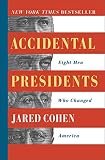
Consider Accidental Presidents by Jared Cohen. Recommended by 10 sources.
“Accidental Presidents offers eight narrative portraits of men who succeeded to the U.S. presidency without election, using anecdote-rich scenes and readable context to show how personality and circumstance interact with office power. It’s strongest as a set of self-contained stories that make succession stakes concrete for non-specialist readers; it does not prioritize dense archival argument or exhaustive methodology, so expect some interpretive generalizations and repeated themes across cases. Use it for fast historical orientation rather than scholarly deep-dives.”

Each recommendation is collected from a public source — interviews, articles, or curated lists — and linked to its original URL. Books with many verifiable recommendations from respected people rank higher.