BookMentionsBookMentions
The Fountainhead
29 recommendations

The Fountainhead

by Ayn Rand

Recommended by Ev Williams, Emma Watson +
10 more

More Recommenders

A

4. Fountainhead Read it at 21 I recall being obsessed with the book, reading it in my college library for hours. It is this book that instilled in me the idea of "resist the obvious" through the eyes of Howard Roark. | As a kid, I wanted to be an architect. That's before I read The Fountainhead. I mean it is hard to find a profession that pays worse than Architecture,. | Defiant in its pursuit of one’s artistic goals, meaning you don’t compromise; you stay truthful to what you’re exploring. | Healthy selfishness is a great thing. | I absolutely loved the book. Sure, the characters are extreme and onedimensional but to me, that was the point. | I got sucked into reading this overthetop manifesto of selfreliance during finals of my first year of college. By the end of the book, I decided to drop out of school. I never returned. It was the best decision of my life. | I know, it's a cult. I'm not going to take it too far, but I did enjoy it. | I think for me one of the core things that is very applicable to my life today is the virtue of independence is the vision, you know, if you know the idea of Howard Roark who is the architect in The Fountainhead, who has a vision for what he wants to accomplish and, there's some time in the book when he is frustrated in his career because people don't want to build the type of buildings he wants to build. And he's given a choice, a difficult choice, to compromise his integrity or to essentially go out of business. And he has to go and take a job working in a quarry. And for me that model has a lot of resonance. When I think about what I'm doing and the way I'm doing it is more important to me than any amount of money or anything like that because it's my artistic work. | It’s one of my favorite books. It’s less of a political statement. It’s just personally one of my favorite books. I’m a fan of Architecture,. | Sets these bold, stark characters?you could even call them Christ figures?and you think to yourself, 'I want to be that.' | Sets these bold, stark characters—you could even call them Christ figures—and you think to yourself, 'I want to be that.' | The protagonist’s audacious selfconfidence and refusal to compromise his artistic vision—which was to say, himself—was a fascinating thing to survey. | This book was incredibly motivating to me. It encouraged me to think as an individual, take risks to reach my goals, and responsibility for my successes and failures. I loved it.

Source →
Ray Dalio

Founder of Bridgewater Associates

4. Fountainhead Read it at 21 I recall being obsessed with the book, reading it in my college library for hours. It is this book that instilled in me the idea of "resist the obvious" through the eyes of Howard Roark. | As a kid, I wanted to be an architect. That's before I read The Fountainhead. I mean it is hard to find a profession that pays worse than Architecture,. | Defiant in its pursuit of one’s artistic goals, meaning you don’t compromise; you stay truthful to what you’re exploring. | Healthy selfishness is a great thing. | I absolutely loved the book. Sure, the characters are extreme and onedimensional but to me, that was the point. | I got sucked into reading this overthetop manifesto of selfreliance during finals of my first year of college. By the end of the book, I decided to drop out of school. I never returned. It was the best decision of my life. | I know, it's a cult. I'm not going to take it too far, but I did enjoy it. | I think for me one of the core things that is very applicable to my life today is the virtue of independence is the vision, you know, if you know the idea of Howard Roark who is the architect in The Fountainhead, who has a vision for what he wants to accomplish and, there's some time in the book when he is frustrated in his career because people don't want to build the type of buildings he wants to build. And he's given a choice, a difficult choice, to compromise his integrity or to essentially go out of business. And he has to go and take a job working in a quarry. And for me that model has a lot of resonance. When I think about what I'm doing and the way I'm doing it is more important to me than any amount of money or anything like that because it's my artistic work. | It’s one of my favorite books. It’s less of a political statement. It’s just personally one of my favorite books. I’m a fan of Architecture,. | Sets these bold, stark characters?you could even call them Christ figures?and you think to yourself, 'I want to be that.' | Sets these bold, stark characters—you could even call them Christ figures—and you think to yourself, 'I want to be that.' | The protagonist’s audacious selfconfidence and refusal to compromise his artistic vision—which was to say, himself—was a fascinating thing to survey. | This book was incredibly motivating to me. It encouraged me to think as an individual, take risks to reach my goals, and responsibility for my successes and failures. I loved it.

Source →
N

4. Fountainhead Read it at 21 I recall being obsessed with the book, reading it in my college library for hours. It is this book that instilled in me the idea of "resist the obvious" through the eyes of Howard Roark. | As a kid, I wanted to be an architect. That's before I read The Fountainhead. I mean it is hard to find a profession that pays worse than Architecture,. | Defiant in its pursuit of one’s artistic goals, meaning you don’t compromise; you stay truthful to what you’re exploring. | Healthy selfishness is a great thing. | I absolutely loved the book. Sure, the characters are extreme and onedimensional but to me, that was the point. | I got sucked into reading this overthetop manifesto of selfreliance during finals of my first year of college. By the end of the book, I decided to drop out of school. I never returned. It was the best decision of my life. | I know, it's a cult. I'm not going to take it too far, but I did enjoy it. | I think for me one of the core things that is very applicable to my life today is the virtue of independence is the vision, you know, if you know the idea of Howard Roark who is the architect in The Fountainhead, who has a vision for what he wants to accomplish and, there's some time in the book when he is frustrated in his career because people don't want to build the type of buildings he wants to build. And he's given a choice, a difficult choice, to compromise his integrity or to essentially go out of business. And he has to go and take a job working in a quarry. And for me that model has a lot of resonance. When I think about what I'm doing and the way I'm doing it is more important to me than any amount of money or anything like that because it's my artistic work. | It’s one of my favorite books. It’s less of a political statement. It’s just personally one of my favorite books. I’m a fan of Architecture,. | Sets these bold, stark characters?you could even call them Christ figures?and you think to yourself, 'I want to be that.' | Sets these bold, stark characters—you could even call them Christ figures—and you think to yourself, 'I want to be that.' | The protagonist’s audacious selfconfidence and refusal to compromise his artistic vision—which was to say, himself—was a fascinating thing to survey. | This book was incredibly motivating to me. It encouraged me to think as an individual, take risks to reach my goals, and responsibility for my successes and failures. I loved it.

Source →
B

4. Fountainhead Read it at 21 I recall being obsessed with the book, reading it in my college library for hours. It is this book that instilled in me the idea of "resist the obvious" through the eyes of Howard Roark. | As a kid, I wanted to be an architect. That's before I read The Fountainhead. I mean it is hard to find a profession that pays worse than Architecture,. | Defiant in its pursuit of one’s artistic goals, meaning you don’t compromise; you stay truthful to what you’re exploring. | Healthy selfishness is a great thing. | I absolutely loved the book. Sure, the characters are extreme and onedimensional but to me, that was the point. | I got sucked into reading this overthetop manifesto of selfreliance during finals of my first year of college. By the end of the book, I decided to drop out of school. I never returned. It was the best decision of my life. | I know, it's a cult. I'm not going to take it too far, but I did enjoy it. | I think for me one of the core things that is very applicable to my life today is the virtue of independence is the vision, you know, if you know the idea of Howard Roark who is the architect in The Fountainhead, who has a vision for what he wants to accomplish and, there's some time in the book when he is frustrated in his career because people don't want to build the type of buildings he wants to build. And he's given a choice, a difficult choice, to compromise his integrity or to essentially go out of business. And he has to go and take a job working in a quarry. And for me that model has a lot of resonance. When I think about what I'm doing and the way I'm doing it is more important to me than any amount of money or anything like that because it's my artistic work. | It’s one of my favorite books. It’s less of a political statement. It’s just personally one of my favorite books. I’m a fan of Architecture,. | Sets these bold, stark characters?you could even call them Christ figures?and you think to yourself, 'I want to be that.' | Sets these bold, stark characters—you could even call them Christ figures—and you think to yourself, 'I want to be that.' | The protagonist’s audacious selfconfidence and refusal to compromise his artistic vision—which was to say, himself—was a fascinating thing to survey. | This book was incredibly motivating to me. It encouraged me to think as an individual, take risks to reach my goals, and responsibility for my successes and failures. I loved it.

Source →
S

4. Fountainhead Read it at 21 I recall being obsessed with the book, reading it in my college library for hours. It is this book that instilled in me the idea of "resist the obvious" through the eyes of Howard Roark. | As a kid, I wanted to be an architect. That's before I read The Fountainhead. I mean it is hard to find a profession that pays worse than Architecture,. | Defiant in its pursuit of one’s artistic goals, meaning you don’t compromise; you stay truthful to what you’re exploring. | Healthy selfishness is a great thing. | I absolutely loved the book. Sure, the characters are extreme and onedimensional but to me, that was the point. | I got sucked into reading this overthetop manifesto of selfreliance during finals of my first year of college. By the end of the book, I decided to drop out of school. I never returned. It was the best decision of my life. | I know, it's a cult. I'm not going to take it too far, but I did enjoy it. | I think for me one of the core things that is very applicable to my life today is the virtue of independence is the vision, you know, if you know the idea of Howard Roark who is the architect in The Fountainhead, who has a vision for what he wants to accomplish and, there's some time in the book when he is frustrated in his career because people don't want to build the type of buildings he wants to build. And he's given a choice, a difficult choice, to compromise his integrity or to essentially go out of business. And he has to go and take a job working in a quarry. And for me that model has a lot of resonance. When I think about what I'm doing and the way I'm doing it is more important to me than any amount of money or anything like that because it's my artistic work. | It’s one of my favorite books. It’s less of a political statement. It’s just personally one of my favorite books. I’m a fan of Architecture,. | Sets these bold, stark characters?you could even call them Christ figures?and you think to yourself, 'I want to be that.' | Sets these bold, stark characters—you could even call them Christ figures—and you think to yourself, 'I want to be that.' | The protagonist’s audacious selfconfidence and refusal to compromise his artistic vision—which was to say, himself—was a fascinating thing to survey. | This book was incredibly motivating to me. It encouraged me to think as an individual, take risks to reach my goals, and responsibility for my successes and failures. I loved it.

Source →
K

4. Fountainhead Read it at 21 I recall being obsessed with the book, reading it in my college library for hours. It is this book that instilled in me the idea of "resist the obvious" through the eyes of Howard Roark. | As a kid, I wanted to be an architect. That's before I read The Fountainhead. I mean it is hard to find a profession that pays worse than Architecture,. | Defiant in its pursuit of one’s artistic goals, meaning you don’t compromise; you stay truthful to what you’re exploring. | Healthy selfishness is a great thing. | I absolutely loved the book. Sure, the characters are extreme and onedimensional but to me, that was the point. | I got sucked into reading this overthetop manifesto of selfreliance during finals of my first year of college. By the end of the book, I decided to drop out of school. I never returned. It was the best decision of my life. | I know, it's a cult. I'm not going to take it too far, but I did enjoy it. | I think for me one of the core things that is very applicable to my life today is the virtue of independence is the vision, you know, if you know the idea of Howard Roark who is the architect in The Fountainhead, who has a vision for what he wants to accomplish and, there's some time in the book when he is frustrated in his career because people don't want to build the type of buildings he wants to build. And he's given a choice, a difficult choice, to compromise his integrity or to essentially go out of business. And he has to go and take a job working in a quarry. And for me that model has a lot of resonance. When I think about what I'm doing and the way I'm doing it is more important to me than any amount of money or anything like that because it's my artistic work. | It’s one of my favorite books. It’s less of a political statement. It’s just personally one of my favorite books. I’m a fan of Architecture,. | Sets these bold, stark characters?you could even call them Christ figures?and you think to yourself, 'I want to be that.' | Sets these bold, stark characters—you could even call them Christ figures—and you think to yourself, 'I want to be that.' | The protagonist’s audacious selfconfidence and refusal to compromise his artistic vision—which was to say, himself—was a fascinating thing to survey. | This book was incredibly motivating to me. It encouraged me to think as an individual, take risks to reach my goals, and responsibility for my successes and failures. I loved it.

Source →
M

4. Fountainhead Read it at 21 I recall being obsessed with the book, reading it in my college library for hours. It is this book that instilled in me the idea of "resist the obvious" through the eyes of Howard Roark. | As a kid, I wanted to be an architect. That's before I read The Fountainhead. I mean it is hard to find a profession that pays worse than Architecture,. | Defiant in its pursuit of one’s artistic goals, meaning you don’t compromise; you stay truthful to what you’re exploring. | Healthy selfishness is a great thing. | I absolutely loved the book. Sure, the characters are extreme and onedimensional but to me, that was the point. | I got sucked into reading this overthetop manifesto of selfreliance during finals of my first year of college. By the end of the book, I decided to drop out of school. I never returned. It was the best decision of my life. | I know, it's a cult. I'm not going to take it too far, but I did enjoy it. | I think for me one of the core things that is very applicable to my life today is the virtue of independence is the vision, you know, if you know the idea of Howard Roark who is the architect in The Fountainhead, who has a vision for what he wants to accomplish and, there's some time in the book when he is frustrated in his career because people don't want to build the type of buildings he wants to build. And he's given a choice, a difficult choice, to compromise his integrity or to essentially go out of business. And he has to go and take a job working in a quarry. And for me that model has a lot of resonance. When I think about what I'm doing and the way I'm doing it is more important to me than any amount of money or anything like that because it's my artistic work. | It’s one of my favorite books. It’s less of a political statement. It’s just personally one of my favorite books. I’m a fan of Architecture,. | Sets these bold, stark characters?you could even call them Christ figures?and you think to yourself, 'I want to be that.' | Sets these bold, stark characters—you could even call them Christ figures—and you think to yourself, 'I want to be that.' | The protagonist’s audacious selfconfidence and refusal to compromise his artistic vision—which was to say, himself—was a fascinating thing to survey. | This book was incredibly motivating to me. It encouraged me to think as an individual, take risks to reach my goals, and responsibility for my successes and failures. I loved it.

Source →
M

4. Fountainhead Read it at 21 I recall being obsessed with the book, reading it in my college library for hours. It is this book that instilled in me the idea of "resist the obvious" through the eyes of Howard Roark. | As a kid, I wanted to be an architect. That's before I read The Fountainhead. I mean it is hard to find a profession that pays worse than Architecture,. | Defiant in its pursuit of one’s artistic goals, meaning you don’t compromise; you stay truthful to what you’re exploring. | Healthy selfishness is a great thing. | I absolutely loved the book. Sure, the characters are extreme and onedimensional but to me, that was the point. | I got sucked into reading this overthetop manifesto of selfreliance during finals of my first year of college. By the end of the book, I decided to drop out of school. I never returned. It was the best decision of my life. | I know, it's a cult. I'm not going to take it too far, but I did enjoy it. | I think for me one of the core things that is very applicable to my life today is the virtue of independence is the vision, you know, if you know the idea of Howard Roark who is the architect in The Fountainhead, who has a vision for what he wants to accomplish and, there's some time in the book when he is frustrated in his career because people don't want to build the type of buildings he wants to build. And he's given a choice, a difficult choice, to compromise his integrity or to essentially go out of business. And he has to go and take a job working in a quarry. And for me that model has a lot of resonance. When I think about what I'm doing and the way I'm doing it is more important to me than any amount of money or anything like that because it's my artistic work. | It’s one of my favorite books. It’s less of a political statement. It’s just personally one of my favorite books. I’m a fan of Architecture,. | Sets these bold, stark characters?you could even call them Christ figures?and you think to yourself, 'I want to be that.' | Sets these bold, stark characters—you could even call them Christ figures—and you think to yourself, 'I want to be that.' | The protagonist’s audacious selfconfidence and refusal to compromise his artistic vision—which was to say, himself—was a fascinating thing to survey. | This book was incredibly motivating to me. It encouraged me to think as an individual, take risks to reach my goals, and responsibility for my successes and failures. I loved it.

Source →
T

4. Fountainhead Read it at 21 I recall being obsessed with the book, reading it in my college library for hours. It is this book that instilled in me the idea of "resist the obvious" through the eyes of Howard Roark. | As a kid, I wanted to be an architect. That's before I read The Fountainhead. I mean it is hard to find a profession that pays worse than Architecture,. | Defiant in its pursuit of one’s artistic goals, meaning you don’t compromise; you stay truthful to what you’re exploring. | Healthy selfishness is a great thing. | I absolutely loved the book. Sure, the characters are extreme and onedimensional but to me, that was the point. | I got sucked into reading this overthetop manifesto of selfreliance during finals of my first year of college. By the end of the book, I decided to drop out of school. I never returned. It was the best decision of my life. | I know, it's a cult. I'm not going to take it too far, but I did enjoy it. | I think for me one of the core things that is very applicable to my life today is the virtue of independence is the vision, you know, if you know the idea of Howard Roark who is the architect in The Fountainhead, who has a vision for what he wants to accomplish and, there's some time in the book when he is frustrated in his career because people don't want to build the type of buildings he wants to build. And he's given a choice, a difficult choice, to compromise his integrity or to essentially go out of business. And he has to go and take a job working in a quarry. And for me that model has a lot of resonance. When I think about what I'm doing and the way I'm doing it is more important to me than any amount of money or anything like that because it's my artistic work. | It’s one of my favorite books. It’s less of a political statement. It’s just personally one of my favorite books. I’m a fan of Architecture,. | Sets these bold, stark characters?you could even call them Christ figures?and you think to yourself, 'I want to be that.' | Sets these bold, stark characters—you could even call them Christ figures—and you think to yourself, 'I want to be that.' | The protagonist’s audacious selfconfidence and refusal to compromise his artistic vision—which was to say, himself—was a fascinating thing to survey. | This book was incredibly motivating to me. It encouraged me to think as an individual, take risks to reach my goals, and responsibility for my successes and failures. I loved it.

Source →
L

4. Fountainhead Read it at 21 I recall being obsessed with the book, reading it in my college library for hours. It is this book that instilled in me the idea of "resist the obvious" through the eyes of Howard Roark. | As a kid, I wanted to be an architect. That's before I read The Fountainhead. I mean it is hard to find a profession that pays worse than Architecture,. | Defiant in its pursuit of one’s artistic goals, meaning you don’t compromise; you stay truthful to what you’re exploring. | Healthy selfishness is a great thing. | I absolutely loved the book. Sure, the characters are extreme and onedimensional but to me, that was the point. | I got sucked into reading this overthetop manifesto of selfreliance during finals of my first year of college. By the end of the book, I decided to drop out of school. I never returned. It was the best decision of my life. | I know, it's a cult. I'm not going to take it too far, but I did enjoy it. | I think for me one of the core things that is very applicable to my life today is the virtue of independence is the vision, you know, if you know the idea of Howard Roark who is the architect in The Fountainhead, who has a vision for what he wants to accomplish and, there's some time in the book when he is frustrated in his career because people don't want to build the type of buildings he wants to build. And he's given a choice, a difficult choice, to compromise his integrity or to essentially go out of business. And he has to go and take a job working in a quarry. And for me that model has a lot of resonance. When I think about what I'm doing and the way I'm doing it is more important to me than any amount of money or anything like that because it's my artistic work. | It’s one of my favorite books. It’s less of a political statement. It’s just personally one of my favorite books. I’m a fan of Architecture,. | Sets these bold, stark characters?you could even call them Christ figures?and you think to yourself, 'I want to be that.' | Sets these bold, stark characters—you could even call them Christ figures—and you think to yourself, 'I want to be that.' | The protagonist’s audacious selfconfidence and refusal to compromise his artistic vision—which was to say, himself—was a fascinating thing to survey. | This book was incredibly motivating to me. It encouraged me to think as an individual, take risks to reach my goals, and responsibility for my successes and failures. I loved it.

Source →

Recommended by 12 notable people, including Ev Williams and Emma Watson

Check price on Amazon

Proof-backed recommendation

Amazon availability

Reading Profile

Difficulty:hard
Length:Long(754 pages)
Themes:uncompromising vision vs social conformityindividual genius vs collective mediocrity

Should I read this?

The Fountainhead is a philosophical novel following architect Howard Roark’s defiance of social convention. Reading it feels like absorbing a passionate manifesto through melodrama: long speeches and symbolic characters deliver Ayn Rand’s objectivist ideas. Its strength is fueling personal integrity; its weakness is didacticism that flattens nuance and becomes a lecture. The prose is grandiose, the pacing uneven, but for those who click, it’s an electrifying defense of individualism.

Read this if...

  • A young architect or designer who feels pressure to prioritize marketability over vision, and needs a fictional push to trust their creative instincts.
  • A philosophy-curious reader who wants to encounter Rand’s ideas in narrative form before tackling the denser Atlas Shrugged.
  • Someone stuck in a corporate environment that rewards conformity, looking for an empowering story about sticking to principles despite institutional pushback.

Skip this if...

  • You’ll likely put it down around the final trial when Roark’s courtroom speech turns into a dense, repetitive philosophical lecture — it drags hard if you’re already tired of the didactic tone.
  • You’ll lose interest early on when every character feels like a spokesperson rather than a person — the characterization becomes preachy and flat, especially after the first third.
  • You’ll abandon it in the middle chapters when the narrative stalls for extended ideological debates — the pace becomes tedious as Rand prioritizes argument over story.

This centennial edition of "The Fountainhead," celebrating the controversial and enduring legacy of its author, features an afterword by Rand's literary executor, Leonard Peikoff, offering some of Ayn Rand's personal notes on the development of her masterwork, and a Reader's Guide to her writings and philosophy.

Before You Buy

Reading Specifications

Difficulty:hard

Length:754 pages (Long)

Themes:
uncompromising vision vs social conformityindividual genius vs collective mediocrityselfishness as virtue vs altruism as self-sacrifice

Audience Fit

Recommended for:
  • A young architect or designer who feels pressure to prioritize marketability over vision, and needs a fictional push to trust their creative instincts.
  • A philosophy-curious reader who wants to encounter Rand’s ideas in narrative form before tackling the denser Atlas Shrugged.
  • Someone stuck in a corporate environment that rewards conformity, looking for an empowering story about sticking to principles despite institutional pushback.
Not ideal if you want:
  • You’ll likely put it down around the final trial when Roark’s courtroom speech turns into a dense, repetitive philosophical lecture — it drags hard if you’re already tired of the didactic tone.
  • You’ll lose interest early on when every character feels like a spokesperson rather than a person — the characterization becomes preachy and flat, especially after the first third.
  • You’ll abandon it in the middle chapters when the narrative stalls for extended ideological debates — the pace becomes tedious as Rand prioritizes argument over story.

Check formats, pricing, and availability options for Kindle, physical print, or audiobooks directly.

View available editions on Amazon

Key themes

uncompromising vision vs social conformityindividual genius vs collective mediocrityselfishness as virtue vs altruism as self-sacrifi…artistic integrity vs public approvalreason vs emotional dependence

Why recommended

Recommended by 29 sources and appears in Conservative, Books Recommended by Founders, and Books Recommended by Billionaires.

Recommended by notable people

People and public figures who have recommended this book.

Recommendation Signals

Recommendation proof is sourced from public posts, interviews, reading lists, and cited references.

Ev Williams

Ev Williams

Co-founder of Twitter and Medium

4. Fountainhead Read it at 21 I recall being obsessed with the book, reading it in my college library for hours. It is this book that instilled in me the idea of "resist the obvious" through the eyes of Howard Roark. | As a kid, I wanted to be an architect. That's before I read The Fountainhead. I mean it is hard to find a profession that pays worse than Architecture,. | Defiant in its pursuit of one’s artistic goals, meaning you don’t compromise; you stay truthful to what you’re exploring. | Healthy selfishness is a great thing. | I absolutely loved the book. Sure, the characters are extreme and onedimensional but to me, that was the point. | I got sucked into reading this overthetop manifesto of selfreliance during finals of my first year of college. By the end of the book, I decided to drop out of school. I never returned. It was the best decision of my life. | I know, it's a cult. I'm not going to take it too far, but I did enjoy it. | I think for me one of the core things that is very applicable to my life today is the virtue of independence is the vision, you know, if you know the idea of Howard Roark who is the architect in The Fountainhead, who has a vision for what he wants to accomplish and, there's some time in the book when he is frustrated in his career because people don't want to build the type of buildings he wants to build. And he's given a choice, a difficult choice, to compromise his integrity or to essentially go out of business. And he has to go and take a job working in a quarry. And for me that model has a lot of resonance. When I think about what I'm doing and the way I'm doing it is more important to me than any amount of money or anything like that because it's my artistic work. | It’s one of my favorite books. It’s less of a political statement. It’s just personally one of my favorite books. I’m a fan of Architecture,. | Sets these bold, stark characters?you could even call them Christ figures?and you think to yourself, 'I want to be that.' | Sets these bold, stark characters—you could even call them Christ figures—and you think to yourself, 'I want to be that.' | The protagonist’s audacious selfconfidence and refusal to compromise his artistic vision—which was to say, himself—was a fascinating thing to survey. | This book was incredibly motivating to me. It encouraged me to think as an individual, take risks to reach my goals, and responsibility for my successes and failures. I loved it.
View sources (11) ▾80%

Appears In

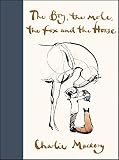
The Boy, the Mole, the Fox and the Horse
Try This Instead

Not sure if this is the right fit?

Consider The Boy, the Mole, the Fox and the Horse by Charlie Mackesy. Recommended by 8 sources.

Soft-spoken, heavily illustrated fable built from short dialogues and watercolor sketches. Each spread pairs a spare line of text with a loose drawing, so the pleasure is visual and aphoristic rather than narrative; readers collect felt-true sentences more than plot. Most useful when you want quick consolations, a prompt for conversation with a child, or a pause during a rough day. Limiting if you want sustained argument, concrete advice, or tightly plotted storytelling: the repetition of gentleness can feel sentimental or thin after a while.

Similar books

How recommendation signals are reviewed

Each recommendation is collected from a public source — interviews, articles, or curated lists — and linked to its original URL. Books with many verifiable recommendations from respected people rank higher.

The Fountainhead

The Fountainhead

View on Amazon →