
Most Recommended Books
Curated99 of 5,676 books2,657 recommendations totalThe books that come up most often across every reading list, interview and podcast we track — the closest thing to a consensus canon. Ranked by how many different people recommended each title, with the source for every one.
Where to start: Most Recommended Books recommended most often
Recommended books, ranked by how many of the 440 people behind this list recommended each one.
- 1Man's Search for Meaning90 recommendations
- 2Sapiens88 recommendations · recommended by Nat Eliason, Derek Sivers and Ankur Warikoo
- 3The Hard Thing About Hard Things54 recommendations · recommended by Tim Ferriss, Nat Eliason and Ankur Warikoo
- 4Zero to One54 recommendations
- 5Thinking, Fast and Slow53 recommendations
Psychiatrist Viktor Frankl recounts his survival in Nazi death camps, weaving together brutal details and insights about finding meaning in suffering. The first half is a gripping, horrifying memoir; the second half shifts to a philosophical framework he calls logotherapy. The book’s core appeal is its raw demonstration that even in hell, a sense of purpose can keep you alive. Some readers find the shift jarring and the later sections abstract. The ideas resonate best if you accept the spiritual overtones and personal anecdotes over a more analytical approach.
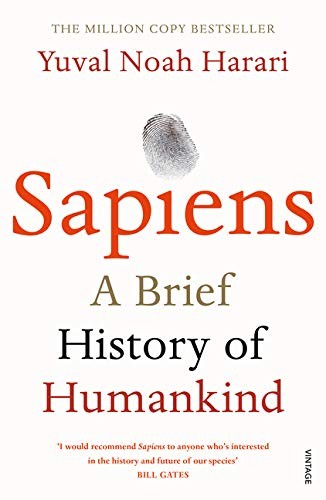
A Brief History of Humankind
Recommended by Nat Eliason, Derek Sivers, Ankur Warikoo and 69 others
A sweeping narrative history of Homo sapiens from the Cognitive Revolution to the present. Harari argues that what makes humans dominate the planet is not physical strength but collective myths: shared fictions like money, religion, and nations that allow millions of strangers to cooperate. The book moves fast through 70,000 years, making big, debatable claims about agriculture, empire, capitalism, and happiness. It is less a history textbook than a provocative essay in chronological form, and best read as an argument rather than a reference.
Building a Business When There Are No Easy Answers
Recommended by Tim Ferriss, Nat Eliason, Ankur Warikoo and 38 others
A blunt, conversational tour through the worst parts of building a company. Horowitz shares personal stories from his own startup failures and recoveries, offering practical wisdom on layoffs, pivots, CEO loneliness, and managing when times are bad. The value is in the honest, experience-based insight you won't get from business school. The limitation is its narrow focus on venture-backed tech startups—if you're not in that world, some advice may feel irrelevant. Reads like a wise mentor telling you what nobody else will.
Notes on Startups, or How to Build the Future
A contrarian manifesto on building startups that create new categories rather than competing in existing ones. Thiel draws from PayPal and his investments in Facebook to argue that the best businesses are monopolies that avoid competition entirely. The book revolves around one question—What important truth do you believe that very few people agree with?—and uses it to interrogate everything from sales culture to the energy crisis. It reads like a sharp dinner argument with someone often right in a way that is uncomfortable to admit.
This book walks you through two mental systems—one fast and intuitive, the other slow and analytical—using a cascade of clever experiments that reveal how easily we're fooled. The value lies in naming and demonstrating dozens of cognitive biases that affect decisions from shopping to investing. it reads as dense, rich, and often fascinating, but the parade of similar studies can feel repetitive, and the lack of practical shortcuts may frustrate readers wanting quick fixes. Some later research has questioned a few findings, which can gnaw at your trust as you go.
Life and Work
This is Dalio’s operating manual for life and work—part memoir, part handbook. He distills his hedge fund’s culture into repeatable 'principles' for radical transparency and systematic thinking. The useful part is the concrete algorithms for error-logging and group decision-making; the annoying part is the cultish fervor around his own brilliance and the implication that his way scales universally. It reads like a boss’s extended memo, sometimes riveting, sometimes eye-rolling.

Escape 95, Live Anywhere, and Join the New Rich
On the "books read" section of Ev Williams' GoodReads profile.
An Easy & Proven Way to Build Good Habits & Break Bad Ones
A practical system for behavior change built on the idea that tiny, incremental improvements compound into remarkable results. Clear avoids motivation-based advice and instead focuses on environment design, habit stacking, and identity-based change—making good habits frictionless while making bad ones inconvenient. The book is structured in short, actionable chapters, each ending with a cheat sheet, so you can skip around based on what you are trying to fix. It cares less about the psychology of why you procrastinate and more about the engineering of making procrastination harder.
25th Anniversary Edition
Recommended by Tim Ferriss, Nat Eliason, Sophie Bakalar and 33 others
A quick, dreamy fable about a shepherd chasing treasure who finds wisdom instead. The prose is easy, almost childlike, and the story moves through symbolic encounters that each deliver a lesson about listening to your heart. You’ll underline a few lines if you’re open to its message, but the charm fades if you bristle at repeated aphorisms. The main limitation: it can feel like a beautifully wrapped box of motivational quotes—inspiring to some, trite to others.
A Memoir by the Creator of Nike
Phil Knight’s memoir is a raw, first-person sprint through Nike’s chaotic early years, loaded with near-bankruptcies, strained partnerships, and the obsessive hustle of an underdog. The useful part is its unfiltered look at the emotional cost of entrepreneurship—the sleepless nights, the lawsuits, the brinkmanship. It will lose you when the endless travelogue and repetitive financial close-shaves start to feel like a highlight reel without a clear lesson, and Knight’s own voice can grow self-mythologizing.
A sprawling ideological novel set in a dystopian America where productive industrialists and creators go on strike against a society that shackles them with regulation and collective guilt. The plot follows railroad executive Dagny Taggart as she fights to keep her company running while the most capable minds mysteriously disappear. At well over a thousand pages, it is less a novel than a philosophical argument dressed in fiction—the characters deliver extended speeches on individualism, rational self-interest, and the moral evil of altruism. It polarizes because it demands you take a side.
Recommended by Nat Eliason, Derek Sivers, Ankur Warikoo and 29 others
Do you feel stuck in life, not knowing how to make it more successful? Do you wish to become more popular? Are you craving to earn more? Do you wish to expand your horizon, earn new clients and win people over with your ideas?
When New Technologies Cause Great Firms to Fail
A dense, methodical autopsy of how well-managed companies fail by doing exactly what they’re supposed to do: listen to customers and invest in high-margin products. The core insight—that disruptive technologies initially look irrelevant—unfolds through relentless case studies from disk drives to steel mills. Useful for its systemic logic, but the repetition can feel academic. You’ll get a precise vocabulary for a paradox, not a step-by-step fix. The theory is direct, yet the historical focus may leave you wondering how to apply it to your own fast-moving industry.
A Roman emperor's private journal in which Marcus Aurelius wrestles with anger, mortality, duty, and the difficulty of staying calm while running an empire. The book is a collection of fragmentary reflections organized into twelve short books, each a conversation with himself about not being derailed by other people's frustrations or the fear of death. It reads like a Stoic devotional—repetitive by design, since Marcus was reminding himself of the same truths daily. There is no plot, no system. There is a man trying not to lose himself to the weight of the job.
Break Through the Blocks and Win Your Inner Creative Battles
The War of Art reads like a fiery pamphlet that personifies creative blocks as 'Resistance,' a cunning adversary. The short, declarative pages can jolt a procrastinating artist into action by naming fear and self-sabotage with combat clarity. The useful part is this diagnosis, which makes avoidance feel like a conquerable external foe. But the book rarely moves beyond metaphor: it offers no steps, just inspirational battle cries. If you bristle at a drill-sergeant tone and endless variations on the same idea, the repetition will grate long before the slim volume ends.
A Practical Guide to Personal Freedom
Recommended by Aaron Rodgers, Aubrey Marcus, Nate O'Brien and 23 others
A slim, conversational guide that draws on Toltec spiritual tradition to propose four internal agreements for reducing suffering. The reading feels like listening to an encouraging elder: warm, repetitive, and full of anecdotes. Its value is in persistent reminders that most emotional pain comes from unchecked assumptions and taking things personally. The limitation is a lack of nuance and no practical exercises; it assumes you can reframe your mind through sheer intention. Without follow-up, the advice can feel like fortune-cookie wisdom.

A Novel
Recommended by Tim Ferriss, Nat Eliason, Ev Williams and 8 others
The “brilliantly realized” (The New York Times Book Review) breakthrough novel from visionary author Neal Stephenson, a modern classic that predicted the metaverse and inspired generations of Silicon Valley innovators Hiro lives in a Los Angeles where franchises line the freeway…
Why Helping Others Drives Our Success
Recommended by Derek Sivers, Changpeng Zhao, Tony Hsieh and 19 others
A research-heavy exploration of how reciprocity styles—givers, takers, and matchers—shape professional success. Grant uses stories from business, sports, and entertainment to argue that selfless givers can rise to the top if they avoid burnout and exploitation. The book is densely packed with studies, which makes it convincing but sometimes overwhelming. Useful for understanding networking through a generous lens, though the sheer volume of examples may feel like a barrage. Annoying if you want fewer anecdotes and more actionable steps.
Isaacson’s biography pulls from numerous interviews to chronicle Steve Jobs’s life, from tech visionary to difficult boss. It shows the obsessive details and blunt personality through testimony from those who worked with him. The narrative can become repetitive with product launches and boardroom conflicts. You may admire the innovation but feel worn down by the extensive accounts of personal callousness and friction. It’s a long, detailed account that demands patience and a tolerance for emotional turbulence.
How Today's Entrepreneurs Use Continuous Innovation to Create Radically Successful Businesses
Recommended by Sophie Bakalar, Marc Andreessen, John D Saunders and 20 others
The Lean Startup reads like a startup coach walking you through a method for testing ideas quickly, filled with war stories from the author’s own venture. Ries’s build-measure-learn loop repeats often, driving the point home but feeling like a mantra. Early chapters energize; the book sags under its own terminology in the middle. You’ll get a useful lens for reducing waste, though you might tire of the repetitive experimental approach and recycled examples.
The New Psychology of Success
Carol Dweck unpacks the distinction between fixed and growth mindsets, illustrating how beliefs about ability can shape learning, resilience, and achievement. The core idea is instantly applicable—shifting from 'I'm not good at this' to 'I'm not good at this yet'—and Dweck supports it with vivid schoolroom, sports, and boardroom stories. That same accessibility also becomes the book's friction point: the concept gets padded with repetitive case studies, and some readers will chafe at its relentless optimism and reliance on anecdotal evidence.
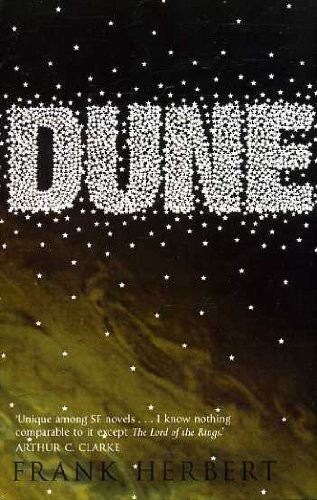
Deluxe Edition
Recommended by Tim Ferriss, Sophie Bakalar, Ev Williams and 24 others
Set on the desert planet Arrakis, Dune immerses you in a feudal interstellar empire where noble houses clash over the universe's most valuable resource. The narrative weaves political intrigue, messianic prophecy, and ecological adaptation. Useful if you want a richly realized world that explores power and human potential. Its density and extensive inner monologue can feel slow; you may find yourself bogged down by the sheer volume of invented terminology and the occasional preachy tone.
Why Some Companies Make The Leap and Others Don't
Recommended by Nat Eliason, Ev Williams, Max Levchin and 20 others
The book walks you through a multi-year research project, contrasting spectacular performers with mere survivors. The core insight—that sustained greatness hinges on disciplined people, thought, and action—feels sturdy and actionable. But the book’s arguments rely on retrospective selection of companies, and some of its darlings later faltered. You’ll find a methodical, almost monastic tone that rewards patience but may irritate if you want contemporary, tech-savvy lessons.
Timeless lessons on wealth, greed, and happiness
The Sunday Times Number One Bestseller. Over 10 million copies sold around the world. The original book from Morgan Housel, the New York Times and Sunday Times bestselling author of Same As Ever and The Art of Spending Money.
Ten Reasons We're Wrong About the Worldand Why Things Are Better Than You Think
Readers of Factfulness: Ten Reasons We're Wrong About the World--and Why Things Are Better Than You Think seeking engagement for all reading groups can gain further insight with this essential resource as a guide to aid your discussions.
The Story of Success
Recommended by Bill Gates, Sophie Bakalar, Changpeng Zhao and 19 others
Outliers reads like a series of captivating magazine profiles, each unpacking a hidden factor behind extraordinary success. Gladwell’s storytelling makes complex social science accessible, but the book relies on memorable anecdotes rather than offering systematic analysis. The book explores the idea that individual brilliance rarely stands alone; success often hinges on birth dates, cultural legacies, and the 10,000-hour rule. While the narratives are strong, the book overgeneralizes from handpicked examples, leaving skeptical readers questioning the conclusions. It’s most useful as a conversation starter about luck and timing—annoying if you want a rigorous academic treatise or a how-to guide for your own life.
40th Anniversary Edition (Oxford Landmark Science)
Dawkins delivers evolution as you've never seen it—genes as calculating strategists, organisms as disposable vehicles. The prose is lucid and urgent, building a case that feels both electrifying and claustrophobic. Most useful: the vivid logic of kin selection and the birth of the meme concept. Limitation: the relentless certainty can wear you down, and some analogies strain under pressure. You'll likely emerge with a sharper worldview, though maybe a bit resentful of being so thoroughly cornered.
La historia de Buda novelada por Herman Hesse.Esta novela, ambientada en la India tradicional, relata la vida de Siddhartha, un hombre para quien el camino de la verdad pasa por la renuncia y la comprensión de la unidad que subyace en todo lo existente.
Unlocking the Power of Sleep and Dreams
The book reads like an engaging, urgent lecture from a sleep evangelist, blending accessible science with alarming anecdotes. Its strength is the deep dive into how sleep shapes memory, health, and creativity, making a strong case for its non-negotiable importance. The downside: tone can become preachy and overdrawn, with some claims feeling overstated, leaving you either inspired to protect your slumber or weary of the relentless doom-mongering.
What the New Science of Psychedelics Teaches Us About Consciousness, Dying, Addiction, Depression, and Transcendence
“Pollan keeps you turning the pages . . . cleareyed and assured.” —New York Times A #1 New York Times Bestseller, New York Times Book Review 10 Best Books of 2018, and New York Times Notable Book A brilliant and brave investigation into the medical and scientific revolution…
Reading the Tao Te Ching feels like stepping into a mist of aphorisms—some luminous, some frustratingly opaque. Its usefulness lies in its ability to unsettle fixed thinking and open a space for intuitive understanding. But it will likely annoy you if you expect clear definitions or systematic philosophy; many verses feel contradictory, deliberately evading logical grasp. You’ll either find it a profound companion or an exercise in poetic vagueness.

The Fountainhead is a philosophical novel following architect Howard Roark’s defiance of social convention. Reading it feels like absorbing a passionate manifesto through melodrama: long speeches and symbolic characters deliver Ayn Rand’s objectivist ideas. Its strength is fueling personal integrity; its weakness is didacticism that flattens nuance and becomes a lecture. The prose is grandiose, the pacing uneven, but for those who click, it’s an electrifying defense of individualism.
The Power of Introverts in a World That Can't Stop Talking
Quiet draws on studies, case studies, and personal stories to argue for the power of introverts in an extrovert-idealizing society. It validates introverted traits and explains how to leverage them, from the classroom to the boardroom. The mix of anecdotes and studies keeps it engaging, though the argument can feel repetitively one-sided. Extroverts might feel unfairly cast as the problem, and the ‘introvert manifesto’ tone occasionally overwhelms the nuance. The book lands hardest when it advocates for structural changes rather than just individual pep talks.
Why We Do What We Do in Life and Business
NEW YORK TIMES BESTSELLER • This instant classic explores how we can change our lives by changing our habits. NAMED ONE OF THE BEST BOOKS OF THE YEAR BY The Wall Street Journal • Financial Times In The Power of Habit, award-winning business reporter Charles Duhigg takes us to…
An Amazon Best Book of the Month For readers of Atul Gawande, Andrew Solomon, and Anne Lamott, a profoundly moving, exquisitely observed memoir by a young neurosurgeon faced with a terminal cancer diagnosis who attempts to answer the question What makes a life worth living?

Recommended by Marc Andreessen, Sahil Lavingia, Tobi Lutke and 16 others
A lean, engineering-minded manual that treats management as a craft of maximizing leverage. Grove explains how to run meetings, set objectives, and evaluate performance with a clarity that cuts through typical business jargon. The book's value is its direct, actionable frameworks—like the "breakfast factory" analogy—that make abstract management tasks concrete. But its 1980s context shows: the examples feel dated, and it assumes a manufacturing mindset that may not translate smoothly to today's creative or remote teams. Some sections read like an internal memo—either refreshingly honest or disappointingly dry.
EXTREMELY USEFULL! IN EVERY chapter of this book, mention has been made of the money-making secret which has made fortunes for more than five hundred exceedingly wealthy men whom I have carefully analyzed over a long period of years.
The Disciplined Pursuit of Less
Recommended by Tim Ferriss, Ankur Warikoo, Ryan Holiday and 18 others
This book offers a mindset shift: do less but better by cutting out the non-essential. It reads like a series of anecdotes and motivational nudges, with occasional diagrams. The useful part is its core idea—daring to focus only on what truly matters—and the practical ways it helps you identify and eliminate the trivial. However, it can feel repetitive, stretching one elegant concept across 200 pages. If you're already a minimalist or want fresh insight, you'll find it thin; if you're drowning in busyness, it might be the reset you need.
A Novel
Recommended by Nat Eliason, Bill Gates, Ev Williams and 18 others
The Martian pins you inside astronaut Mark Watney's head as he thinks his way through disaster, rationing potatoes and hacking life support with relentless ingenuity. It reads as a cascade of near-misses and resource math, delivered in a voice that’s equal parts engineer and wisecrack. This is problem-solving fiction at its most accessible—every obstacle becomes a mental puzzle. The limitation: Watney's unflagging cheer and the pattern of crisis-solution can start to feel repetitive, leaving little room for internal darkness or the messier realities of isolation.
Adventures of a Curious Character
This book reads like an evening with a hyper-curious, prankish genius who can't stop telling you about his exploits. Feynman's stories—from cracking safes at Los Alamos to picking up art just to see if he could—are often hilarious and always driven by a relentless itch to figure things out. You'll enjoy it most if you're here for the mischief, not the science. Annoyingly, the anecdotes sometimes feel like a victory lap, and the lack of structure may leave you wondering where it's all heading.
Powerful Lessons in Personal Change
A leading management consultant outlines seven organizational rules for improving effectiveness and increasing productivity at work and at home.
Recommended by Aaron Rodgers, James Clear, Lex Fridman and 14 others
Sun Tzu's ideas on survival and success have been read across the world for centuries. Today they can still be applied to business, politics and life. The Art of War demonstrates how to win without conflict.
Shackleton's Incredible Voyage
Recommended by Nat Eliason, Ryan Holiday, Max Levchin and 15 others
This reconstruction of Shackleton's doomed Antarctic expedition reads like a real-time logbook, immersing you in the men's daily struggle against ice, starvation, and despair. The value is unfiltered immediacy: you feel every moment of monotony and peril as they did. The limitation is its strict reliance on contemporaneous sources—it rarely steps back for analysis or emotional interiority, so depth comes from cumulative detail rather than introspection. If you want to know what they did, not necessarily how they felt inside, this delivers.
Lessons Learned from 15 Years as CEO of the Walt Disney Company
Recommended by Tim Ferriss, Bill Gates, The Rational Walk and 15 others
This is Iger’s personal account of his tenure as Disney’s CEO, structured around principles he used to navigate massive decisions—buying Pixar, Marvel, Lucasfilm, and launching Disney+. The writing is polished and conversational, like an extended interview, offering vivid boardroom anecdotes and leadership maxims. The book’s strength is its clear, experience-based lessons on managing creative talent, handling crises, and thinking long-term. However, it can feel self-congratulatory and gloss over failures; it’s more a victory lap than a warts-and-all confession. If you’re looking for a balanced critique of corporate culture, you’ll find this one-sided.
The Japanese Phenomenon That Shows You How to Change Your Life and Achieve Real Happiness
Recommended by Derek Sivers, Ankur Warikoo, Marc Andreessen and 15 others
"[This book] demonstrates how to unlock the power within yourself to be the person you truly want to be. Using the theories of Alfred Adler, one of the three giants of twentieth century psychology, The Courage to Be Disliked follows an illuminating conversation between a…
Making Smarter Decisions When You Don't Have All the Facts
Recommended by Derek Sivers, Marc Andreessen, Max Levchin and 16 others
Duke blends poker stories with decision-science insights, arguing that life’s outcomes are a mix of skill and luck. She uses high-stakes poker hands and controversial sports calls to illustrate how we misjudge luck. The book reads like a long, chatty seminar: part cognitive bias 101, part personal memoir. You’ll likely pick up the habit of asking “What were the odds?” before judging decisions. The main friction: it rehashes common cognitive biases without novel depth, and its repetitive structure can wear thin. Its strength is teaching decision-outcome separation, but the poker metaphors can feel forced.
A Novel
Ready Player One reads like a videogame in book form: fast, immersive, and packed with 80s pop-culture puzzles. Its main draw is a high-stakes treasure hunt set in a richly detailed virtual universe, appealing to anyone who loves geek culture. The constant references, however, can feel like a pop-culture checklist rather than storytelling, and characters remain thin. If you're not already steeped in early video games, movies, and music, you'll miss much of the fun. It's a nostalgic thrill ride that sacrifices depth for pure, unapologetic escapism.
What the Rich Teach their Kids About Money
Recommended by Ankur Warikoo, Nate O'Brien, Anthony Pompliano and 18 others
This book reads like a personal parable, contrasting two father figures to drive home a mindset shift about money. The strength is its memorable simplicity: it challenges the “go to school, get a job, and save” script, urging financial literacy and asset-building. However, the advice is vague, repetitive, and built on unverifiable anecdotes rather than a concrete system. You’ll find no step-by-step plans or worksheets here—just big ideas that either light a fire or leave you wanting more substance. It’s best as a narrative thought-starter, not an instruction manual. Its enduring popularity hinges on its emotional appeal and counterintuitive framing, not its instructional depth.
Revised and Expanded Edition
Recommended by Tobi Lutke, Ran Segall, Nir Eyal and 15 others
Don Norman turns everyday frustrations into a detective story about flawed design. You’ll start seeing doors, switches, and software through new eyes, armed with concepts like affordances and feedback. The examples are vivid and often entertaining, but the academic prose and repetitive structures can make the book feel more like a lecture than a manual. It can sharpen your design intuition, but it won’t teach you to design anything yourself—annoying if you expected a how-to guide.
Marketing and Selling HighTech Products to Mainstream Customers
A practical guide to marketing disruptive technology products, built around the idea that many innovations stall between early adopters and the mainstream. Moore offers a clear playbook for identifying a beachhead segment and dominating it before expanding. The advice is direct and actionable, but the case studies—mostly from enterprise hardware and software of the 1990s—can feel distant. Still, the underlying segmentation logic remains useful for anyone navigating the messy middle of tech adoption.
The Fates of Human Societies
Why has human history unfolded so differently across the globe? And what can it teach us about our current crisis? Jared Diamond puts the case that geography and biogeography, not race, moulded the contrasting fates of Europeans, Asians, Native Americans, sub-Saharan Africans,…
The Tactics, Routines, and Habits of Billionaires, Icons, and World-Class Performers
Jocko Willink covered this book in "Jocko Podcast" Ep. 50

An Inquiry Into Values
You’re strapped into a mental road trip where every roadside repair becomes a treatise on Quality. Pirsig’s narrator, haunted by a former self, meditates on technology and madness while struggling to connect with his son. The useful part: it rewires how you think about craft, reason, and what makes something ‘good.’ The frustration: the ride keeps stopping for lectures that some will find illuminating and others self-indulgent; the thin characters and dated psychology may leave you stranded.
Some Instructions on Writing and Life
Bird by Bird is the bible of writing guides – a wry, honest, down-to-earth book that has never stopped selling since it was first published in the United States in the 1990s. Bestselling novelist and memoirist Anne Lamott distils what she’s learned over years of trial and error.
Tesla, SpaceX, and the Quest for a Fantastic Future
South African born Elon Musk is the renowned entrepreneur and innovator behind PayPal, SpaceX, Tesla, and SolarCity. Musk wants to save our planet; he wants to send citizens into space, to form a colony on Mars; he wants to make money while doing these things; and he wants us…

The Definitive Book on Value Investing. A Book of Practical Counsel (Revised Edition)
This is a slow, meticulous read that builds value investing principles through exhaustive stock comparisons and portfolio theory. The core useful insight is Graham’s emphasis on a margin of safety and treating market fluctuations as your servant, not your guide. The limitation: many examples hail from the 1940s-1970s, making the data feel irrelevant, and the prose can be pedantic, stretching patience. You'll get the timeless philosophy but must wade through antiquated case studies.
Why Good People Are Divided by Politics and Religion
Using the elephant-and-rider metaphor, Haidt explains years of moral psychology research in an accessible way. It shines when revealing the emotional roots of our moral convictions, clarifying why political and religious debates feel so intractable. Its limitation: the later sections on politics and religion can feel repetitive, and the evolutionary group-selection ideas may strain credibility for some. Still, it's a valuable read for anyone who wants to understand, not just win, arguments.
"In a world where freedom is a forgotten word, and individuality is sacrificed for stability, humanity has traded its soul for comfort and control. Genetic engineering determines your fate, and the soothing grip of 'soma' keeps you blissfully compliant.
Recommended by Bill Gates, Ev Williams, Sophie Bakalar and 12 others
'If you really want to hear about it, the first thing you'll probably want to know is where I was born and what my lousy childhood was like, and how my parents were occupied and all before they had me, and all that David Copperfield kind of crap, but I don't feel like going into…
How NonConformists Move the World
Originals reads like a breezy tour of social science studies packaged as career advice. The book’s value is how it upends tidy beliefs—like why the most original thinkers also tend to be chronic procrastinators or how speaking up late in a meeting can be more persuasive. The limitation is its overreliance on startup legends and lab findings that can feel like a grab bag of interesting anecdotes rather than a cohesive manual. If you’ve read modern business books, some insights will feel repackaged.
Recommended by Bill Gates, Sophie Bakalar, Ev Williams and 12 others
In The Great Gatsby F. Scott Fitzgerald captures the flamboyance, the carelessness and the cruelty of the wealthy during America's Jazz Age.
A Novel
Project Hail Mary opens with an amnesiac astronaut waking on a spaceship, and the fun is watching him piece together his identity and apocalyptic mission. The book is driven by scientific puzzles—every crisis met with experimentation and calculation—but it’s buoyed by a warmth that arrives with an unexpected alien ally. What works best is a clever, can’t-put-it-down plot laced with optimism. The limitation: for some readers, the frequent, detailed science asides will feel like lectures that stall the momentum.
A Memoir of the Craft
The author shares his insights into the craft of writing and offers a humorous perspective on his own experience as a writer.
Recommended by Tim Ferriss, Nat Eliason, Sadia Badiei and 12 others
The Magic of Thinking Big reads like a stream of practical, no-nonsense advice from a 1950s business coach. It is packed with short chapters, anecdotes, and direct admonitions to build confidence, stop making excuses, and take action. The useful part is its ability to jolt you out of complacency and make you believe you can achieve more. The limiting part is its dated flavor—stories and language that may feel out of touch, and advice that repeats the same core ideas without deepening them. You’ll absorb it quickly, but some may find it too simplistic for today’s world.
The novel opens with a scene introducing Prince Stepan Arkadyevich Oblonsky ("Stiva"), a Moscow aristocrat and civil servant who has been unfaithful to his wife Darya Alexandrovna ("Dolly").
Recommended by Derek Sivers, Ryan Holiday, Aubrey Marcus and 15 others
The 48 Laws of Power reads like a Machiavellian field guide, each chapter laying out a law with historical examples, observations, and reversals. The book’s strength is its unflinching look at realpolitik across centuries, helping you spot and deploy power moves in boardrooms and beyond. However, its amoral stance and repetitive structure can grate, and Greene’s selective historical anecdotes may oversimplify complex situations. It’s best absorbed in small doses; reading straight through feels like a cynical binge.
Why Violence Has Declined
Recommended by Bill Gates, Stewart Brand, Mark Manson and 10 others
'The most inspiring book I've ever read' Bill Gates, 2017 'A brilliant, mind-altering book ... Everyone should read this astonishing book' Guardian 'Will change the way you see the world' Daily Mail Shortlisted for the Samuel Johnson Prize 2012 Wasn't the twentieth century the…
An Antidote to Chaos
OVER TEN MILLION COPIES SOLD #1 INTERNATIONAL BESTSELLER What are the most valuable things that everyone should know? Acclaimed clinical psychologist Jordan B Peterson has influenced the modern understanding of personality, and now he has become one of the world's most popular…
This is a classic tale of humanity awash in totalitarianism. A farm is taken over by its overworked, mistreated animals. With flaming idealism and stirring slogans, they set out to create a paradise of progress, justice, and equality.
Recommended by Nat Eliason, Stewart Brand, Simon Sinek and 7 others
“There are at least two kinds of games,” states James P. Carse as he begins this extraordinary book. “One could be called finite; the other infinite.
How Google, Bono, and the Gates Foundation Rock the World with OKRs
INSTANT NEW YORK TIMES BESTSELLER 'For anyone interested in becoming a better manager' - Bill Gates -------- Discover the revolutionary movement behind the explosive growth of Intel, Google, Amazon and Uber.
The Wit and Wisdom of Charles T. Munger
Recommended by Tim Ferriss, Bill Gates, Marc Andreessen and 14 others
Poor Charlie's Almanack collects eleven talks by Berkshire Hathaway's Charlie Munger, spanning 1986 to 2007. It’s less a cohesive book than a series of sharp, often rambling reflections on business, psychology, and life. The main value lies in his multidisciplinary 'mental models' approach—pulling from multiple fields to make better decisions. However, the format can feel repetitive, and Munger’s curmudgeonly tone and frequent tangents into historical anecdotes may try the patience of readers seeking clean, actionable frameworks.
In twenty-one bite-sized lessons, Yuval Noah Harari explores what it means to be human in an age of bewilderment. How can we protect ourselves from nuclear war, ecological cataclysms and technological disruptions?
Rules for Focused Success in a Distracted World
Newport argues that sustained, distraction-free concentration is the competitive edge of the modern economy, then lays out rules for cultivating it. The book reads like a manifesto with tactical advice, but its first half is a lengthy justification that may feel redundant if you already value focus. The main limitation: the advice assumes a level of professional autonomy many readers lack—if your job requires constant responsiveness, the prescriptions can seem impractical or guilt-inducing.
The Case for Reason, Science, Humanism, and Progress
Reading feels like sitting through a TED talk with endless slides: each chapter serves up a dataset on declining violence, rising wealth, spreading education. The book shines as a reference for the facts behind the 'good news' narrative. But the monotone optimism wears thin; Pinker rarely stops to acknowledge that the same data can be read as evidence of persistent inequality. The argument gets preachy, and if you need nuance, you'll find the brush too broad. It's a heady dose of progress boosterism that makes its case at full volume, but the cheerful tone clashes with the gravity some readers will feel about real-world problems.
An Autobiography
#1 NATIONAL BESTSELLER • Far more than a superb memoir about the highest levels of professional tennis, Open is the engrossing story of a remarkable life.
Hitchhiker's Guide to the Galaxy, Book 1
Recommended by Tim Ferriss, Ankur Warikoo, Sahil Lavingia and 14 others
Reading this is like being cornered by a sharp, slightly manic friend who’s decided to explain why the meaning of life is 42. The joy comes from Douglas Adams’s relentless wit, playful footnotes, and a universe where bureaucracy is a cosmic horror. The main limitation is that the plot often meanders into extended comedy sketches; if you’re waiting for a conventional payoff, you’ll be left adrift. Its strength is also its weakness: the jokes never stop, but stakes barely register.
A Guide to Spiritual Enlightenment
Tolle delivers a series of teachings urging you to detach from past and future to find peace in the present moment. The writing is calm and direct, often circling back to the same core message: you are not your mind. Some passages feel like gentle revelations, while others repeat until they lose punch. The absence of concrete techniques may leave you stranded if you need more than insight. It works best as a contemplative slow read rather than a linear argument.
Recommended by Max Levchin, Keith Rabois, Reid Hoffman and 11 others
It reads like a compressed operating manual from a C-suite insider. The value is in its pattern-matching across hypergrowth companies—concrete advice on hiring executives, managing boards, and internationalization, often boiled down into bullet lists. The book wastes no words, which suits a time-pressed founder, but the absence of narrative or failure cases makes it feel more like a reference doc than a strong read. It’s most useful when you’re in a specific bind and need a fast, opinionated direction.
ONE OF THE WORLD'S MOST FAMOUS BOOKS AND WINNER OF THE NOBEL PRIZE FOR LITERATURE _______________________________ 'Many years later, as he faced the firing squad, Colonel Aureliano Buendía was to remember that distant afternoon when his father took him to discover ice' Gabriel…
"[The best document] in human history that [is] the product of a committee." - Christopher Hitchens
A sprawling, inside-out memoir that moves from a Chicago childhood to two terms as First Lady, delivered in a careful, personable voice. The most useful part is witnessing the constant recalibration of identity — as a lawyer, mother, and public figure — without tidy resolutions. The first third sinks into granular family and education scenes that test patience; the book often feels like it’s tidying its own story for posterity rather than pulling you into raw drama.

From Darwin to Munger, 3rd Edition
A dense but wide-ranging compilation that walks through cognitive biases, evolutionary legacies, and mental shortcuts from philosophy, biology, and investing. The book’s useful part is the sheer variety of examples and concepts it surfaces—it can sharpen your suspicion of your own reasoning. Its limitation is a buffet-without-digestion feel: many ideas are introduced but not deeply integrated, and it lacks hands-on exercises. Readers looking for a systematic practice may leave with more awareness than actionable method.

As Told to Alex Haley
Recommended by Ryan Holiday, Jason Calacanis, John Fish and 9 others
With its first great victory in the landmark Supreme Court decision Brown v. Board of Education in 1954, the civil rights movement gained the powerful momentum it needed to sweep forward into its crucial decade, the 1960s.
The Ancient Art of Stoic Joy
Recommended by Tim Ferriss, Derek Sivers, Marc Andreessen and 10 others
Straightforward unpacking of Stoicism for modern anxieties. Irvine explains techniques like negative visualization with patient clarity, and early on makes contentment feel like a trainable skill. The middle drags as he repeats methods, and ancient Roman examples may alienate readers wanting contemporary stories. The book’s stern, no-excuses approach can grate if you’re already overwhelmed by life’s structural burdens, but its disciplined methods provide a bracing mental reset for those ready to adopt a more detached inner posture.
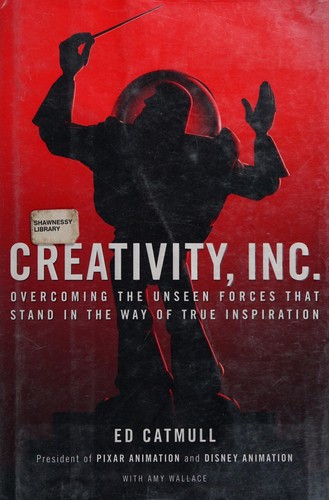
Overcoming the Unseen Forces That Stand in the Way of True Inspiration
Reading like a backstage memoir from Pixar’s co-founder, this book interweaves company history with a management philosophy built on protecting creative candor. The most useful part is its granular depiction of the Braintrust—a meeting designed to surface honest, sometimes brutal feedback without hierarchy—and the postmortem culture that forced the studio to learn from failure. However, the advice is inseparable from Pixar’s exceptional circumstances, and the book can feel like a polished victory lap. If you’re looking for replicable tactics rather than inspirational narrative, the anecdote-driven approach may leave you wanting more concrete tools.
The Timeless Art of Turning Trials into Triumph
Recommended by Tim Ferriss, Derek Sivers, Aubrey Marcus and 10 others
A brisk, anecdote-driven pep talk drawing on Stoic philosophy and historical figures to argue that obstacles can be turned to advantage. The three-part framework (Perception, Action, Will) is memorable and easy to apply. Each chapter presents a historical figure, a setback, and a lesson, which makes it feel like a series of blog posts stitched together. Useful for a quick motivational boost to reframe a frustrating situation. However, the cherry-picked stories and repetitive phrasing offer little nuance, and you'll likely notice that every figure is sanitized into a one-dimensional hero. It works best as a one-sitting skim, not a deep read.

How Great Leaders Inspire Everyone to Take Action
Recommended by Alfred Lin, Tony Hsieh, Richard Branson and 11 others
The inspiring, life-changing bestseller by the author of LEADERS EAT LAST and TOGETHER IS BETTER In 2009, Simon Sinek started a movement to help people become more inspired at work, and in turn inspire their colleagues and customers.
The Definitive Guide to Getting the Right Things Done (Harperbusiness Essentials)
Drucker delivers a lecture-like, unsentimental read that strips effectiveness to five habits: tracking time, focusing outward, leveraging strengths, prioritizing ruthlessly, and systematic decisions. The useful part is redirecting attention from busyness to contribution—a productivity audit for your role. The annoyance: dated offices, a dry tone, and some oversimplification of how to apply ideas in flat, digital organizations. Still, a clarifying jolt if you need a mental reset, but many will find it too abstract for immediate action.
How Prosperity Evolves (P.S.)
Matt Ridley, acclaimed author of the classics Genome and Nature via Nurture, turns from investigating human nature to investigating human progress.
One of the New York Times 100 Best Books of the 21st Century Winner of the Pulitzer Prize for Fiction A post-apocalyptic classic set in a burned-out America. A father and his young son walk under a darkened sky, heading slowly for the coast.
Secrets and Lies in a Silicon Valley Startup
NATIONAL BESTSELLER • The gripping story of Elizabeth Holmes and Theranos—one of the biggest corporate frauds in history—a tale of ambition and hubris set amid the bold promises of Silicon Valley, rigorously reported by the prize-winning journalist.

Negotiating As If Your Life Depended On It
Chris Voss delivers a blunt, story-driven playbook drawn from years as an FBI hostage negotiator. You'll learn field-tested techniques like mirroring, labeling, and calibrated questions, all illustrated through kidnappings and standoffs. The value is raw, psychological leverage you can apply immediately to business or personal disputes. The limitation: Voss's world is adversarial, and his advice can feel manipulative or out of place in everyday relationships. Without an interest in his crime stories, the book may also feel repetitive.
The Political Genius of Abraham Lincoln
Goodwin weaves letters and diaries into an immersive story, dropping you into the 1860s surrounded by ambitious characters jockeying for power. Her strength is making Lincoln’s political acumen—his ability to read men, soothe egos, and wait—feel urgent and instructive. The downside: at nearly 900 pages, the chronicle of cabinet infighting can become a slog, and the near-hagiographic tone may grate if you want a more critical lens.

Reading 'Ego Is the Enemy' feels like sitting through a stern but engaging lecture where history's cautionary tales are used to hammer home a single point. The book's value lies in its vivid, memorable examples—from generals to CEOs—that make the dangers of pride tangible. However, the lesson can grow repetitive; the same idea is restated across similar stories, and the tone sometimes veers into moralizing. If you're looking for nuance or actionable exercises, this isn't it.
How to Nurture the Crazy Ideas That Win Wars, Cure Diseases, and Transform Industries
Safi Bahcall mixes historical vignettes with a central metaphor from physics—phase transitions—to explain why companies often kill their own breakthroughs. The idea distinguishes 'loonshots' (radical ideas) from 'franchise' (core business) and shows how structure inhibits innovation. The most useful part is recognizing organizational 'immune responses' that attack early-stage thinking. But the physics-heavy lens can feel strained, and the book leans more toward diagnosis than concrete, get-started-today tactics. If you come for a crisp how-to manual, you'll likely leave frustrated.
A Path to Profits, Passion, and Purpose
Recommended by Tim Ferriss, Ev Williams, Tony Hsieh and 8 others
Pay brandnew employees $2,000 to quit Make customer service the responsibility of the entire companynot just a department Focus on company culture as the #1 priority Apply research from the science of happiness to running a business Help employees growboth personally and…
Recommended Most Recommended Books by Tim Ferriss
Tim Ferriss recommends 12 books on this list. See all book recommendations by Tim Ferriss
Recommended Most Recommended Books by Nat Eliason
Nat Eliason recommends 11 books on this list. See all book recommendations by Nat Eliason
Recommended Most Recommended Books by Derek Sivers
Derek Sivers recommends 9 books on this list. See all book recommendations by Derek Sivers
Most Recommended Books: common questions
- What are the most recommended most recommended books?
- Man's Search for Meaning, Sapiens and The Hard Thing About Hard Things are the most recommended most recommended books on BookMentions, ranked by how many people recommended them.
- Who recommends most recommended books?
- Tim Ferriss, Nat Eliason, Derek Sivers and Ankur Warikoo are among the people who recommend books on this list. Each name links to their full set of book recommendations.
- Which of these most recommended books should I read first?
- Man's Search for Meaning is the most recommended here with 90 recommendations, which makes it the safest place to start.
Built from recommendation data, category signals, and source-backed book records. Use this list as a starting point; open any book to see proof, context, and Amazon options where available.
Explore more lists
Best Classic Books
58 booksClassic books, including titles recommended by Jordan Peterson, Sophie Bakalar and Emma Watson. Most recommended here: 1984, Anna Karenina and Brave New World.
Best Memoirs
71 booksThe memoirs people recommend most — lives told by the person who lived them, from sport and science to business and war. Each pick links back to who recommended it and where they said it.
Best World History Books
18 booksWorld History books, including titles recommended by Raoul Pal, Stewart Brand and Jocko Willink. Most recommended here: Guns, Germs, and Steel, The Lessons of History and The Ascent of Money.
Best Historical Fiction Books
751 booksHistorical fiction recommended most by novelists and historians — war, empire, family sagas and the novels that send you to the history afterwards. With a source behind every pick.
Best Socialism Books
26 booksSocialism books, including titles recommended by Noam Chomsky, Emma Watson and Richard Branson. Most recommended here: 1984, A People's History of the United States and Homage to Catalonia.
Best Self Help Books
28 booksSelf Help books, including titles recommended by Derek Sivers, Nat Eliason and Tim Ferriss. Most recommended here: Man's Search for Meaning, Atomic Habits and The Alchemist.
About this list
This list aggregates books that appear in public recommendation sources, reader-interest signals, and category data. Books are ranked by their position from the source list; recommendation counts and ratings are shown where available. Open any book to see source-backed recommendation proof, editorial context, and Amazon options — the per-book detail page is where the trust signals live.
Recommended books by person: who recommends most recommended books
Books recommended by the people below. Open a profile to see everything they recommend, with the source behind each pick.
- Tim FerrissBooks recommended by Tim: 12

- Nat EliasonBooks recommended by Nat: 11
- Derek SiversBooks recommended by Derek: 9

- Ankur WarikooBooks recommended by Ankur: 8
- Bill GatesBooks recommended by Bill: 8

- Ev WilliamsBooks recommended by Ev: 7

- Marc AndreessenBooks recommended by Marc: 7

- Sophie BakalarBooks recommended by Sophie: 7
- Max LevchinBooks recommended by Max: 6
- Ryan HolidayBooks recommended by Ryan: 6

- Changpeng ZhaoBooks recommended by Changpeng: 5

- Sahil LavingiaBooks recommended by Sahil: 5