Why Good People Are Divided by Politics and Religion
by Jonathan Haidt
More Recommenders
American comedian and podcaster

founder of The Collaborative Lab
Recommended by 12 notable people, including Marc Andreessen and Ali Abdaal
Check price on AmazonRecommended by public sources
Amazon availability
See customer reviews on Amazon →Using the elephant-and-rider metaphor, Haidt explains years of moral psychology research in an accessible way. It shines when revealing the emotional roots of our moral convictions, clarifying why political and religious debates feel so intractable. Its limitation: the later sections on politics and religion can feel repetitive, and the evolutionary group-selection ideas may strain credibility for some. Still, it's a valuable read for anyone who wants to understand, not just win, arguments.
This summary and audience guidance are AI-generated from the book's description and its recommendation history, last updated May 2026. Recommendations, quotes and sources elsewhere on this page come from published material and are not generated.
NEW YORK TIMES BESTSELLER • The #1 bestselling author of The Anxious Generation and acclaimed social psychologist challenges conventional thinking about morality, politics, and religion in a way that speaks to conservatives and liberals alike—a “landmark contribution to humanity’s understanding of itself” (The New York Times Book Review). Drawing on his twenty-five years of groundbreaking research on moral psychology, Jonathan Haidt shows how moral judgments arise not from reason but from gut feelings. He shows why liberals, conservatives, and libertarians have such different intuitions about right and wrong, and he shows why each side is actually right about many of its central concerns.…
Difficulty:hard
Length:450 pages (Medium)
Check formats, pricing, and availability options for Kindle, physical print, or audiobooks directly.
View available editions on AmazonWhy recommended
Recommended by 21 sources and appears in Most Recommended Books, Spirituality, and Politics.
People and public figures who have recommended this book.
Recommendation proof is sourced from public posts, interviews, reading lists, and cited references.
Check formats, pricing, and availability options directly on Amazon.
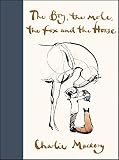
Consider The Boy, the Mole, the Fox and the Horse by Charlie Mackesy. Recommended by 8 sources.
“Soft-spoken, heavily illustrated fable built from short dialogues and watercolor sketches. Each spread pairs a spare line of text with a loose drawing, so the pleasure is visual and aphoristic rather than narrative; readers collect felt-true sentences more than plot. Most useful when you want quick consolations, a prompt for conversation with a child, or a pause during a rough day. Limiting if you want sustained argument, concrete advice, or tightly plotted storytelling: the repetition of gentleness can feel sentimental or thin after a while.”
Each recommendation is collected from a public source — interviews, articles, or curated lists — and linked to its original URL. Books with many verifiable recommendations from respected people rank higher.