
Books Recommended by Investors
Category75 books curated1,645 recommendations totalBooks recommended by venture capitalists, hedge fund managers and angel investors — valuation, market history, risk and decision-making under uncertainty. Each with the source behind it.
Where to start: Books Recommended by Investors recommended most often
Recommended books, ranked by how many of the 383 people behind this list recommended each one.
- 1Man's Search for Meaning90 recommendations · recommended by Naval Ravikant, Nat Eliason and Derek Sivers
- 2Sapiens88 recommendations · recommended by Keith Rabois, Derek Sivers and Matt Mullenweg
- 3Zero to One54 recommendations · recommended by Keith Rabois, Derek Sivers and Patrick O'Shaughnessy
- 4The Hard Thing About Hard Things54 recommendations · recommended by Keith Rabois, Ankur Warikoo and Marc Andreessen
- 5Thinking, Fast and Slow53 recommendations · recommended by Naval Ravikant, Bill Gates and Marc Andreessen
Recommended by Naval Ravikant, Nat Eliason, Derek Sivers and 37 others
Psychiatrist Viktor Frankl recounts his survival in Nazi death camps, weaving together brutal details and insights about finding meaning in suffering. The first half is a gripping, horrifying memoir; the second half shifts to a philosophical framework he calls logotherapy. The book’s core appeal is its raw demonstration that even in hell, a sense of purpose can keep you alive. Some readers find the shift jarring and the later sections abstract. The ideas resonate best if you accept the spiritual overtones and personal anecdotes over a more analytical approach.
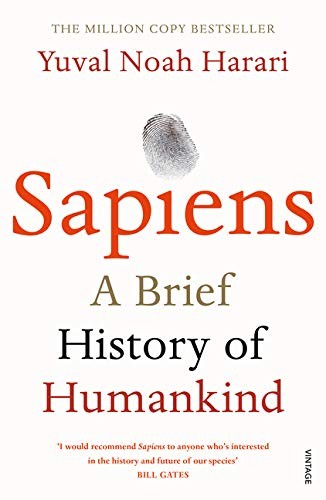
A Brief History of Humankind
Recommended by Keith Rabois, Derek Sivers, Matt Mullenweg and 31 others
A sweeping narrative history of Homo sapiens from the Cognitive Revolution to the present. Harari argues that what makes humans dominate the planet is not physical strength but collective myths: shared fictions like money, religion, and nations that allow millions of strangers to cooperate. The book moves fast through 70,000 years, making big, debatable claims about agriculture, empire, capitalism, and happiness. It is less a history textbook than a provocative essay in chronological form, and best read as an argument rather than a reference.
Notes on Startups, or How to Build the Future
Recommended by Keith Rabois, Derek Sivers, Patrick O'Shaughnessy and 21 others
A contrarian manifesto on building startups that create new categories rather than competing in existing ones. Thiel draws from PayPal and his investments in Facebook to argue that the best businesses are monopolies that avoid competition entirely. The book revolves around one question—What important truth do you believe that very few people agree with?—and uses it to interrogate everything from sales culture to the energy crisis. It reads like a sharp dinner argument with someone often right in a way that is uncomfortable to admit.
Building a Business When There Are No Easy Answers
Recommended by Keith Rabois, Ankur Warikoo, Marc Andreessen and 20 others
A blunt, conversational tour through the worst parts of building a company. Horowitz shares personal stories from his own startup failures and recoveries, offering practical wisdom on layoffs, pivots, CEO loneliness, and managing when times are bad. The value is in the honest, experience-based insight you won't get from business school. The limitation is its narrow focus on venture-backed tech startups—if you're not in that world, some advice may feel irrelevant. Reads like a wise mentor telling you what nobody else will.
Recommended by Naval Ravikant, Bill Gates, Marc Andreessen and 22 others
This book walks you through two mental systems—one fast and intuitive, the other slow and analytical—using a cascade of clever experiments that reveal how easily we're fooled. The value lies in naming and demonstrating dozens of cognitive biases that affect decisions from shopping to investing. it reads as dense, rich, and often fascinating, but the parade of similar studies can feel repetitive, and the lack of practical shortcuts may frustrate readers wanting quick fixes. Some later research has questioned a few findings, which can gnaw at your trust as you go.
Life and Work
Recommended by Naval Ravikant, Ankur Warikoo, David Cancel and 15 others
This is Dalio’s operating manual for life and work—part memoir, part handbook. He distills his hedge fund’s culture into repeatable 'principles' for radical transparency and systematic thinking. The useful part is the concrete algorithms for error-logging and group decision-making; the annoying part is the cultish fervor around his own brilliance and the implication that his way scales universally. It reads like a boss’s extended memo, sometimes riveting, sometimes eye-rolling.

Escape 95, Live Anywhere, and Join the New Rich
Recommended by Daniel Pink, Eric Weinstein, David Heinemeier Hansson and 11 others
On the "books read" section of Ev Williams' GoodReads profile.
An Easy & Proven Way to Build Good Habits & Break Bad Ones
Recommended by Keith Rabois, Derek Sivers, Tim Ferriss and 44 others
A practical system for behavior change built on the idea that tiny, incremental improvements compound into remarkable results. Clear avoids motivation-based advice and instead focuses on environment design, habit stacking, and identity-based change—making good habits frictionless while making bad ones inconvenient. The book is structured in short, actionable chapters, each ending with a cheat sheet, so you can skip around based on what you are trying to fix. It cares less about the psychology of why you procrastinate and more about the engineering of making procrastination harder.
A Roman emperor's private journal in which Marcus Aurelius wrestles with anger, mortality, duty, and the difficulty of staying calm while running an empire. The book is a collection of fragmentary reflections organized into twelve short books, each a conversation with himself about not being derailed by other people's frustrations or the fear of death. It reads like a Stoic devotional—repetitive by design, since Marcus was reminding himself of the same truths daily. There is no plot, no system. There is a man trying not to lose himself to the weight of the job.

A Novel
Recommended by Nat Eliason, Tim Ferriss, Reid Hoffman and 7 others
The “brilliantly realized” (The New York Times Book Review) breakthrough novel from visionary author Neal Stephenson, a modern classic that predicted the metaverse and inspired generations of Silicon Valley innovators Hiro lives in a Los Angeles where franchises line the freeway…

Why Generalists Triumph in a Specialized World
Recommended by Keith Rabois, Vinod Khosla, Daniel Pink and 8 others
Range reads like a persuasive, anecdote-rich long-form article: full of vivid stories about late bloomers and generalists who thrived in complex fields. It’s liberating if you’ve ever felt pressured to specialize early, but the repetition across chapters can drag, and the practical takeaways are thin. You’ll feel vindicated in your curiosity, but you might also wonder what, exactly, to do with that freedom.
The New Psychology of Success
Recommended by Bill Gates, Derek Sivers, Mark Manson and 11 others
Carol Dweck unpacks the distinction between fixed and growth mindsets, illustrating how beliefs about ability can shape learning, resilience, and achievement. The core idea is instantly applicable—shifting from 'I'm not good at this' to 'I'm not good at this yet'—and Dweck supports it with vivid schoolroom, sports, and boardroom stories. That same accessibility also becomes the book's friction point: the concept gets padded with repetitive case studies, and some readers will chafe at its relentless optimism and reliance on anecdotal evidence.
The foundational and wildly popular go-to resource for influence and persuasion—a renowned international bestseller, with over 5 million copies sold—now revised adding: new research, new insights, new examples, and online applications.
Recommended by Patrick O'Shaughnessy, James Clear, Josh Waitzkin and 6 others
La historia de Buda novelada por Herman Hesse.Esta novela, ambientada en la India tradicional, relata la vida de Siddhartha, un hombre para quien el camino de la verdad pasa por la renuncia y la comprensión de la unidad que subyace en todo lo existente.
Unlocking the Power of Sleep and Dreams
Recommended by Bill Gates, Trevor Ncube, Bryan Johnson and 10 others
The book reads like an engaging, urgent lecture from a sleep evangelist, blending accessible science with alarming anecdotes. Its strength is the deep dive into how sleep shapes memory, health, and creativity, making a strong case for its non-negotiable importance. The downside: tone can become preachy and overdrawn, with some claims feeling overstated, leaving you either inspired to protect your slumber or weary of the relentless doom-mongering.
What the New Science of Psychedelics Teaches Us About Consciousness, Dying, Addiction, Depression, and Transcendence
Recommended by Naval Ravikant, Bill Gates, Vinod Khosla and 18 others
“Pollan keeps you turning the pages . . . cleareyed and assured.” —New York Times A #1 New York Times Bestseller, New York Times Book Review 10 Best Books of 2018, and New York Times Notable Book A brilliant and brave investigation into the medical and scientific revolution…
Reading the Tao Te Ching feels like stepping into a mist of aphorisms—some luminous, some frustratingly opaque. Its usefulness lies in its ability to unsettle fixed thinking and open a space for intuitive understanding. But it will likely annoy you if you expect clear definitions or systematic philosophy; many verses feel contradictory, deliberately evading logical grasp. You’ll either find it a profound companion or an exercise in poetic vagueness.
Why We Do What We Do in Life and Business
Recommended by Naval Ravikant, Nat Eliason, Daniel Pink and 8 others
NEW YORK TIMES BESTSELLER • This instant classic explores how we can change our lives by changing our habits. NAMED ONE OF THE BEST BOOKS OF THE YEAR BY The Wall Street Journal • Financial Times In The Power of Habit, award-winning business reporter Charles Duhigg takes us to…

Recommended by Keith Rabois, Marc Andreessen, Sahil Lavingia and 15 others
A lean, engineering-minded manual that treats management as a craft of maximizing leverage. Grove explains how to run meetings, set objectives, and evaluate performance with a clarity that cuts through typical business jargon. The book's value is its direct, actionable frameworks—like the "breakfast factory" analogy—that make abstract management tasks concrete. But its 1980s context shows: the examples feel dated, and it assumes a manufacturing mindset that may not translate smoothly to today's creative or remote teams. Some sections read like an internal memo—either refreshingly honest or disappointingly dry.
Adventures of a Curious Character
Recommended by Naval Ravikant, Bill Gates, Ev Williams and 8 others
This book reads like an evening with a hyper-curious, prankish genius who can't stop telling you about his exploits. Feynman's stories—from cracking safes at Los Alamos to picking up art just to see if he could—are often hilarious and always driven by a relentless itch to figure things out. You'll enjoy it most if you're here for the mischief, not the science. Annoyingly, the anecdotes sometimes feel like a victory lap, and the lack of structure may leave you wondering where it's all heading.
Things That Gain from Disorder (Incerto)
Recommended by Naval Ravikant, Nat Eliason, Derek Sivers and 21 others
Taleb’s Antifragile reads like a sprawling, anecdote-heavy monologue from a sharp but abrasive dinner guest. The core idea — that some systems thrive on volatility — is genuinely useful for rethinking risk in careers, investing, and health. However, the book is padded with digressions, personal vendettas, and broad generalizations. You’ll gain a memorable mental model but likely lose patience with the self-congratulatory tone and absence of empirical rigor. Best absorbed in small doses, not as a coherent argument.
The Three-Body Problem, Book 1
Recommended by Bill Gates, Matt Mullenweg, Andrew Chen and 11 others
This novel starts as a mystery rooted in a woman’s tragic experience during China’s Cultural Revolution, then spirals into a high-concept alien contact story built on intricate physics and game theory. The useful part lies in its audacious imagination: a three-body solar system, a virtual reality game, and a shocking revelation about humanity’s place in the universe. The limiting part may be its cold, analytical style and flat characters; emotion takes a backseat to ideas, and the scientific digressions can feel like lectures. It’s a slow burn that rewards intellectual curiosity but might alienate those craving warmth or narrative immediacy.
Second Edition
Recommended by Nat Eliason, Matt Mullenweg, David Kadavy and 7 others
Taleb blends philosophy, finance, and personal anecdotes to argue that rare, high-impact events shape our world far more than we admit. The useful part is the mental shift away from overreliance on models and predictions. The annoying part: a rambling structure, frequent rants against ‘imbeciles,’ and an authorial voice so self-satisfied that it sometimes overshadows the ideas. You may finish it feeling sharper about uncertainty or just worn down by the attitude.
The Tactics, Routines, and Habits of Billionaires, Icons, and World-Class Performers
Recommended by Naval Ravikant, Daniel Pink, George Raveling and 8 others
Jocko Willink covered this book in "Jocko Podcast" Ep. 50

A Brief History of Tomorrow
Recommended by Naval Ravikant, Bill Gates, Derek Sivers and 14 others
The Wit and Wisdom of Charles T. Munger
Recommended by Matt Mullenweg, Shane Parrish, Terrance McArthur and 5 others
Poor Charlie's Almanack collects eleven talks by Berkshire Hathaway's Charlie Munger, spanning 1986 to 2007. It’s less a cohesive book than a series of sharp, often rambling reflections on business, psychology, and life. The main value lies in his multidisciplinary 'mental models' approach—pulling from multiple fields to make better decisions. However, the format can feel repetitive, and Munger’s curmudgeonly tone and frequent tangents into historical anecdotes may try the patience of readers seeking clean, actionable frameworks.
An Antidote to Chaos
Recommended by Naval Ravikant, Nat Eliason, Marc Andreessen and 11 others
OVER TEN MILLION COPIES SOLD #1 INTERNATIONAL BESTSELLER What are the most valuable things that everyone should know? Acclaimed clinical psychologist Jordan B Peterson has influenced the modern understanding of personality, and now he has become one of the world's most popular…
Hitchhiker's Guide to the Galaxy, Book 1
Recommended by Ankur Warikoo, Kelly Vaughn, Jack Edwards and 5 others
Reading this is like being cornered by a sharp, slightly manic friend who’s decided to explain why the meaning of life is 42. The joy comes from Douglas Adams’s relentless wit, playful footnotes, and a universe where bureaucracy is a cosmic horror. The main limitation is that the plot often meanders into extended comedy sketches; if you’re waiting for a conventional payoff, you’ll be left adrift. Its strength is also its weakness: the jokes never stop, but stakes barely register.
A Guide to Spiritual Enlightenment
Recommended by Steve Burns, Justin Kan, Jen Sincero and 8 others
Tolle delivers a series of teachings urging you to detach from past and future to find peace in the present moment. The writing is calm and direct, often circling back to the same core message: you are not your mind. Some passages feel like gentle revelations, while others repeat until they lose punch. The absence of concrete techniques may leave you stranded if you need more than insight. It works best as a contemplative slow read rather than a linear argument.
Recommended by Keith Rabois, Brian Armstrong, David Cancel and 11 others
It reads like a compressed operating manual from a C-suite insider. The value is in its pattern-matching across hypergrowth companies—concrete advice on hiring executives, managing boards, and internationalization, often boiled down into bullet lists. The book wastes no words, which suits a time-pressed founder, but the absence of narrative or failure cases makes it feel more like a reference doc than a strong read. It’s most useful when you’re in a specific bind and need a fast, opinionated direction.

From Darwin to Munger, 3rd Edition
Recommended by David Cancel, Shane Parrish, Andrew Wilkinson and 5 others
A dense but wide-ranging compilation that walks through cognitive biases, evolutionary legacies, and mental shortcuts from philosophy, biology, and investing. The book’s useful part is the sheer variety of examples and concepts it surfaces—it can sharpen your suspicion of your own reasoning. Its limitation is a buffet-without-digestion feel: many ideas are introduced but not deeply integrated, and it lacks hands-on exercises. Readers looking for a systematic practice may leave with more awareness than actionable method.

The Journey Beyond Yourself
Recommended by Ryan Hoover and Scooter Braun
How Prosperity Evolves (P.S.)
Recommended by Bill Gates, Marc Andreessen, Peter Adeney and 5 others
Matt Ridley, acclaimed author of the classics Genome and Nature via Nurture, turns from investigating human nature to investigating human progress.
How to Nurture the Crazy Ideas That Win Wars, Cure Diseases, and Transform Industries
Recommended by Keith Rabois, Bill Gates, Daniel Pink and 7 others
Safi Bahcall mixes historical vignettes with a central metaphor from physics—phase transitions—to explain why companies often kill their own breakthroughs. The idea distinguishes 'loonshots' (radical ideas) from 'franchise' (core business) and shows how structure inhibits innovation. The most useful part is recognizing organizational 'immune responses' that attack early-stage thinking. But the physics-heavy lens can feel strained, and the book leans more toward diagnosis than concrete, get-started-today tactics. If you come for a crisp how-to manual, you'll likely leave frustrated.
How to Get Things Right
Recommended by Keith Rabois, Tim Ferriss, Matt D’Avella and 2 others
THE GAME-CHANGING BOOK FROM THE BESTSELLING AUTHOR OF BEING MORTAL Today we find ourselves in possession of stupendous know-how, which we willingly place in the hands of the most highly skilled people.
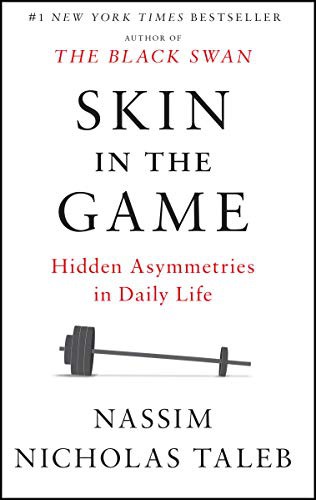
Hidden Asymmetries in Daily Life
Recommended by Naval Ravikant, Ankur Warikoo, Marc Andreessen and 6 others
Taleb delivers a rambunctious, often scornful manifesto insisting that morality, economics, and knowledge all require 'skin in the game'— personal risk. The book is bracing, scattered with historical anecdotes, mathematical asides, and sharp critiques of experts who bear no consequences for failures. It genuinely reframes how you think about accountability and fairness. However, its tone can grate: it's repetitive, self-congratulatory, and dismissively bulldozes opposing views. It's useful as a provocation, but anyone wanting a tempered, systematic argument will be frustrated.

A True Story of High Finance, Murder, and One Man's Fight for Justice
Recommended by Keith Rabois, Eric Jorgenson, Chris Sacca and 3 others
[Red Notice] does for investing in Russia and the former Soviet Union what Liars Poker did for our understanding of Salomon Brothers, Wall Street, and the mortgagebacked securities business in the 1980s.
An Eternal Golden Braid
Recommended by Naval Ravikant, Nat Eliason, Sahil Lavingia and 9 others
A scientist and mathematician explores the mystery and complexity of human thought processes from an interdisciplinary point of view
Explanations That Transform the World
Recommended by Naval Ravikant, Nat Eliason, Ryan Shea and 2 others
Deutsch builds a case that all progress—scientific, moral, political—stems from creating good explanations. The book reads like a series of interconnected arguments defending this idea with clarity and intellectual optimism, covering physics, biology, computing, and politics. Its useful part is a coherent, ambitious framework that challenges prevailing pessimism. The limitation is that the arguments can become repetitive, applying the same principles across many domains without much empirical grounding, and the confident tone may irritate readers who prefer more tentative philosophy.
The Power of Passion and Perseverance
Recommended by Keith Rabois, Derek Sivers, Ankur Warikoo and 10 others
Angela Duckworth unpacks why persistent passion matters more than innate talent, weaving her own journey as a psychologist with case studies from spelling bees to Navy SEALs. The book's strength lies in its clear, memorable framing of grit as a key driver of achievement. However, it can feel repetitive, circling the same core idea with varying examples, and those already skeptical of pop psychology may find the stories thin. Useful as a foundation for rethinking effort, but not a step-by-step manual.

My Philosophy of Leadership
Recommended by Vinod Khosla, Drew Houston and Ryan Sarver
Bill Walsh delivers his philosophy that excellence emerges from meticulous preparation and unyielding standards, not from obsessing over wins. Drawing from his 49ers tenure, the book is part memoir, part leadership sermon. The useful core is its relentless push for personal accountability and daily discipline. But the constant football context can feel exclusionary: if you don't care about specific games or position battles, the anecdotes blur into repetition, and the coaching-heavy lens may frustrate those seeking transferable, non-sports examples.

Thoughts on the Nature of Mass Movements
Recommended by Mark Manson, George Raveling, Susan J. Fowler and 2 others
Hoffer writes with the blunt force of a dockworker-philosopher, offering aphoristic insights that feel both unsettling and clarifying. Mass movements—religious, political, revolutionary—are stripped to psychological springs: frustration, self-surrender, a hunger for certainty. Memorable lines land on every page, but the argument relies on broad, forceful claims, not evidence. It's most useful as a provocation, less so as a rigorous framework. The tone can feel coldly reductionist, and it lacks cultural or historical specificity, making some claims feel recycled rather than deepened.
Public Discourse in the Age of Show Business
Recommended by Keith Rabois, Nat Eliason, Matt Mullenweg and 10 others
What happens when media and politics become forms of entertainment? As our world begins to look more and more like Orwell's 1984, Neil's Postman's essential guide to the modern media is more relevant than ever.

Recommended by Eric Weinstein, Tai Lopez, Jordan Peterson and 3 others
Winner of the Pulitzer prize in 1974 and the culmination of a life's work, The Denial of Death is Ernest Becker's brilliant and impassioned answer to the "why" of human existence.

Recommended by Naval Ravikant, David Heinemeier Hansson, Mohnish Pabrai and 1 other
An Inquiry into the Nature and Causes of the Wealth of Nations, generally referred to by its shortened title The Wealth of Nations, is the magnum opus of the Scottish economist and moral philosopher Adam Smith.

The Prophet is Gibran's best known work. The Prophet has been translated into over 108 different languages, making it one of the most translated books in history, and it has never been out of print.
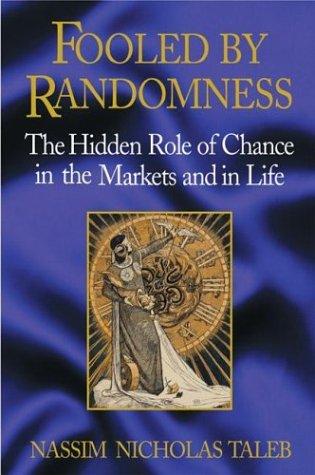
The Hidden Role of Chance in Life and in the Markets (Incerto)
Recommended by Naval Ravikant, Nat Eliason, Matt Mullenweg and 11 others
A brisk, abrasive tour through the ways randomness governs our lives, especially in markets. Taleb uses trading anecdotes and historical examples to dismantle the illusion of skill and expose survivorship bias. The book’s strength is its relentless skepticism, but it also indulges in repetition and self-congratulation. You’ll find sharp insights if you can tolerate the author’s combative tone and disregard for systematic exposition. Philosophical tangents on probability and stoicism are discussion-friendly, but the book offers no practical roadmap, only a cautionary lens. It’s a humbling read that sticks with you, though you might skim the self-indulgent parts.

A Guide to Wealth and Happiness
Recommended by Naval Ravikant, Ankur Warikoo, Ana Fabrega and 2 others
This collection of short, pithy maxims reads like scrolling through a curated Twitter feed. The advice on leverage, specific knowledge, and internal peace is distilled into memorable one-liners that are easy to revisit. However, the lack of narrative arc or substantive depth can make it feel repetitive and superficial, especially if you’re at burnout or seeking detailed how-tos. It works best as a quick-hit inspiration source, not a linear read. Entrepreneurs and self-improvement enthusiasts will dog-ear the wisdom, but anyone craving a coherent argument will put it down halfway.
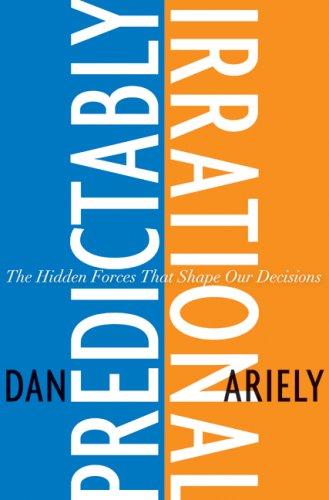
The Hidden Forces That Shape Our Decisions
Recommended by Derek Sivers, Scott Young, Tom Bilyeu and 4 others
Ariely walks you through a parade of clever experiments that expose the irrational forces behind everyday decisions. The anecdotes are breezy and often funny, making complex ideas feel like party conversation. It’s useful for spotting your own blind spots, but the rapid-fire stories can blur together, and the pop-science style may underwhelm if you want rigorous academic depth.

Being Human in the Age of Artificial Intelligence,
Recommended by Bill Gates, Barack Obama, Book Recommendations (43 Books) and 3 others
Life 3.0 reads like a long, wide-ranging conversation with a physicist who loves big if-then thought experiments. The useful part is its panoramic sweep across possible AI futures—from job automation to cosmic colonization—forcing you to consider timelines you might otherwise avoid. The limitation is that the speculative breadth often outruns the depth; chapters can feel meandering, and some readers will find the cosmic-scale scenarios too detached from practical concerns, making it hard to ground in real urgency.

Recommended by Nat Eliason, Tim Ferriss, Mark Manson and 7 others
This 120-page book reads like a series of distilled lectures from the authors of the monumental 'Story of Civilization.' Durant offers bold, aphoristic reflections on geography, biology, morality, economics, and war, seeking timeless patterns. What works best is a provocative, big-picture perspective that can reframe how you think about history. The limitation is its mid-century lens: assumptions about race, gender, and human nature now feel archaic, and the grand, unsupported claims will frustrate readers wanting careful, source-cited analysis. Useful as a philosophical spark, not a rigorous guide.
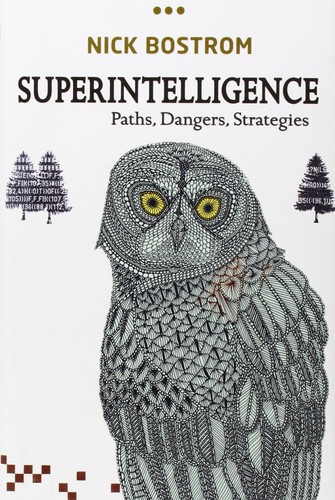
Paths, Dangers, Strategies
Recommended by Naval Ravikant, Sam Harris, Geoffrey Miller and 2 others
A New York Times bestseller Superintelligence asks the questions: What happens when machines surpass humans in general intelligence Will artificial agents save or destroy us Nick Bostrom lays the foundation for understanding the future of humanity and intelligent life.The human…

Mastering the Transition to the Information Age
Recommended by Naval Ravikant, Ryan Shea, Erik Torenberg and 1 other
The Sovereign Individual reads like a dense, broad forecast of how digital technology will shift power from governments to individuals. It’s most useful as a provocative framework for thinking about financial independence and societal transformation. However, its grand historical theories and unwavering certainty can feel more like libertarian sermon than balanced analysis. The book is dated in parts, with some predictions that haven’t materialized, and its tone may alienate readers who prefer nuance over broad declarations.

Recommended by Scott Young, Sahil Lavingia, Patrick Collison and 3 others
Abridged by Lowell Blair.Set against the turbulent years of the Napoleonic era, Alexandre Dumas's thrilling adventure story is one of the most widely read romantic novels of all time.
Stories
Recommended by Naval Ravikant, Tim Ferriss, Mark Manson and 5 others
From an awardwinning science fiction writer (whose short story "The Story of Your Life" was the basis for the Academy Awardnominated movie Arrival), the longawaited new collection of stunningly original, humane, and already celebrated short storiesThis muchanticipated second…

The Power Of Myth launched an extraordinary resurgence of interest in Joseph Campbell and his work. A preeminent scholar, writer, and teacher, he has had a profound influence on millions of people.
The Evolution of a Reckless Upstart into a Visionary Leader
Recommended by Keith Rabois, Bill Gates, Marc Andreessen and 6 others
Now in paperback, the #1 New York Times bestselling biography of how Steve Jobs became the most visionary CEO in history. With a new foreword by Marc Andreessen and new afterword by the authors, Becoming Steve Jobs is a narrative on Jobs' evolution as a manager and leader, as an…

The Untold Story of How Salesforce.com Went from Idea to Billion-Dollar Company-and Revolutionized an Industry
Recommended by Keith Rabois, David Cancel, Tony Robbins and 4 others
How did salesforce.com grow from a start up in a rented apartment into the world's fastest growing software company in less than a decade For the first time, Marc Benioff, the visionary founder, chairman and CEO of salesforce.com, tells how he and his team created and used new…
The Foundations of Business Strategy
Recommended by Keith Rabois, Packy McCormick, Daniel Ek and 3 others
What are the secrets to making a company enduringly valuable 7 Powers breaks fresh ground by constructing a comprehensive strategy toolset that is easy for you to learn, communicate and quickly apply.Drawing on his decades of experience as a business strategy advisor, active…

Or, a Young Lady's Illustrated Primer (Bantam Spectra Book)
Recommended by Ev Williams, Geoffrey Miller and Peter Thiel
The Diamond Age is a sprawling narrative that marries a Victorian-influenced future with nano-tech ubiquity, following Nell's coming-of-age guided by a stolen interactive 'Primer.' The reading is rich with inventive concepts and cultural satire, but also prone to digressions and side plots that fracture momentum. Its useful part is the Primer as a thought experiment about personalized education and consciousness. The limitation: Stephenson's ambition often outpaces his narrative cohesion, leaving threads dangling and the ending feeling more intellectual than emotionally satisfying.

The Shortest and Surest Way to Understand Basic Economics
Recommended by Naval Ravikant, Marc Andreessen, Changpeng Zhao and 4 others
Hazlitt patiently walks through dozens of economic fallacies—from broken windows to tariffs—using a single core principle: good economics considers both the seen and unseen. The prose is clear, and each short chapter feels like a mental exercise. But the relentless repetition of the same argumentative structure can feel like a sermon, and examples from the 1940s will strike some readers as musty. Best as a starting point for logical thinking, not a comprehensive economics course.

A Classic Text on the Japanese Way of the Sword (Shambhala Library)
Recommended by Naval Ravikant, Nat Eliason, Tim Ferriss and 6 others
Reading this feels like deciphering a warrior’s notebook: brief, circular, and dense with metaphor. Its value lies in reframing competition as an inner discipline—timing, rhythm, and perception become tactical tools. The limitation is its archaic, repetitive structure; practical application requires slow, patient extraction. Useful if you enjoy mining philosophical gold from cryptic texts, but likely maddening if you want clear, step-by-step methods.

The Biology of Humans at Our Best and Worst
Recommended by Keith Rabois, Bill Gates, Marc Andreessen and 6 others
The New York Times bestseller"It's no exaggeration to say that Behave is one of the best nonfiction books I've ever read." David P.
If you're going to read one book about Hollywood, this is the one.As cofounder of Creative Artists Agency (CAA), Michael Ovitz earned a reputation for ruthless negotiation, brilliant strategy and fierce loyalty to his clients.
Big Ideas From The Computer Age
Recommended by Keith Rabois, Derek Sivers, Ev Williams and 4 others
Paul Graham collects opinionated, conversational essays about programming, design, and startups, written from a coder-founder viewpoint. Many passages turn a programmer's job into a creative pursuit, with pithy metaphors and candid stories that make abstract ideas feel concrete. Best value: quick, provocative reframes that nudge how you think about building software and starting companies. Main limitation: essays vary in depth and repeat themes; long digressions sometimes read like personal manifesto rather than practical guidance. Treat it as idea-sparking reading, not an instruction manual.

The Universal Laws of Life, Growth, and Death in Organisms, Cities, and Companies
Recommended by Matt Mullenweg, Vinod Khosla, Tobi Lutke and 3 others
Recommended by Naval Ravikant, Nat Eliason, Mahatma Gandhi and 5 others
Prince Arjuna faced a dilemma that many face sooner or laterwhether to take action that is necessary yet morally ambiguous. The difference is that Arjuna's action was to wage war against his own family. With the armies arrayed, Arjuna loses his nerve.

A Spiritual Guide to Mastering the Challenges of Women, Work, and Sexual Desire
Recommended by Naval Ravikant, Ali Abdaal and Jen Sincero
The mark of a true classic is that it becomes more relevant with the passage of time Twenty years ago, David Deida wrote The Way of the Superior Man share lessons on how a man can grow spiritually while passionately tussling with the challenges of women, work, and sexual desire,…

Towns, Buildings, Construction (Center for Environmental Structure Series)
Recommended by Naval Ravikant, Sriram Krishnan, Gretchen Rubin and 1 other

Recommended by Cleo Abram, Patrick Collison and Delian Asparouhov
Ted Chiang's first published story, "Tower of Babylon," won the Nebula Award in 1990. Subsequent stories have won the Asimov's SF Magazine reader poll, a second Nebula Award, the Theodore Sturgeon Memorial Award, and the Sidewise Award for alternate history. He won the John W.

And Why It Flourishes in Freedom
Recommended by Naval Ravikant, James Altucher, Sriram Krishnan and 5 others
Innovation is the main event of the modern age, the reason we experience both dramatic improvements in our living standards and unsettling changes in our society.

The Prehistoric Origins of Modern Sexuality
Recommended by Naval Ravikant, Anna Kendrick and Aubrey Marcus
Sex at Dawn reads as a spirited, argumentative synthesis of anthropology, history, and popular science that challenges the default narrative of innate sexual monogamy. Its useful contribution lies in assembling cross-cultural examples and provocative counterexamples that force readers to question assumptions about pair-bonding and sexual norms. Its chief limitation is a tendency toward selective evidence and rhetorical flourish; readers seeking a cautiously balanced, heavily sourced academic treatment will find the tone polemical and some claims overstated. Repetition and combative language sometimes wear thin.
Recommended Books Recommended by Investors by Naval Ravikant
Naval Ravikant recommends 30 books on this list. See all book recommendations by Naval Ravikant
Recommended Books Recommended by Investors by Keith Rabois
Keith Rabois recommends 18 books on this list. See all book recommendations by Keith Rabois
Recommended Books Recommended by Investors by Nat Eliason
Nat Eliason recommends 15 books on this list. See all book recommendations by Nat Eliason
Books Recommended by Investors: common questions
- What are the most recommended books recommended by investors?
- Man's Search for Meaning, Sapiens and Zero to One are the most recommended books recommended by investors on BookMentions, ranked by how many people recommended them.
- Who recommends books recommended by investors?
- Naval Ravikant, Keith Rabois, Nat Eliason and Bill Gates are among the people who recommend books on this list. Each name links to their full set of book recommendations.
- Which of these books recommended by investors should I read first?
- Man's Search for Meaning is the most recommended here with 90 recommendations, which makes it the safest place to start.
Built from recommendation data, category signals, and source-backed book records. Use this list as a starting point; open any book to see proof, context, and Amazon options where available.
Explore more lists
Best Cognitive Psychology Books
15 booksCognitive Psychology books, including titles recommended by Derek Sivers, Naval Ravikant and Ev Williams. Most recommended here: Thinking, Fast and Slow, Grit and The Untethered Soul.
Best Social Psychology Books
16 booksSocial Psychology books, including titles recommended by Derek Sivers, Ev Williams and Naval Ravikant. Most recommended here: Thinking, Fast and Slow, The Power of Habit and Quiet.
Best Startup Books
79 booksThe startup books founders recommend most — lean methodology, venture funding, product-market fit and hiring. Plus the company histories worth reading before you repeat them.
Best Investing Books
83 booksA curated collection of the highest-rated investing books, covering value investing, behavioral finance, portfolio theory, and personal wealth building.
Best Productivity Books
22 booksThe productivity books people actually finish and apply — focus, habits, time management and attention. Ranked by how many people recommended each title, with the source behind every pick.
Best Economics Books
69 booksEconomics books, including titles recommended by Bill Gates, Marc Andreessen and Naval Ravikant. Most recommended here: Thinking, Fast and Slow, Factfulness and Guns, Germs, and Steel.
About this list
This list aggregates books that appear in public recommendation sources, reader-interest signals, and category data. Books are ranked by their position from the source list; recommendation counts and ratings are shown where available. Open any book to see source-backed recommendation proof, editorial context, and Amazon options — the per-book detail page is where the trust signals live.
Recommended books by person: who recommends books recommended by investors
Books recommended by the people below. Open a profile to see everything they recommend, with the source behind each pick.
- Naval RavikantBooks recommended by Naval: 30

- Keith RaboisBooks recommended by Keith: 18

- Nat EliasonBooks recommended by Nat: 15
- Bill GatesBooks recommended by Bill: 12

- Derek SiversBooks recommended by Derek: 11

- Ankur WarikooBooks recommended by Ankur: 10
- Marc AndreessenBooks recommended by Marc: 10

- Matt MullenwegBooks recommended by Matt: 10
- Tim FerrissBooks recommended by Tim: 10

- Mark MansonBooks recommended by Mark: 9
- Ev WilliamsBooks recommended by Ev: 8

- Vinod KhoslaBooks recommended by Vinod: 8
