BookMentionsBookMentions
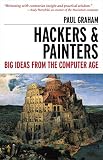
Hackers & Painters
13 recommendations

Hackers & Painters

Big Ideas From The Computer Age

by Paul Graham

Derek SiversRyan HolidayEv Williams
Recommended by Derek Sivers, Ryan Holiday +
5 more

More Recommenders

Ev Williams

Co-founder of Twitter and Medium

A collection of essays from one of the best. Loosely about intelligence, entrepreneurship, Programming,, and questioning norms. Many brilliant ideas and insights. | A printed version of some of his essays.

Source →
Keith Rabois

Technology executive and investor

A collection of essays from one of the best. Loosely about intelligence, entrepreneurship, Programming,, and questioning norms. Many brilliant ideas and insights. | A printed version of some of his essays.

Source →
P

A collection of essays from one of the best. Loosely about intelligence, entrepreneurship, Programming,, and questioning norms. Many brilliant ideas and insights. | A printed version of some of his essays.

Source →
B

A collection of essays from one of the best. Loosely about intelligence, entrepreneurship, Programming,, and questioning norms. Many brilliant ideas and insights. | A printed version of some of his essays.

Source →
N

A collection of essays from one of the best. Loosely about intelligence, entrepreneurship, Programming,, and questioning norms. Many brilliant ideas and insights. | A printed version of some of his essays.

Source →

Recommended by 7 notable people, including Derek Sivers and Ryan Holiday

Check price on Amazon

Proof-backed recommendation

Amazon availability

Reading Profile

Difficulty:hard
Themes:programming-as-art vs engineering-as-processspeed-of-iteration vs long-term polish

Should I read this?

Paul Graham collects opinionated, conversational essays about programming, design, and startups, written from a coder-founder viewpoint. Many passages turn a programmer's job into a creative pursuit, with pithy metaphors and candid stories that make abstract ideas feel concrete. Best value: quick, provocative reframes that nudge how you think about building software and starting companies. Main limitation: essays vary in depth and repeat themes; long digressions sometimes read like personal manifesto rather than practical guidance. Treat it as idea-sparking reading, not an instruction manual.

Read this if...

  • a senior software engineer deciding whether to leave steady employment to start a company — useful for quick, perspective-shaping arguments about priorities and culture before taking the plunge
  • a product designer or UX lead at an early-stage startup trying to argue for craft alongside velocity — provides language and metaphors that defend aesthetic and creative work in a technical context
  • an indie hacker or solo-builder shipping side projects who needs contrarian encouragement to release, iterate, and value taste over checklist-style instructions

Skip this if...

  • annoying if you prefer rigor and citations — essays are anecdote-heavy and rarely provide data or step-by-step guidance
  • you'll likely put it down when long digressions harden into personal manifesto; patience runs out mid-essay if you want concise, tightly edited prose
  • lose interest if you want code-level techniques, reproducible recipes, or hands-on exercises — no practical walkthroughs or structured tutorials

"The computer world is like an intellectual Wild West, in which you can shoot anyone you wish with your ideas, if you're willing to risk the consequences. " from Hackers & Painters: Big Ideas from the Computer Age, by Paul GrahamWe are living in the computer age, in a world increasingly designed and engineered by computer programmers and software...

Before You Buy

Reading Specifications

Difficulty:hard

Themes:
programming-as-art vs engineering-as-processspeed-of-iteration vs long-term polishindividual-hacker creativity vs team-scale systems

Audience Fit

Recommended for:
  • a senior software engineer deciding whether to leave steady employment to start a company — useful for quick, perspective-shaping arguments about priorities and culture before taking the plunge
  • a product designer or UX lead at an early-stage startup trying to argue for craft alongside velocity — provides language and metaphors that defend aesthetic and creative work in a technical context
  • an indie hacker or solo-builder shipping side projects who needs contrarian encouragement to release, iterate, and value taste over checklist-style instructions
Not ideal if you want:
  • annoying if you prefer rigor and citations — essays are anecdote-heavy and rarely provide data or step-by-step guidance
  • you'll likely put it down when long digressions harden into personal manifesto; patience runs out mid-essay if you want concise, tightly edited prose
  • lose interest if you want code-level techniques, reproducible recipes, or hands-on exercises — no practical walkthroughs or structured tutorials

Check formats, pricing, and availability options for Kindle, physical print, or audiobooks directly.

View available editions on Amazon

Key themes

programming-as-art vs engineering-as-processspeed-of-iteration vs long-term polishindividual-hacker creativity vs team-scale systemsstartups-as-experimentation vs established-busine…

Why recommended

Recommended by 13 sources and appears in Entrepreneur, Books Recommended by Ryan Holiday, and Books Recommended by Investors.

Recommended by notable people

People and public figures who have recommended this book.

Recommendation Signals

Recommendation proof is sourced from public posts, interviews, reading lists, and cited references.

B

Brian Armstrong

A collection of essays from one of the best. Loosely about intelligence, entrepreneurship, Programming,, and questioning norms. Many brilliant ideas and insights. | A printed version of some of his essays.
View sources (4) ▾80%

Appears In

Accidental Presidents
Try This Instead

Not sure if this is the right fit?

Consider Accidental Presidents by Jared Cohen. Recommended by 10 sources.

Accidental Presidents offers eight narrative portraits of men who succeeded to the U.S. presidency without election, using anecdote-rich scenes and readable context to show how personality and circumstance interact with office power. It’s strongest as a set of self-contained stories that make succession stakes concrete for non-specialist readers; it does not prioritize dense archival argument or exhaustive methodology, so expect some interpretive generalizations and repeated themes across cases. Use it for fast historical orientation rather than scholarly deep-dives.

Similar books

How recommendation signals are reviewed

Each recommendation is collected from a public source — interviews, articles, or curated lists — and linked to its original URL. Books with many verifiable recommendations from respected people rank higher.

Hackers & Painters

Hackers & Painters

View on Amazon →