
Best Economics Books
Topic List69 books curated325 recommendations totalEconomics books, including titles recommended by Bill Gates, Marc Andreessen and Naval Ravikant. Most recommended here: Thinking, Fast and Slow, Factfulness and Guns, Germs, and Steel.
Where to start: Economics Books recommended most often
Recommended books, ranked by how many of the 181 people behind this list recommended each one.
- 1Thinking, Fast and Slow53 recommendations · recommended by Bill Gates, Marc Andreessen and Naval Ravikant
- 2Factfulness28 recommendations · recommended by Bill Gates, Alfred Lin and Jason Furman
- 3Guns, Germs, and Steel22 recommendations · recommended by Bill Gates, Raoul Pal and Simon Sinek
- 4The Rational Optimist18 recommendations · recommended by Bill Gates, Marc Andreessen and Money Mustache
- 5The Wealth Of Nations14 recommendations · recommended by Naval Ravikant, Noam Chomsky and Linda Yueh
Recommended by Bill Gates, Marc Andreessen, Naval Ravikant and 45 others
This book walks you through two mental systems—one fast and intuitive, the other slow and analytical—using a cascade of clever experiments that reveal how easily we're fooled. The value lies in naming and demonstrating dozens of cognitive biases that affect decisions from shopping to investing. it reads as dense, rich, and often fascinating, but the parade of similar studies can feel repetitive, and the lack of practical shortcuts may frustrate readers wanting quick fixes. Some later research has questioned a few findings, which can gnaw at your trust as you go.
Ten Reasons We're Wrong About the Worldand Why Things Are Better Than You Think
Recommended by Bill Gates, Alfred Lin, Jason Furman and 21 others
Readers of Factfulness: Ten Reasons We're Wrong About the World--and Why Things Are Better Than You Think seeking engagement for all reading groups can gain further insight with this essential resource as a guide to aid your discussions.
The Fates of Human Societies
Recommended by Bill Gates, Raoul Pal, Simon Sinek and 13 others
Why has human history unfolded so differently across the globe? And what can it teach us about our current crisis? Jared Diamond puts the case that geography and biogeography, not race, moulded the contrasting fates of Europeans, Asians, Native Americans, sub-Saharan Africans,…
How Prosperity Evolves (P.S.)
Recommended by Bill Gates, Marc Andreessen, Money Mustache and 12 others
Matt Ridley, acclaimed author of the classics Genome and Nature via Nurture, turns from investigating human nature to investigating human progress.

Recommended by Naval Ravikant, Noam Chomsky, Linda Yueh and 9 others
An Inquiry into the Nature and Causes of the Wealth of Nations, generally referred to by its shortened title The Wealth of Nations, is the magnum opus of the Scottish economist and moral philosopher Adam Smith.

How Little Things Can Make a Big Difference
Recommended by Simon Sinek, Ev Williams, Joe Rogan and 5 others
Gladwell builds an accessible narrative around the idea that social epidemics have tipping points, shaped by a few key people, sticky messaging, and context. The reading feels like a series of well-told stories—Hush Puppies, crime waves, children’s television—each framed as a puzzle with a clear solution. It’s useful as a conversation starter and a new way to notice everyday patterns. The limitation: the anecdotes can feel too tidy, and if you arrive hungry for formal studies or systematic data, the book will feel underwhelming. Still, it’s a brisk, idea-sparking read that reshapes how you think about why things take off.

A Rogue Economist Explores the Hidden Side of Everything (P.S.)
Recommended by Simon Sinek, Ev Williams, Raoul Pal and 6 others
Steven D. Levitt and Stephen J. Dubner offer the longawaited paperback edition of Freakonomics, the runaway bestseller, including six Freakonomics columns from the New York Times Magazine and a Q & A with the authors.Which is more dangerous, a gun or a swimming poolWhat do…

The Shortest and Surest Way to Understand Basic Economics
Recommended by Marc Andreessen, Naval Ravikant, Changpeng Zhao and 4 others
Hazlitt patiently walks through dozens of economic fallacies—from broken windows to tariffs—using a single core principle: good economics considers both the seen and unseen. The prose is clear, and each short chapter feels like a mental exercise. But the relentless repetition of the same argumentative structure can feel like a sermon, and examples from the 1940s will strike some readers as musty. Best as a starting point for logical thinking, not a comprehensive economics course.
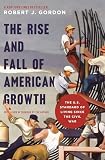
The U.S. Standard of Living since the Civil War (The Princeton Economic History of the Western World)
Recommended by Bill Gates, Marc Andreessen, Satya Nadella and 4 others
The book presents a history tying the late‑19th and early‑20th‑century flood of household-changing inventions to the rise in American living standards, and it argues that comparable gains are unlikely in coming decades. Reading moves between vivid household vignettes, dense statistical chapters, and policy-minded projection. Its most useful feature is the long-run frame and the detailed historical and statistical material; its main limitation is repetition and a mid‑book slog of numbers that can feel dry and over-argued.

The Universal Laws of Life, Growth, and Death in Organisms, Cities, and Companies
Recommended by Michael Mauboussin, Stewart Brand, Nassim Nicholas Taleb and 5 others
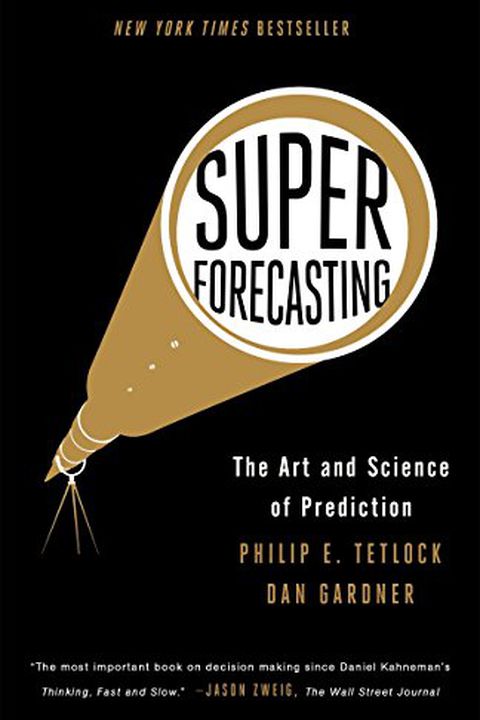
The Art and Science of Prediction
Recommended by Michael Mauboussin, Preston Pysh, Anthony Pompliano and 5 others
Superforecasting examines the traits and methods of highly accurate forecasters, linking them to cognitive biases and techniques like belief updating. It outlines an approach to probabilistic thinking, drawing on examples from forecasting tournaments. The density, however, can drag when it lingers on scoring metrics or repeats concepts. Readers wanting a light, prescriptive manual may bounce, but those who persist gain a sharper lens on uncertainty.

How Certain Schemes to Improve the Human Condition Have Failed (Veritas Paperbacks)
Recommended by Balaji S. Srinivasan, Scott Young, Rabbi Josh Yuter and 4 others
Reflections on Financial Crises
Recommended by Bill Gates, Money Mustache, Warren Buffett and 2 others
An inside, policy-focused memoir that reads like a day-by-day after-action report of the 2008 financial crisis. Geithner lays out timelines, phone calls, and technical mechanisms behind the Fed and Treasury interventions, so what works best is a granular sense of how decisions were made under pressure. what works best is high for readers who want procedural clarity, but the prose leans toward technocratic detail and frequent self-defense, which can feel repetitive and thin on emotional self-reflection.

A 400Year History of American Capitalism
Recommended by Mark Suster, Samir Arora, Meb Faber and 2 others
An absorbing and original narrative history of American capitalism NAMED A BEST BOOK OF 2017 BY THE ECONOMIST From the days of the Mayflower and the Virginia Company, America has been a place for people to dream, invent, build, tinker, and bet the farm in pursuit of a better…
Money, Democracy, and the Life of John Maynard Keynes
Recommended by Jason Furman, Harini Calamur, Corey Robin and 2 others
A pageturning biography of worldchanging economist John Maynard Keynes and the big ideas that outlived him.In the spring of 1934, Virginia Woolf sketched an affectionate biographical portrait of her great friend John Maynard Keynes.

Uncommon Sense for the Thoughtful Investor
Recommended by Warren Buffett, Bill Gurley, Peter Attia and 2 others
"This is that rarity, a useful book."Warren BuffettHoward Marks, the chairman and cofounder of Oaktree Capital Management, is renowned for his insightful assessments of market opportunity and risk.
The Origins of Power, Prosperity, and Poverty
Recommended by Bill Gates, Trevor Ncube, Mark Zuckerberg and 2 others
Why Nations Fail argues that political and economic institutions — inclusive or extractive — are the central engines behind why some countries prosper and others stagnate. It leans on long historical case studies and comparative examples to make a single, institution-centered explanation tangible. The useful parts are those clear contrasts and repeated examples that help you map institutions onto incentives. Limits include dense theory passages, repeated examples that feel repetitive, and a tone that can sound dismissive of rival explanations. Not a how-to guide; it’s argumentative history and interpretation.
The First 5,000 Years
Recommended by Miguel de Icaza, Sarah Bond, Santiago Siri and 2 others

The Political and Economic Origins of Our Time
Recommended by Noam Chomsky, Satya Nadella and Bernie Sanders
In this classic work of economic history and social theory, Karl Polanyi analyzes the economic and social changes brought about by the "great transformation" of the Industrial Revolution.

Why So Many Predictions Failbut Some Don't
Recommended by Bill Gates, Sophie Bakalar and Jon Stewart
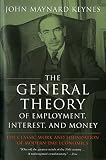
Recommended by Warren Buffett and Eric Weinstein
Reading feels like following a sustained intellectual argument: Keynes advances an extended critique of laissez-faire, builds a case for policy intervention, and returns repeatedly to core concepts. What works best is seeing the original reasoning and rhetorical moves behind mid-20th-century macroeconomic policy debates. The main limitations are dense, sometimes archaic prose, repetitive passages, and relatively few contemporary examples; it also lacks hands-on exercises or quick summaries, so expect slow, attentive reading rather than a quick how-to.
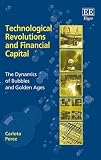
The Dynamics of Bubbles and Golden Ages
Recommended by Marc Andreessen, Arianna Simpson, Balaji S. Srinivasan and 1 other
"Technological Revolutions and Financial Capital" presents a novel interpretation of the good and bad times in the economy, taking a longterm perspective and linking Technology, and finance in an original and convincing way.

How is it that the law enforcer itself does not have to keep the law How is it that the law permits the state to lawfully engage in actions which, if undertaken by individuals, would land them in jail These are among the most intriguing issues in political and economic…

Seven Ways to Think Like a 21stCentury Economist
Recommended by Tim O’Reilly, Katharine Hayhoe, Bryan Callen and 1 other
A Financial Times "Best Book of 2017: Economics"800CEORead "Best Business Book of 2017: Current Events & Public Affairs"Economics is the mother tongue of public policy.

A Personal Statement
Recommended by Marc Andreessen, The Barefoot Investor and Arnold Schwarzenegger
The international bestseller on the extent to which personal freedom has been eroded by government regulations and agencies while personal prosperity has been undermined by government spending and economic controls. New Foreword by the Authors; Index.
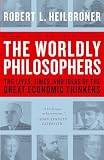
The Lives, Times And Ideas Of The Great Economic Thinkers
Recommended by Jason Furman, Linda Yueh, Erik Brynjolfsson and 1 other
The Worldly Philosophers not only enables us to see more deeply into our history but helps us better understand our own times. In this seventh edition, Robert L. Heilbroner provides a new theme that connects thinkers as diverse as Adam Smith and Karl Marx.
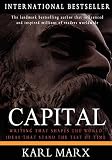
A Critique of Political Economy, Vol. 1
Recommended by Noam Chomsky, Elon Musk and David Harvey
Abridged but still dense, this edition mixes scene‑setting historical description of mid‑Victorian industry with sustained, often combative economic argument. Its practical value lies in vocabulary and close readings of how wages, commodities, and production were organized — material that fuels seminar debate and close citation. The main limitation is prose packed with technical digressions and extended sentences that sap forward motion; readers who want crisp, modern explanations or policy prescriptions will likely find it frustrating rather than clarifying.

Improving Decisions About Health, Wealth, and Happiness
Recommended by Money Mustache and Fedor Holz

The Unmaking of America
Recommended by Alan Eyre, Quentin Hardy and Callie Khouri
NEW YORK TIMES BESTSELLER • When did America give up on fairness The bestselling author of  Fantasy,land  tells the epic history of how America decided that big business gets whatever it wants, only the rich get richer, and nothing should…
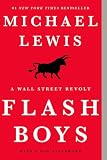
A Wall Street Revolt
Recommended by Malcolm Gladwell, AlyKhan Satchu and Brian Armstrong
Flash Boys reads like a cinematic long-form magazine investigation of how trading technology reshaped U.S. equity markets. Michael Lewis follows a handful of traders and entrepreneurs who quit lucrative posts to trace algorithms, dark pools, and speed advantages; the narrative gives clear, scene-driven examples that make obscure plumbing feel urgent. The book's strength is storytelling—vivid characters and tension—while its limitation is light technical rigor: readers wanting detailed market mechanics or balanced academic debate will find gaps. It also leans on anecdote and personality, which can feel repetitive.

Economics as if People Mattered (Harper Perennial Modern Thought)
Recommended by Emma Watson and Ramachandra Guha

A Critique of Political Economy
Recommended by Noam Chomsky and Elon Musk
"Read [this book] when I was 14." - Elon Musk

A provocative meditation on race, Claudia Rankine's longawaited follow up to her groundbreaking book Don't Let Me Be Lonely: An American Lyric.Claudia Rankine's bold new book recounts mounting racial aggressions in ongoing encounters in twentyfirstcentury daily life and in the…
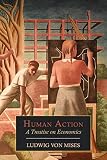
Reading Human Action feels like tackling a long, formal argument in economic theory: dense prose, step-by-step deductions, and frequent polemical asides. Its most useful material is a contiguous, theory-first account of market reasoning and individual choice that lays out praxeological logic at length. Its limits are an abstract tone, repeated restatements, and relatively few modern examples to break up the logic. Expect to reread sections rather than skim. No hands-on exercises are provided.

A Radical Rethinking of the Way to Fight Global Poverty
Recommended by Bill Gates and Harini Calamur

Inside Information, Dirty Money, and the Quest to Bring Down the Most Wanted Man on Wall Street
Recommended by Peter Attia and Max Levchin
The story of billionaire trader Steven Cohen, the rise and fall of his hedge fund SAC Capital, and the largest insider trading investigation in history for readers of The Big Short, Den of Thieves, and Dark MoneySteven A. Cohen changed Wall Street.

Forces of Change in the PostCrisis World
Recommended by Tom Keene
An unimpeachable classic work in political philosophy, intellectual and cultural history, and economics, The Road to Serfdom has inspired and infuriated politicians, scholars, and general readers for half a century.

The Surprising Science Behind Why Everything You Know About Success Is (Mostly) Wrong
Recommended by Tim Urban

With penetrating insights for today, this vital history of the world economic collapse of the late 1920s offers unforgettable portraits of the four men whose personal and professional actions as heads of their respective central banks changed the course of the twentieth century…

Undressing the Dismal Science
Recommended by Money Mustache and Peter Adeney
Show 28 more books with a single recommendation
Two prizewinning economists show how economics, when done right, can help us solve the thorniest social and political problems of our dayThe experience of the last decade has not been kind to the image of economists: asleep at the wheel (perhaps with the foot on the gas pedal)…
Love, Drugs, Trouble, and Coming of Age in the Bronx
Recommended by Lena Dunham
In her extraordinary bestseller, Adrian Nicole LeBlanc immerses readers in the intricacies of the ghetto, revealing the true sagas lurking behind the headlines of gangsta glamour, golddrenched drug dealers, and streetcorner society.
An Experiment in Literary Investigation (P.S.)
Recommended by Jordan Peterson
In her groundbreaking reporting from Iraq, Naomi Klein exposed how the trauma of invasion was being exploited to remake the country in the interest of foreign corporations.
Spufford cunningly maps out a literary genre of his own . . . Freewheeling and fabulous. The Times (London)Strange as it may seem, the gray, oppressive USSR was founded on a fairy tale.
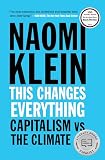
Forget everything you think you know about global warming. It's not about carbon ? it's about capitalism. The good news is that we can seize this crisis to transform our failed economic system and build something radically better.In her most provocative book yet, Naomi Klein,…
Samuelson's text was first published in 1948, and it immediately became the authority for the principles of economics courses.

The Rise of Finance and the Fall of American Business
Recommended by Tim O’Reilly
A History of Financial Crises
Raoul Pal recommended this book on Twitter.
Essays on Socialism and Transitional Political Economy (Routledge Foundations of the Market Economy)
This collection of essays from one of the major Austrian economists working in the world today brings together in one place some of his key writings on a variety of economic issues.

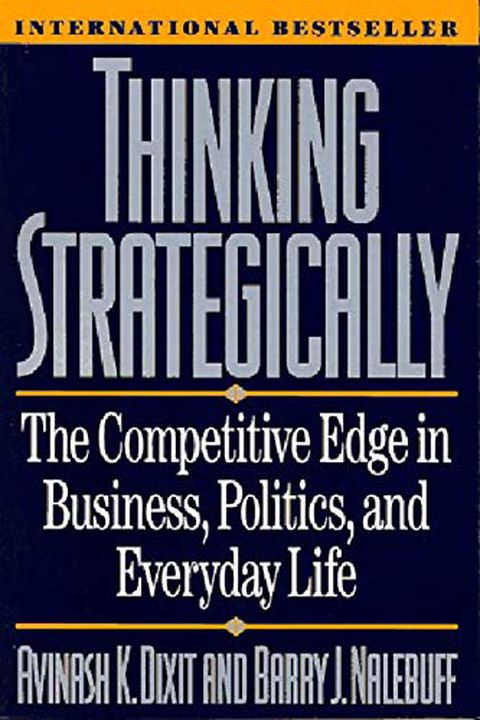
The Competitive Edge in Business, Politics, and Everyday Life (Norton Paperback)
The international bestseller ? don't compete without it! A major bestseller in Japan, Financial Times Top Ten book of the year, BookoftheMonth Club bestseller, and required reading at the best business schools, Thinking Strategically is a crash course in outmaneauvering any…

How Twelve Brilliant Minds Would Solve Today's Biggest Problems
A timely exploration of the life and work of worldchanging thinkersfrom Adam Smith to John Maynard Keynesand how their ideas would solve the great economic problems we face today.

From theory to practice, your complete guide to understanding economics today
The Dismal Science. The Worldly Philosophy. The Science of Scarcity. Most people think economics is one of the most challenging and complex fields of study. But with this book, it doesn't have to be! You will learn how the U.S.

Economics for Public Policy
A textbook that examines how societies reach decisions about the use and allocation of economic resourcesWhile economic research emphasizes the importance of governmental institutions for growth and progress, conventional public policy textbooks tend to focus on macroeconomic…

Economic Facts and Fallacies exposes some of the most popular fallacies about economic issuesand does so in a lively manner and without requiring any prior knowledge of economics by the reader.

In the 20th century Murray Rothbard was known as the state's greatest living enemy, and The Anatomy of the State is his most succinct and powerful statement on the topic, a daring evidence of how he came to wear that designation proudly.He explains what a state is and what it is…

An Economic History of the United States
From the legendary former Fed Chairman and the acclaimed Economist writer and historian, the full, epic story of America's evolution from a small patchwork of threadbare colonies to the most powerful engine of wealth and innovation the world has ever seen.
At its core, an economy is about providing goods and services for human wellbeing. But many economists and critics preach that an economy is something far different: a cold and heartless system that operates outside of human control.

The Complete Story of the Shale Revolution, the Fight over Fracking, and the Future of Energy
Gary Sernovitz leads a double life. The prototypical New York liberal, he is also an oil man a fact his leftleaning friends let slide until the word "fracking" entered popular parlance. "How can you frack" they suddenly demanded, aghast.

The Unexpected Benefits of Defying Logic
The provocative followup to the New York Times bestseller Predictably Irrational Why can large bonuses make CEOs less productiveHow can confusing directions actually help usWhy is revenge so important to usWhy is there such a big difference between what we think will make us…
Recommended Economics Books by Bill Gates
Bill Gates recommends 10 books on this list. See all book recommendations by Bill Gates
Recommended Economics Books by Marc Andreessen
Marc Andreessen recommends 7 books on this list. See all book recommendations by Marc Andreessen
Recommended Economics Books by Money Mustache
Money Mustache recommends 4 books on this list. See all book recommendations by Money Mustache
Economics Books: common questions
- What are the most recommended economics books?
- Thinking, Fast and Slow, Factfulness and Guns, Germs, and Steel are the most recommended economics books on BookMentions, ranked by how many people recommended them.
- Who recommends economics books?
- Bill Gates, Marc Andreessen, Money Mustache and Naval Ravikant are among the people who recommend books on this list. Each name links to their full set of book recommendations.
- Which of these economics books should I read first?
- Thinking, Fast and Slow is the most recommended here with 53 recommendations, which makes it the safest place to start.
Built from recommendation data, category signals, and source-backed book records. Use this list as a starting point; open any book to see proof, context, and Amazon options where available.
Explore more lists
Best Economic Development Books
15 booksEconomic Development books, including titles recommended by Bill Gates, Jordan Peterson and Ev Williams. Most recommended here: Factfulness, The Wealth Of Nations and Freakonomics.
Best Socialism Books
26 booksSocialism books, including titles recommended by Noam Chomsky, Emma Watson and Richard Branson. Most recommended here: 1984, A People's History of the United States and Homage to Catalonia.
Best Social Psychology Books
16 booksSocial Psychology books, including titles recommended by Derek Sivers, Ev Williams and Naval Ravikant. Most recommended here: Thinking, Fast and Slow, The Power of Habit and Quiet.
Best Sociology Books
187 booksSociology recommended most by researchers and writers — inequality, cities, institutions, race and class. Including the fieldwork that changed how the questions get asked.
Best Personal Finance Books
56 booksPersonal Finance books, including titles recommended by Matt D’Avella, Warren Buffett and Derek Sivers. Most recommended here: Rich Dad Poor Dad, Your Money or Your Life and The Most Important Thing.
Best Cognitive Psychology Books
15 booksCognitive Psychology books, including titles recommended by Derek Sivers, Naval Ravikant and Ev Williams. Most recommended here: Thinking, Fast and Slow, Grit and The Untethered Soul.
About this list
This list aggregates books that appear in public recommendation sources, reader-interest signals, and category data. Books are ranked by their position from the source list; recommendation counts and ratings are shown where available. Open any book to see source-backed recommendation proof, editorial context, and Amazon options — the per-book detail page is where the trust signals live.
Recommended books by person: who recommends economics books
Books recommended by the people below. Open a profile to see everything they recommend, with the source behind each pick.
- Bill GatesBooks recommended by Bill: 10

- Marc AndreessenBooks recommended by Marc: 7

- Money MustacheBooks recommended by Money: 4
- Naval RavikantBooks recommended by Naval: 4

- Noam ChomskyBooks recommended by Noam: 4

- Alfred LinBooks recommended by Alfred: 3
- Bill GurleyBooks recommended by Bill: 3

- Elon MuskBooks recommended by Elon: 3

- Ev WilliamsBooks recommended by Ev: 3

- Jason FurmanBooks recommended by Jason: 3
- Jordan PetersonBooks recommended by Jordan: 3

- Linda YuehBooks recommended by Linda: 3