A Classic Text on the Japanese Way of the Sword (Shambhala Library)
by Miyamoto Musashi
More Recommenders
Author and entrepreneur

Author and media strategist

Retired U.S. Navy SEAL officer and author
Recommended by 10 notable people, including Naval Ravikant and Tim Ferriss
Check price on AmazonProof-backed recommendation
Amazon availability
See customer reviews on Amazon →Reading this feels like deciphering a warrior’s notebook: brief, circular, and dense with metaphor. Its value lies in reframing competition as an inner discipline—timing, rhythm, and perception become tactical tools. The limitation is its archaic, repetitive structure; practical application requires slow, patient extraction. Useful if you enjoy mining philosophical gold from cryptic texts, but likely maddening if you want clear, step-by-step methods.
This summary and audience guidance are AI-generated from the book's description and its recommendation history, last updated May 2026. Recommendations, quotes and sources elsewhere on this page come from published material and are not generated.
There are various Ways. There is the Way of salvation by the law of Buddha, the Way of Confucius governing the Way of learning, the Way of healing as a doctor, as a poet teaching the Way of Waka, tea, archery, and many arts and skills. Each man practises as he feels inclined. It is said the warrior's is the twofold Way of pen and sword, and he shou...
Difficulty:hard
Check formats, pricing, and availability options for Kindle, physical print, or audiobooks directly.
View available editions on AmazonWhy recommended
Recommended by 16 sources and appears in Books Recommended by Investors and Most Recommended Books.
People and public figures who have recommended this book.
Recommendation proof is sourced from public posts, interviews, reading lists, and cited references.
Check formats, pricing, and availability options directly on Amazon.
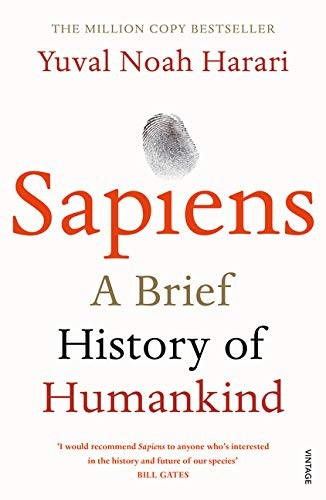
Consider Sapiens by Yuval Noah Harari. Recommended by 101 sources.
“A sweeping narrative history of Homo sapiens from the Cognitive Revolution to the present. Harari argues that what makes humans dominate the planet is not physical strength but collective myths: shared fictions like money, religion, and nations that allow millions of strangers to cooperate. The book moves fast through 70,000 years, making big, debatable claims about agriculture, empire, capitalism, and happiness. It is less a history textbook than a provocative essay in chronological form, and best read as an argument rather than a reference.”
Each recommendation is collected from a public source — interviews, articles, or curated lists — and linked to its original URL. Books with many verifiable recommendations from respected people rank higher.