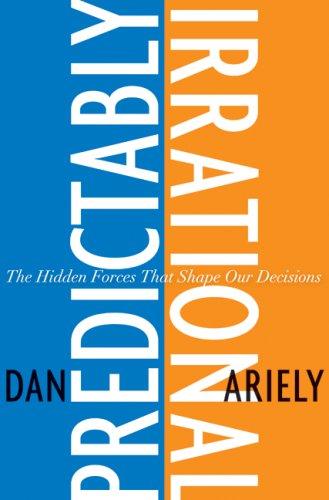
The Hidden Forces That Shape Our Decisions
by Dan Ariely
More Recommenders
American neuroscientist
Recommended by 12 notable people, including Derek Sivers and Keith Rabois
Check price on AmazonRecommended by public sources
Amazon availability
See customer reviews on Amazon →Ariely walks you through a parade of clever experiments that expose the irrational forces behind everyday decisions. The anecdotes are breezy and often funny, making complex ideas feel like party conversation. It’s useful for spotting your own blind spots, but the rapid-fire stories can blur together, and the pop-science style may underwhelm if you want rigorous academic depth.
This summary and audience guidance are AI-generated from the book's description and its recommendation history, last updated May 2026. Recommendations, quotes and sources elsewhere on this page come from published material and are not generated.
Why do our headaches persist after we take a onecent aspirin but disappear when we take a fiftycent aspirin Why do we splurge on a lavish meal but cut coupons to save twentyfive cents on a can of soup When it comes to making decisions in our lives, we think we're making smart, rational choices. But are we In this newly revised and expanded ed...
Difficulty:easy
Check formats, pricing, and availability options for Kindle, physical print, or audiobooks directly.
View available editions on AmazonWhy recommended
Recommended by 16 sources and appears in Psychology, Books Recommended by Investors, and Most Recommended Books.
People and public figures who have recommended this book.
Recommendation proof is sourced from public posts, interviews, reading lists, and cited references.
Check formats, pricing, and availability options directly on Amazon.
Consider The Boy, the Mole, the Fox and the Horse by Charlie Mackesy. Recommended by 8 sources.
“Soft-spoken, heavily illustrated fable built from short dialogues and watercolor sketches. Each spread pairs a spare line of text with a loose drawing, so the pleasure is visual and aphoristic rather than narrative; readers collect felt-true sentences more than plot. Most useful when you want quick consolations, a prompt for conversation with a child, or a pause during a rough day. Limiting if you want sustained argument, concrete advice, or tightly plotted storytelling: the repetition of gentleness can feel sentimental or thin after a while.”
Each recommendation is collected from a public source — interviews, articles, or curated lists — and linked to its original URL. Books with many verifiable recommendations from respected people rank higher.