
Best Sociology Books
Category100 of 187 books325 recommendations totalKey Takeaways
- Outliers by Malcolm Gladwell (2008) is the most recommended book on this list, with 28 recommendations.
- The Better Angels of Our Nature (20 recommendations) and The Coddling of the American Mind (15 recommendations) come next.
- This page shows 100 of 187 books with 325 recommendations in total.
- Recommenders include Barack Obama, Bill Gates and Adam Grant.
Sociology recommended most by researchers and writers — inequality, cities, institutions, race and class. Including the fieldwork that changed how the questions get asked.
Last updated
What are the most recommended Sociology Books?
The most recommended Sociology Books are Outliers (28), The Better Angels of Our Nature (20) and The Coddling of the American Mind (15), ranked by how many of the 186 people behind this list recommended each one.
| Rank | Book | Author | First published | Recommendations | Recommended by |
|---|---|---|---|---|---|
| 1 | Outliers | Malcolm Gladwell | 2008 | 28 | Bill Gates, Joe Rogan and Russell Brand |
| 2 | The Better Angels of Our Nature | Steven Pinker | 2010 | 20 | Bill Gates, Mark Manson and Mark Zuckerberg |
| 3 | The Coddling of the American Mind | Greg Lukianoff | 2018 | 15 | Scott Galloway, Tom Bilyeu and Vinod Khosla |
| 4 | The True Believer | Eric Hoffer | 1951 | 15 | Mark Manson, Marc Andreessen and Antonio García Martínez |
| 5 | Amusing Ourselves to Death | Neil Postman | 1985 | 15 | Tristan Harris, Timothy Keller and Michael Batnick |
| 6 | Evicted | Matthew Desmond | 2016 | 14 | Barack Obama, Bill Gates and Satya Nadella |
| 7 | Tribe | Sebastian Junger | — | 14 | Joe Rogan, Russell Brand and Jason Kander |
| 8 | The Tipping Point | Malcolm Gladwell | 2000 | 13 | Joe Rogan, Kevin Rose and Simon Sinek |
The Story of Success
by Malcolm Gladwell
Recommended by Bill Gates, Joe Rogan, Russell Brand and 19 others
Outliers reads like a series of captivating magazine profiles, each unpacking a hidden factor behind extraordinary success. Gladwell’s storytelling makes complex social science accessible, but the book relies on memorable anecdotes rather than offering systematic analysis. The book explores the idea that individual brilliance rarely stands alone; success often hinges on birth dates, cultural legacies, and the 10,000-hour rule. While the narratives are strong, the book overgeneralizes from handpicked examples, leaving skeptical readers questioning the conclusions. It’s most useful as a conversation starter about luck and timing—annoying if you want a rigorous academic treatise or a how-to guide for your own life.
Why Violence Has Declined
by Steven Pinker
Recommended by Bill Gates, Mark Manson, Mark Zuckerberg and 10 others
'The most inspiring book I've ever read' Bill Gates, 2017 'A brilliant, mind-altering book ... Everyone should read this astonishing book' Guardian 'Will change the way you see the world' Daily Mail Shortlisted for the Samuel Johnson Prize 2012 Wasn't the twentieth century the…
How Good Intentions and Bad Ideas Are Setting Up a Generation for Failure
by Greg Lukianoff
Recommended by Scott Galloway, Tom Bilyeu, Vinod Khosla and 8 others
A finalist for the 2018 National Book Critics Circle Award in Nonfiction A New York Times Notable BookBloomberg Best Book of 2018The New York Times bestseller!Something has been going wrong on many college campuses in the last few years. Speakers are shouted down.

Thoughts on the Nature of Mass Movements
by Eric Hoffer
Recommended by Mark Manson, Marc Andreessen, Antonio García Martínez and 9 others
Hoffer writes with the blunt force of a dockworker-philosopher, offering aphoristic insights that feel both unsettling and clarifying. Mass movements—religious, political, revolutionary—are stripped to psychological springs: frustration, self-surrender, a hunger for certainty. Memorable lines land on every page, but the argument relies on broad, forceful claims, not evidence. It's most useful as a provocation, less so as a rigorous framework. The tone can feel coldly reductionist, and it lacks cultural or historical specificity, making some claims feel recycled rather than deepened.
Public Discourse in the Age of Show Business
by Neil Postman
Recommended by Tristan Harris, Timothy Keller, Michael Batnick and 10 others
What happens when media and politics become forms of entertainment? As our world begins to look more and more like Orwell's 1984, Neil's Postman's essential guide to the modern media is more relevant than ever.
Poverty and Profit in the American City
by Matthew Desmond
Recommended by Barack Obama, Bill Gates, Satya Nadella and 9 others
In Evicted, Princeton sociologist and MacArthur "Genius" Matthew Desmond follows eight families in Milwaukee as they struggle to keep a roof over their heads.

On Homecoming and Belonging
by Sebastian Junger
Recommended by Joe Rogan, Russell Brand, Jason Kander and 7 others
Sebastian Junger, the bestselling author of War and The Perfect Storm, takes a critical look at posttraumatic stress disorder and the many challenges todays returning veterans face in modern society.There are ancient tribal human behaviorsloyalty, interreliance, cooperationthat…

How Little Things Can Make a Big Difference
by Malcolm Gladwell
Recommended by Joe Rogan, Kevin Rose, Simon Sinek and 5 others
Gladwell builds an accessible narrative around the idea that social epidemics have tipping points, shaped by a few key people, sticky messaging, and context. The reading feels like a series of well-told stories—Hush Puppies, crime waves, children’s television—each framed as a puzzle with a clear solution. It’s useful as a conversation starter and a new way to notice everyday patterns. The limitation: the anecdotes can feel too tidy, and if you arrive hungry for formal studies or systematic data, the book will feel underwhelming. Still, it’s a brisk, idea-sparking read that reshapes how you think about why things take off.
by James Surowiecki
Recommended by Kevin Rose, Ben Shapiro, Derek Sivers and 4 others
In this fascinating book, New Yorker business columnist James Surowiecki explores a deceptively simple idea: Large groups of people are smarter than an elite few, no matter how brilliant–better at solving problems, fostering innovation, coming to wise decisions, even predicting…
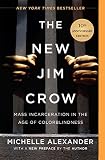
Mass Incarceration in the Age of Colorblindness
by Michelle Alexander
Recommended by Bill Gates, Mark Zuckerberg, Alan Cooper and 3 others
This is a sustained, single-argument account that traces how criminal-justice practices produce racialized civic exclusion, using legal history, court rulings, and policy examples. It’s useful when you need precise language and concrete cases to frame classroom discussion, community reads, or policy critiques. The prose is readable but relentlessly argumentative, and the central claim is repeated often while new legal detail accumulates. Readers seeking multiple perspectives, memoir-style storytelling, or a practical step-by-step playbook will find it narrower than expected.
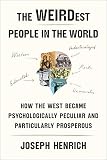
How the West Became Psychologically Peculiar and Particularly Prosperous
by Joseph Henrich
Recommended by Marc Andreessen, Binyamin Appelbaum, Erik Torenberg and 7 others
Henrich offers a long-form argument that connects changes in law, religion, and family organization to behavioral patterns he associates with populations labeled 'WEIRD.' The book mixes vivid historical episodes, cross-cultural comparisons, and evolutionary-style theorizing to tie many threads together. Its strength is breadth: readers get panorama-level explanations and lots of examples. Its downside is slog: repetition, extended theoretical detours, and occasional speculative leaps can feel tiring to readers who want concise, stepwise argumentation.
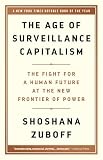
The Fight for a Human Future at the New Frontier of Power
by Shoshana Zuboff
Recommended by Barack Obama, Bridget Phetasy, Vinod Khosla and 4 others
Zuboff builds a broad, argument-driven account of surveillance capitalism: tracing how firms collect behavioral data, turn it into prediction products, and shape markets and public life. The writing introduces a specific vocabulary and many cross-cutting examples that make the scale of the practice tangible. Strengths lie in its depth of cases and an urgent moral frame; limits are a dense, repetitive prose style and few concrete, ready-to-apply policy solutions. Best read with patience and attention rather than as a quick primer.
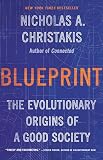
The Evolutionary Origins of a Good Society
by Nicholas A. Christakis
Recommended by Bill Gates, Adam Grant, Eric Schmidt and 2 others
Reading it feels like a wide-angle take on human social life: readable chapters that alternate clear summaries of studies, historical anecdotes, and speculative connections. Its useful part is reframing everyday institutions—family, friendship, cooperation—as products of positive biological tendencies, delivered in plain language that invites curiosity. Main limitation: frequent repetition and broad generalizations mean readers who want technical rigor or sustained counterargument will feel shortchanged; some chapters verge on cheerleading rather than careful nuance.
by Edward Bernays
Recommended by Dave Elitch, Tobias Van Schneider, Jérôme Jarre and 2 others
Bernays writes in a brisk, programmatic voice that reads like a practitioner's manual: short case sketches, tactical prescriptions, and candid justifications for shaping mass opinion. The most useful section maps concrete techniques and the rhetoric used to normalize coordinated publicity, which is handy for historical comparison or classroom debate. The main limits are tone and dated examples: managerial certainty leaves little ethical pushback and some passages feel uncomfortably directive. No exercises or modern scientific framing are provided; better read slowly with a critical pen.
What the Cycles of History Tell Us About America's Next Rendezvous with Destiny
by William Strauss
Recommended by Raoul Pal, Packy McCormick, Balaji S. Srinivasan and 2 others
This is a big-idea, polemical book that forces you to look at history as repeating generational turns. The useful payoff is a single organizing lens that makes sense of recurring political and cultural rhythms and sparks scenario-thinking about future crises. The main limitation is its appetite for broad generalization: long historical vignettes and typologies can feel selective and circular, and the predictive passages slide from plausible forecasting into speculative admonition.

The Political and Economic Origins of Our Time
by Karl Polanyi
Recommended by Satya Nadella, Noam Chomsky and Bernie Sanders
In this classic work of economic history and social theory, Karl Polanyi analyzes the economic and social changes brought about by the "great transformation" of the Industrial Revolution.
How Love Conquered Marriage
by Stephanie Coontz
Recommended by Mark Manson, Brian Earp, Dan Savage and 1 other
Coontz delivers a readable, broad history that traces marital forms from ancient Babylon through Victorian lovers to contemporary debates, mixing archival examples, cultural context, and policy notes. what works best is the long view: it disrupts the sense that today’s marriage norms are timeless by offering concrete historical comparisons you can use in argument or teaching. The main limitation is its survey format—chronological breadth means some sections skim complex local detail and the narrative can feel repetitive if you prefer tightly focused case studies.
Now a New York Times bestseller and from the author of The Psychopath Test, a captivating and brilliant exploration of one of our world's most underappreciated forces: shame. 'It's about the terror, isn't it' 'The terror of what' I said.

How America's Foundational Myth Feeds Inequality, Dismantles the Middle Class, and Devours the Elite
by Daniel Markovits
Recommended by Adam Grant, Sam Freedman and Fareed Zakaria
A revolutionary new argument from eminent Yale Law professor Daniel Markovits attacking the false promise of meritocracy It is an axiom of American life that advantage should be earned through ability and effort.

The Dark Side of the All-American Meal
by Eric Schlosser
Recommended by Kevin Rose and Richard Branson
Eric Schlosser’s exposé revealed how the fast food industry has altered the landscape of America, widened the gap between rich and poor, fueled an epidemic of obesity, and transformed food production throughout the world.

Online Culture Wars From 4Chan And Tumblr To Trump And The Alt-Right
by Angela Nagle
Recommended by Russell Brand, Sam Freedman and Ana Marie Cox
Brisk and argumentative, this book reads like a series of long-form magazine pieces that map how internet subcultures fed revived culture-war fights. Its value is vivid reporting and sharp, clear labeling of online tactics and scenes that otherwise feel chaotic; you may leave with mental snapshots you can reuse in conversations or teaching. Its limitations: broad-brush character sketches, frequent moralizing, and an anecdote-heavy approach that can feel repetitive — many chapters prioritize heat and alarm over systematic, solution-oriented analysis.

Americans Reaching for Hope
by Nicholas D. Kristof
Recommended by Adam Grant and Binyamin Appelbaum
With stark poignancy and political dispassion, Tightrope draws us deep into an "other America." The authors tell this story, in part, through the lives of some of the children with whom Kristof grew up, in rural Yamhill, Oregon, an area that prospered for much of the twentieth…
Gender, Race and Identity
by Douglas Murray
Recommended by Joe Rogan, Jordan Peterson, Tom Bilyeu and 1 other
The challenging and brilliantlyargued new book from the bestselling author of The Strange Death of Europe.In his devastating new book The Madness of Crowds, Douglas Murray examines the twenty-first century's most divisive issues: sexuality, gender, Technology, and race.
The Men of the Harvard Grant Study
by George E. Vaillant
Recommended by Andrew Wilkinson and David Kadavy
At a time when many people around the world are living into their tenth decade, the longest longitudinal study of human development ever undertaken offers some welcome news for the new old age: our lives continue to evolve in our later years, and often become more fulfilling…
Surviving America in the TwentyFirst Century
by Jessica Bruder
Recommended by Siri Srinivas, Mark Duplass, Theodora Lau and 1 other
A Study of the Popular Mind
by Gustave le Bon
Recommended by Akin Oyebode and Brendan Moynihan
The Crowd: A Study of the Popular Mind is a brilliant treatise on the workings of crowds. Gustave Le Bon examines many different kinds of crowds and how they work. He differentiates between different kinds of crowds such as mobs, juries, elected bodies, and simple crowds.
On Becoming an Individual in an Age of Distraction
by Matthew B. Crawford
Recommended by Alan Cooper and Russell Moore
A groundbreaking new book from the bestselling author of Shop Class as Soulcraft In his bestselling book Shop Class as Soulcraft, Matthew B. Crawford explored the ethical and practical importance of manual competence, as expressed through mastery of our physical environment.
Fugitive Life in an American City
by Alice Goffman
Recommended by Alex Blumberg and Raul PachecoVega
A RIVETING, GROUNDBREAKING ACCOUNT OF HOW THE WAR ON CRIME HASTORN APART INNERCITY COMMUNITIESForty years in, the tough on crime turn in American politics has spurred a prison boom of historic proportions that disproportionately affects Black communities.
Ever since its first publication in 1992, The End of History and the Last Man has provoked controversy and debate. Francis Fukuyama's prescient analysis of religious fundamentalism, politics, scientific progress, ethical codes, and war is as essential for a world fighting…
The Opposite of Addiction is Connection
by Johann Hari
Recommended by Alan Cooper, Fatima Bhutto and B.J. Novak
Johann Hari moves through countries and interviews in a narrative investigative travelogue about a century of drug prohibition. The most useful part is the human-scale case studies and side-by-side policy contrasts that make abstract debates tangible. The writing favors storytelling and moral argument over dense statistics, which helps readability but also means evidence is often anecdotal. Readers seeking a neutral, data-first policy manual will find the tone persuasive rather than dispassionate. Expect momentum early, then repetition where the author presses a particular viewpoint.
States, Societies, and the Fate of Liberty
by Daron Acemoglu
Recommended by Satya Nadella
From the authors of the international bestseller Why Nations Fail, a crucial new bigpicture framework that answers the question of how liberty flourishes in some states but falls to authoritarianism or anarchy in othersand explains how it can continue to thrive despite new…
How Inequality Affects the Way We Think, Live, and Die
by Keith Payne
Recommended by Barack Obama and Rachel Botsman
A timely examination by a leading scientist of the physical, psychological, and moral effects of inequality. The levels of inequality in the world today are on a scale that have not been seen in our lifetimes, yet the disparity between rich and poor has ramifications that extend…

A Reporter's Undercover Journey into the Business of Punishment
by Shane Bauer
Recommended by Barack Obama
In 2014, Shane Bauer was hired for $9 an hour to work as an entrylevel prison guard at a private prison in Winnfield, Louisiana.

Excavating the Future in Los Angeles
by Mike Davis
Recommended by Dan Davies, Mark Harris and Anne Helen Petersen
City of Quartz reads like a forensic excavation of Los Angeles: archival reportage, policy history and polemical analysis piled together to show who benefits from growth and who gets pushed aside. Its useful part is the dense catalog of examples — land deals, policing, urban renewal episodes — that tie local institutions to broader economic forces. Annoyances are the repeated rhetorical flourishes and a sometimes fierce, judgmental tone; readers seeking detached description or step-by-step policy prescriptions may find it unsatisfying.
An American Story
by Amy Goldstein
Recommended by Barack Obama and Zacharia Wahls
Amy Goldstein presents close, narrative reporting that follows people and institutions as economic forces reshape a Midwestern community. The book's most useful element is sustained attention to everyday consequences—faces, jobs, municipal choices—that helps you see abstract terms as lived limitations. For readers seeking quick takeaways, the main limitation is pacing and repetition: extended portraiture and policy background deepen context but can feel dense and slow, prioritizing description over prescriptive, checklist-style advice.
A Guide to Pseudo-Events in America
by Daniel J. Boorstin
Recommended by Dave Elitch and Antonio García Martínez
A Rogue Sociologist Takes to the Streets
by Sudhir Venkatesh
Recommended by Mark Zuckerberg and Stephen Dubner
A New York Times BestsellerForeword by Stephen J. Dubner, coauthor of Freakonomics When firstyear graduate student Sudhir Venkatesh walked into an abandoned building in one of Chicago’s most notorious housing projects, he hoped to find a few people willing to take a…
A Theory
by David Graeber
Recommended by Darcie Wilder, Heinemeier Hansson and Quinn Cummings
Graeber expands his viral essay into a pointed, anecdote-heavy polemic that names kinds of pointless modern jobs and why they feel empty. The book's most useful material is the vivid examples and glossary-like language readers can borrow when discussing workplace malaise. Midbook stretches slow as similar outrages and historical detours recur, and the tone sometimes privileges moral argument over calm, methodical analysis. Best read as a stimulant for conversation and personal inventory rather than a blueprint for policy or reform.
'Liquid life' is the kind of life commonly lived in our contemporary, liquidmodern society. Liquid life cannot stay on course, as liquidmodern society cannot keep its shape for long. Liquid life is a precarious life, lived under conditions of constant uncertainty.
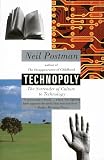
The Surrender of Culture to Technology,
by Neil Postman
Recommended by Aaron Bastani and Tristan Harris
Neil Postman writes in a brisk, opinionated voice that mixes cultural history, polemic, and wry aphorism. Reading it feels like being pressed to see familiar tools as forces that reorder politics, education, art, and truth. What works best is the book’s ability to supply striking language and memorable examples for talking about technology’s cultural consequences. Its main limitation is dated concrete examples and a rhetorical rather than empirical approach, so readers must translate cases to the social-media and AI era. Offers critique, not hands-on fixes.
The Riddles of Culture
by Marvin Harris
Recommended by Mark Manson and Derek Sivers
This book challenges those who argue that we can change the world by changing the way people think. The author shows that no matter how bizarre a people's behavior may seem, it always stems from concrete social and economic conditions.
How Asians and Westerners Think Differently...and Why
by Richard E. Nisbett
Recommended by Satya Nadella and Wolfgang Blau
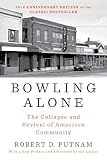
The Collapse and Revival of American Community
by Robert D. Putnam
Recommended by Asha Rangappa
This is a wide-ranging, evidence-packed account that links the decline of communal institutions—from bowling leagues to civic clubs—to broader social shifts in postwar America. Putnam mixes narrative examples with extensive survey and archival material to map when and where civic ties frayed. The useful part is the empirical sweep: timelines, sector-by-sector trends, and clear signposts for anyone arguing about community change. The limiting part is density: long data-heavy chapters and repeated trend recaps make the middle slow, and the focus stays largely U.S.-centric.
The Evolution, Biology, and Extraordinary Power of Life's Fundamental Bond
by Lydia Denworth
Recommended by Adam Grant
An engaging and deeply reported investigation of friendship: its evolution, purpose, and centrality in human and nonhuman lives alike.The bonds of friendship are universal and elemental.
Why We Drive the Way We Do (and What It Says About Us)
by Tom Vanderbilt
Recommended by Rory Sutherland and Malcolm Gladwell
A New York Times Notable BookOne of the Best Books of the YearThe Washington Post The Cleveland PlainDealer Rocky Mountain NewsIn this brilliant, lively, and eyeopening investigation, Tom Vanderbilt examines the perceptual limits and cognitive underpinnings that make us worse…
Uncovering the Hidden Prejudice That Shapes What We See, Think, and Do
by Jennifer L. Eberhardt
Recommended by Daniel Pink and Jeff Raikes
From one of the world's leading experts on unconscious racial bias, a personal examination of one of the central controversies and culturally powerful issues of our time, and its influence on contemporary race relations and criminal justice.We do not have to be racist to be…
An Introduction to History
by Ibn Ibn Khaldûn
Recommended by Mark Zuckerberg
"The Muqaddimah," often translated as "Introduction" or "Prolegomenon," is the most important Islamic history of the premodern world. Written by the great fourteenthcentury Arab scholar Ibn Khaldun (d.
The Mandarins and the Masses
by Theodore Dalrymple
Recommended by Jordan Peterson
This new collection of essays bears the unmistakable stamp of Theodore Dalrymple's bracingly clearsighted view of the human condition. In these twentysix pieces, Dr.

An Inner History of the New America
by George Packer
Recommended by Marc Caputo and Ngozi Adichie
The 2013 National Book Award Winner A New York Times BestsellerAmerican democracy is beset by a sense of crisis. Seismic shifts during a single generation have created a country of winners and losers, allowing unprecedented freedom while rending the social contract, driving the…
American Life in An Age of Diminishing Expectations
by Christopher Lasch
Recommended by Antonio García Martínez and Anna Khachiyan
Surnames and the History of Social Mobility (The Princeton Economic History of the Western World, 49)
by Gregory Clark
Recommended by Niall Ferguson and Scott Young
How much of our fate is tied to the status of our parents and grandparents How much does it influence our children More than we wish to believe.
The Das Kapital of the 20th century. An essential text, and the main theoretical work of the situationists. Few works of political and cultural theory have been as enduringly provocative.
Young Radicals in the Age of Trump
by Robby Soave
Recommended by Ben Shapiro and Bridget Phetasy
Since the 2016 election, college campuses have erupted in violent protests, demands for safe spaces, and the silencing of views that activist groups find disagreeable.
Understanding the Anger of Britain's Underclass
by Darren McGarvey
Recommended by J. K. Rowling
The Sunday Times top ten bestseller.Winner of the Orwell Prize 2018.Darren McGarvey has experienced poverty and its devastating effects firsthand. He knows why people from deprived communities all around Britain feel angry and unheard. And he wants to explain . .

Lenin once said, “There are decades when nothing happens and weeks when decades happen.” This is one of those times when history has sped up.
Show 45 more books with a single recommendation
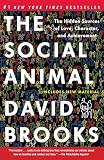
The Hidden Sources of Love, Character, and Achievement
by David Brooks
Recommended by Sahil Lavingia
#1 NEW YORK TIMES BESTSELLERWith unequaled insight and brio, New York Times columnist David Brooks has long explored and explained the way we live.
How One Thing Leads to Another
by Philip Ball
Recommended by Mike Shellenberger
Are there "natural laws" that govern the ways in which humans behave and organize themselves, just as there are physical laws that govern the motions of atoms and planets Unlikely as it may seem, such laws now seem to be emerging from attempts to bring the tools and concepts of…

Behind the Myth of the Scandinavian Utopia
by Michael Booth
Recommended by Brianne Kimmel
Journalist Michael Booth has lived among the Scandinavians for more than ten years and has grown increasingly frustrated with the rosetinted view of this part of the world offered up by the Western media.

How the Media Shapes Your World and the Way You Live in It
by Thomas de Zengotita
Recommended by Bridget Phetasy
In this utterly original look at our modern "culture of performance," de Zengotita shows how media are creating selfreflective environments, custom made for each of us.

Why I'm Better Than You and You're Better Than Someone Who Didn't Buy This Book
by Joel Stein
Recommended by Scott Galloway
From Thurber finalist and former star TIME columnist Joel Stein comes a " brilliant exploration" (Walter Isaacson) of America's political culture war and a hilarious call to arms for the elite."I can think of no one more suited to defend elitism than Stein, a funny man with…
Managing Medical Failure
by Charles L. L. Bosk
Recommended by Peter Attia
On its initial publication, Forgive and Remember emerged as the definitive study of the training and lives of young surgeons.
A Comprehensive Guide
by Michael J. Knowles
Recommended by Ben Shapiro
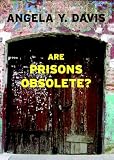
Angela Y. Davis delivers a tight, argument-driven pamphlet making the case that the U.S. prison system should be dismantled. The prose moves briskly between historical context, moral insistence, and political provocation; its useful part is clarifying abolitionist language and stakes for activists and students. Its main limitation is practical: the book stays at critique and vision rather than supplying granular implementation plans or dense empirical backing, so policy-minded readers may feel it’s rhetorically strong but operationally thin.
A Study of the Relation of Military Power to National Advantage
by Norman Angell
Recommended by Peter Thiel
This work has been selected by scholars as being culturally important, and is part of the knowledge base of civilization as we know it. This work was reproduced from the original artifact, and remains as true to the original work as possible.

A Year in the Life of an InnerCity Neighborhood
by David Simon
Recommended by Peter Attia
The crimeinfested intersection of West Fayette and Monroe Streets is wellknownand cautiously avoidedby most of Baltimore. But this notorious corner's 24hour openair drug market provides the economic fuel for a dying neighborhood.
Love, Drugs, Trouble, and Coming of Age in the Bronx
by Adrian Nicole Leblanc
Recommended by Lena Dunham
In her extraordinary bestseller, Adrian Nicole LeBlanc immerses readers in the intricacies of the ghetto, revealing the true sagas lurking behind the headlines of gangsta glamour, golddrenched drug dealers, and streetcorner society.

The Political Economy of the Mass Media
by Edward S. Herman
Recommended by Geoffrey Miller
In this pathbreaking work, Edward S. Herman and Noam Chomsky show that, contrary to the usual image of the news media as cantankerous, obstinate, and ubiquitous in their search for truth and defense of justice, in their actual practice they defend the economic, social, and…

American Injustice in the Age of the Wealth Gap
by Matt Taibbi
Recommended by Brent Hatley
NEW YORK TIMES BESTSELLER ? NAMED ONE OF THE BEST BOOKS OF THE YEAR BY THE WASHINGTON POST, NPR, AND KIRKUS REVIEWSA scathing portrait of an urgent new American crisis Over the last two decades, America has been falling deeper and deeper into a statistical mystery: Poverty goes…
Christian Nationalism in the United States
by Andrew L. Whitehead
Recommended by Timothy Keller
Why do so many conservative Christians continue to support Donald Trump despite his many overt moral failings Why do many Americans advocate so vehemently for xenophobic policies, such as a border wall with Mexico Why do many Americans seem so unwilling to acknowledge the…
The Rise of Disaster Capitalism
by Naomi Klein
Recommended by Brit Marling
In her groundbreaking reporting from Iraq, Naomi Klein exposed how the trauma of invasion was being exploited to remake the country in the interest of foreign corporations.

The Art of Skepticism in a DataDriven World
by Carl T. Bergstrom
Recommended by Nigel Warburton
Bullshit isn't what it used to be. Now, two science professors give us the tools to dismantle misinformation and think clearly in a world of fake news and bad data.It's increasingly difficult to know what's true. Misinformation, disinformation, and fake news abound.
A Humanistic Perspective
by Peter L. Berger
This lucid and lively book, punctuated with witty, incisive examples, is addressed both to the layman who wants to know what Sociology, is all about and to students and sociologists who are concerned about the larger implications and dimensions of their discipline.
by Zygmunt Bauman
Each of these 44 letters tells a story drawn from ordinary lives, but tells it in order to reveal an extraordinariness that we might otherwise overlook.
Decency, Violence, and the Moral Life of the Inner City
by Elijah Anderson
Hidden Biases of Good People
by Mahzarin R. Banaji
I know my own mind.I am able to assess others in a fair and accurate way.These selfperceptions are challenged by leading psychologists Mahzarin R. Banaji and Anthony G.
Political Attitudes and Democracy in Five Nations
by Gabriel Abraham Almond
This classic text is a comparative political study, based on extensive survey data that defined and analysed the Greek concept of civic virtuelture: the political and social attitudes that are crucial to the success of modern democracy in Western nations.
Children in America's Schools
by Jonathan Kozol
National Book Awardwinning author Jonathan Kozol presents his shocking account of the American educational system in this stunning "New York Times" bestseller, which has sold more than 250,000 hardcover copies."An impassioned book, laced with anger and indignation, about how our…
A Social Study
by W. E. B. du Bois
2017 Reprint of 1899 Edition. Full facsimile of the original edition, not reproduced with Optical Recognition software. The Philadelphia Negro is a sociological study of African Americans in Philadelphia written by W. E. B. Du Bois.

Sociogenetic and Psychogenetic Investigations
by Norbert Elias
The Civilizing Process stands out as Norbert Elias' greatest work, tracing the "civilizing" of manners and personality in Western Europe since the late Middle Ages by demonstrating how the formation of states and the monopolization of power within them changed Western society…
A Social History of Marijuana Medical, Recreational and Scientific
by Martin A. Lee
An Economic and Sociological Analysis
by Ludwig von Mises
This book must rank as the most devastating analysis of socialism yet penned. . . . An economic classic in our time.?Henry HazlittMore than thirty years ago F. A.
by Eugen Richter
Publisher: London, S. Sonnenschein Publication date: 1893 Subjects: Socialism Utopias Women and socialism Notes: This is an OCR reprint. There may be typos or missing text. There are no illustrations or indexes.

by Frantz Fanon
A major influence on civil rights, anticolonial, and black consciousness movements around the world, Black Skin, White Masks is the unsurpassed study of the black psyche in a white world.
Young Men on Hookups, Love, Porn, Consent, and Navigating the New Masculinity
by Peggy Orenstein
The book uses a direct, interview-rich style that moves between reported scenes, classroom and family examples, and cultural commentary. It presents frequent verbatim quotes and practical phrases aimed at lowering the bar for awkward conversations about consent and desire. The book favors anecdote and reporting over detailed quantitative analysis, so readers expecting lots of numbers or systematic meta-review may find it light on statistical evidence. At times the author's corrective voice becomes prescriptive and repeats themes, which can slow momentum.
Parents, Children and the Search for Identity
by Andrew Solomon

by John Scott
A consistent bestseller, the wideranging and authoritative Dictionary of Sociology, was first published in 1994 and contains more than 2,500 entries on the terminology, methods, concepts, and thinkers in the field, as well as from the related fields of psychology, economics,…
by C. Wright Mills
C. Wright Mills is best remembered for his highly acclaimed work The Sociological Imagination, in which he set forth his views on how social science should be pursued.
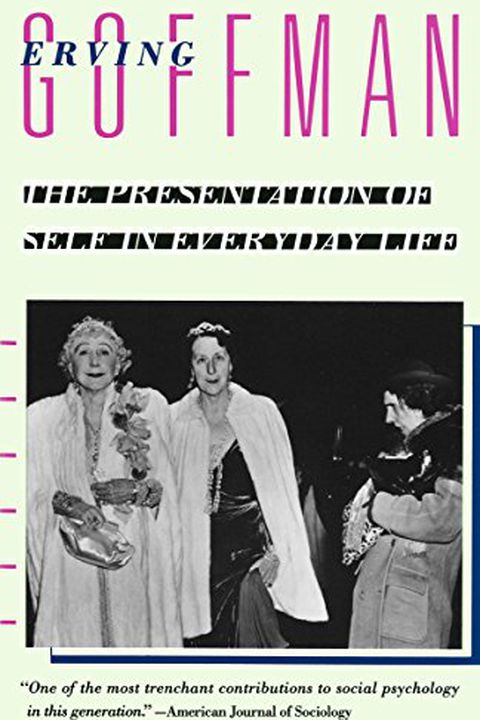
by Erving Goffman
A notable contribution to our understanding of ourselves. This book explores the realm of human behavior in social situations and the way that we appear to others. Dr. Goffman uses the metaphor of theatrical performance as a framework.

A Treatise in the Sociology, of Knowledge
by Peter L. Berger
Called the "fifthmost important sociological book of the 20th century" by the International Sociological Association, this groundbreaking study of knowledge introduces the concept of "social construction" into the social sciences for the first time.
A History of Insanity in the Age of Reason
by Michel Foucault
Librarian note: an alternate cover for this edition can be found here.Michel Foucault examines the archeology of madness in the West from 1500 to 1800 ?
A Social Critique of the Judgement of Taste
by Pierre Bourdieu
Los sujetos sociales se diferencian por las distinciones que realizan entre lo sabroso y lo insípido, lo bello y lo feo, lo distinguido y lo vulgar en las que se expresa o se traiciona su posición.
Anger and Mourning on the American Right
by Arlie Russell Hochschild
In Strangers in Their Own Land, the renowned sociologist Arlie Russell Hochschild embarks on a thoughtprovoking journey from her liberal hometown of Berkeley, California, deep into Louisiana bayou country ? a stronghold of the conservative right.
Big Ideas Simply Explained
by Sarah Tomley
The Sociology, Book takes on some of humankind's biggest questions: What is society What makes it tick Why do we interact in the way that we do with our friends, coworkers, and rivalsThe Sociology, Book profiles the world's most renowned sociologists and more than 100 of their…
by Anthony Giddens
About the Book: Sociology,: 7th Edition The Seventh Edition Of This Indispensable Resource Goes From Strength To Strength Providing A Vibrant, Engaging And Authoritative Introduction To Sociology,.
by Raymond Aron
Raymond Aron's 1955 masterpiece The Opium of the Intellectuals, is one of the great works of twentieth century political reflection.
by Edward T. Hall
Edward T. Hall opens up new dimensions of understanding and perception of human experience by helping us rethink our values in constructive ways. "A fascinating book." Ashley Montag, "Chicago Daily News"

by Natalie yMoore
Mayors Richard M. Daley and Rahm Emanuel have touted and promoted Chicago as a "world class city." The skyscrapers kissing the clouds, the billiondollar Millennium Park, Michelinrated restaurants, pristine lake views, fabulous shopping, vibrant theater scene, downtown flower…
Which Sociology Books does Barack Obama recommend?
Barack Obama recommends 5 books on this list. See all book recommendations by Barack Obama
- Evicted by Matthew Desmond
- The Age of Surveillance Capitalism by Shoshana Zuboff
- Janesville by Amy Goldstein
- American Prison by Shane Bauer
- The Broken Ladder by Keith Payne
Which Sociology Books does Bill Gates recommend?
Bill Gates recommends 5 books on this list. See all book recommendations by Bill Gates
- Outliers by Malcolm Gladwell
- The Better Angels of Our Nature by Steven Pinker
- Evicted by Matthew Desmond
- The New Jim Crow by Michelle Alexander
- Blueprint by Nicholas A. Christakis
Which Sociology Books does Adam Grant recommend?
Adam Grant recommends 4 books on this list. See all book recommendations by Adam Grant
- Blueprint by Nicholas A. Christakis
- The Meritocracy Trap by Daniel Markovits
- Tightrope by Nicholas D. Kristof
- Friendship by Lydia Denworth
Sociology Books: common questions
- What are the most recommended sociology books?
- Outliers, The Better Angels of Our Nature and The Coddling of the American Mind are the most recommended sociology books on BookMentions, ranked by how many people recommended them.
- Who recommends sociology books?
- Barack Obama, Bill Gates, Adam Grant and Joe Rogan are among the people who recommend books on this list. Each name links to their full set of book recommendations.
- Which of these sociology books should I read first?
- Outliers by Malcolm Gladwell is the most recommended here with 28 recommendations, which makes it the safest place to start.
Built from recommendation data, category signals, and source-backed book records. Use this list as a starting point; open any book to see proof, context, and Amazon options where available.
How is the Sociology Books list built?
The Sociology Books list is built from public recommendation sources and category memberships. Books are ranked by how many distinct people recommended each one; recommendation counts and ratings are shown where available. Open any book to see source-backed recommendation proof, editorial context, and Amazon options — the per-book detail page is where the trust signals live.
Who recommends Sociology Books?
Sociology Books are recommended by the people below, including Barack Obama, Bill Gates and Adam Grant. Open a profile to see everything they recommend, with the source behind each pick.
- Barack ObamaBooks recommended by Barack: 5
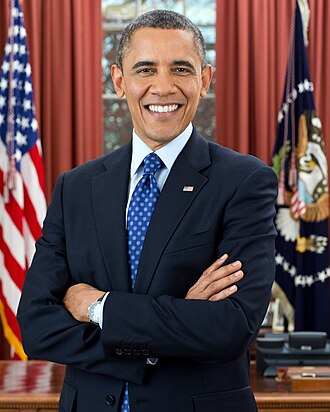
- Bill GatesBooks recommended by Bill: 5

- Adam GrantBooks recommended by Adam: 4

- Joe RoganBooks recommended by Joe: 4

- Mark MansonBooks recommended by Mark: 4
- Mark ZuckerbergBooks recommended by Mark: 4

- Satya NadellaBooks recommended by Satya: 4
- Alan CooperBooks recommended by Alan: 3
- Antonio García MartínezBooks recommended by Antonio: 3
- Ben ShapiroBooks recommended by Ben: 3
- Bridget PhetasyBooks recommended by Bridget: 3
- Dave ElitchBooks recommended by Dave: 3