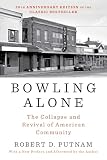
The Collapse and Revival of American Community
by Robert D. Putnam
Recommended by Asha Rangappa
Check price on AmazonProof-backed recommendation
Amazon availability
This is a wide-ranging, evidence-packed account that links the decline of communal institutions—from bowling leagues to civic clubs—to broader social shifts in postwar America. Putnam mixes narrative examples with extensive survey and archival material to map when and where civic ties frayed. The useful part is the empirical sweep: timelines, sector-by-sector trends, and clear signposts for anyone arguing about community change. The limiting part is density: long data-heavy chapters and repeated trend recaps make the middle slow, and the focus stays largely U.S.-centric.
This summary and audience guidance are AI-generated from the book's description and its recommendation history, last updated June 2026. Recommendations, quotes and sources elsewhere on this page come from published material and are not generated.
Once we bowled in leagues, usually after workbut no longer. This seemingly small phenomenon symbolizes a significant social change that Robert Putnam has identified in this brilliant volume, which The Economist hailed as "a prodigious achievement."Drawing on vast new data that reveal Americans' changing behavior, Putnam shows how we have become i...
Difficulty:hard
Check formats, pricing, and availability options for Kindle, physical print, or audiobooks directly.
View available editions on AmazonWhy recommended
Recommended by 2 sources and appears in Sociology, Most Recommended Books, and Politics.
People and public figures who have recommended this book.
Recommendation proof is sourced from public posts, interviews, reading lists, and cited references.
Asha Rangappa
“Bowling Alone is the name of a book by Robert Putnam about the decline of social capital. It's an excellent read.”
Check formats, pricing, and availability options directly on Amazon.
Consider Outliers by Malcolm Gladwell. Recommended by 31 sources.
“Outliers reads like a series of captivating magazine profiles, each unpacking a hidden factor behind extraordinary success. Gladwell’s storytelling makes complex social science accessible, but the book relies on memorable anecdotes rather than offering systematic analysis. The book explores the idea that individual brilliance rarely stands alone; success often hinges on birth dates, cultural legacies, and the 10,000-hour rule. While the narratives are strong, the book overgeneralizes from handpicked examples, leaving skeptical readers questioning the conclusions. It’s most useful as a conversation starter about luck and timing—annoying if you want a rigorous academic treatise or a how-to guide for your own life.”

Each recommendation is collected from a public source — interviews, articles, or curated lists — and linked to its original URL. Books with many verifiable recommendations from respected people rank higher.