Recommended by 5 notable people, including Dave Elitch and Cynthia Johnson
Check price on AmazonRecommended by public sources
Amazon availability
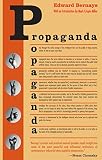
See customer reviews on Amazon →Bernays writes in a brisk, programmatic voice that reads like a practitioner's manual: short case sketches, tactical prescriptions, and candid justifications for shaping mass opinion. The most useful section maps concrete techniques and the rhetoric used to normalize coordinated publicity, which is handy for historical comparison or classroom debate. The main limits are tone and dated examples: managerial certainty leaves little ethical pushback and some passages feel uncomfortably directive. No exercises or modern scientific framing are provided; better read slowly with a critical pen.
This summary and audience guidance are AI-generated from the book's description and its recommendation history, last updated May 2026. Recommendations, quotes and sources elsewhere on this page come from published material and are not generated.
?Bernays? honest and practical manual provides much insight into some of the most powerful and influential institutions of contemporary industrial state capitalist democracies.??Noam Chomsky?The conscious and intelligent manipulation of the organized habits and opinions of the masses is an important element in democratic society. Those who manipula...
Difficulty:hard
Check formats, pricing, and availability options for Kindle, physical print, or audiobooks directly.
View available editions on AmazonWhy recommended
Recommended by 7 sources and appears in Sociology, Most Recommended Books, and Politics.
People and public figures who have recommended this book.
Recommendation proof is sourced from public posts, interviews, reading lists, and cited references.
Check formats, pricing, and availability options directly on Amazon.
Consider Outliers by Malcolm Gladwell. Recommended by 31 sources.
“Outliers reads like a series of captivating magazine profiles, each unpacking a hidden factor behind extraordinary success. Gladwell’s storytelling makes complex social science accessible, but the book relies on memorable anecdotes rather than offering systematic analysis. The book explores the idea that individual brilliance rarely stands alone; success often hinges on birth dates, cultural legacies, and the 10,000-hour rule. While the narratives are strong, the book overgeneralizes from handpicked examples, leaving skeptical readers questioning the conclusions. It’s most useful as a conversation starter about luck and timing—annoying if you want a rigorous academic treatise or a how-to guide for your own life.”


Each recommendation is collected from a public source — interviews, articles, or curated lists — and linked to its original URL. Books with many verifiable recommendations from respected people rank higher.