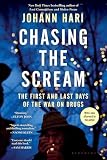
The Opposite of Addiction is Connection
by Johann Hari
Recommended by 3 notable people, including Alan Cooper and B.J. Novak
Check price on AmazonRecommended by public sources
Amazon availability
See customer reviews on Amazon →Johann Hari moves through countries and interviews in a narrative investigative travelogue about a century of drug prohibition. The most useful part is the human-scale case studies and side-by-side policy contrasts that make abstract debates tangible. The writing favors storytelling and moral argument over dense statistics, which helps readability but also means evidence is often anecdotal. Readers seeking a neutral, data-first policy manual will find the tone persuasive rather than dispassionate. Expect momentum early, then repetition where the author presses a particular viewpoint.
This summary and audience guidance are AI-generated from the book's description and its recommendation history, last updated June 2026. Recommendations, quotes and sources elsewhere on this page come from published material and are not generated.
NEW YORK TIMES BESTSELLERIt is now one hundred years since drugs were first banned in the United States. On the eve of this centenary, journalist Johann Hari set off on an epic threeyear, thirtythousandmile journey into the war on drugs. What he found is that more and more people all over the world have begun to recognize three startling truths:...
Difficulty:hard
Check formats, pricing, and availability options for Kindle, physical print, or audiobooks directly.
View available editions on AmazonWhy recommended
Recommended by 3 sources and appears in Sociology, Politics, and Psychology.
People and public figures who have recommended this book.
Recommendation proof is sourced from public posts, interviews, reading lists, and cited references.
Check formats, pricing, and availability options directly on Amazon.
Consider Outliers by Malcolm Gladwell. Recommended by 31 sources.
“Outliers reads like a series of captivating magazine profiles, each unpacking a hidden factor behind extraordinary success. Gladwell’s storytelling makes complex social science accessible, but the book relies on memorable anecdotes rather than offering systematic analysis. The book explores the idea that individual brilliance rarely stands alone; success often hinges on birth dates, cultural legacies, and the 10,000-hour rule. While the narratives are strong, the book overgeneralizes from handpicked examples, leaving skeptical readers questioning the conclusions. It’s most useful as a conversation starter about luck and timing—annoying if you want a rigorous academic treatise or a how-to guide for your own life.”

Each recommendation is collected from a public source — interviews, articles, or curated lists — and linked to its original URL. Books with many verifiable recommendations from respected people rank higher.