BookMentionsBookMentions
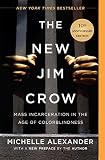
The New Jim Crow
10 recommendations

The New Jim Crow

Mass Incarceration in the Age of Colorblindness

by Michelle Alexander

Recommended by Bill Gates, Mark Zuckerberg +
4 more

More Recommenders

A

I’m reading Michelle Alexander’s book The New Jim Crow and my blood is boiling. | More than any other book I've read in the last few years, this book has reframed my thinking about, and understanding of, a major moral issue with societywide implications. I cannot recommend it strongly enough: "The New Jim Crow" M. Alexander | Since it can’t be done in 140 characters might I suggest two books just to start with The New Jim Crow: Mass Incarceration in the Age of Colorblindness by Michelle Alexander, and Between the World and Me written by TaNehisi Coates. | This book offers an eyeopening look into how the criminal justice system unfairly targets communities of color, and especially Black communities. It’s especially good at explaining the history and the numbers behind mass incarceration. I was familiar with some of the data, but Alexander really helps put it in context. I finished the book more convinced than ever that we need a more just approach to sentencing and more investment in communities of color.

Source →
J

I’m reading Michelle Alexander’s book The New Jim Crow and my blood is boiling. | More than any other book I've read in the last few years, this book has reframed my thinking about, and understanding of, a major moral issue with societywide implications. I cannot recommend it strongly enough: "The New Jim Crow" M. Alexander | Since it can’t be done in 140 characters might I suggest two books just to start with The New Jim Crow: Mass Incarceration in the Age of Colorblindness by Michelle Alexander, and Between the World and Me written by TaNehisi Coates. | This book offers an eyeopening look into how the criminal justice system unfairly targets communities of color, and especially Black communities. It’s especially good at explaining the history and the numbers behind mass incarceration. I was familiar with some of the data, but Alexander really helps put it in context. I finished the book more convinced than ever that we need a more just approach to sentencing and more investment in communities of color.

Source →
B

I’m reading Michelle Alexander’s book The New Jim Crow and my blood is boiling. | More than any other book I've read in the last few years, this book has reframed my thinking about, and understanding of, a major moral issue with societywide implications. I cannot recommend it strongly enough: "The New Jim Crow" M. Alexander | Since it can’t be done in 140 characters might I suggest two books just to start with The New Jim Crow: Mass Incarceration in the Age of Colorblindness by Michelle Alexander, and Between the World and Me written by TaNehisi Coates. | This book offers an eyeopening look into how the criminal justice system unfairly targets communities of color, and especially Black communities. It’s especially good at explaining the history and the numbers behind mass incarceration. I was familiar with some of the data, but Alexander really helps put it in context. I finished the book more convinced than ever that we need a more just approach to sentencing and more investment in communities of color.

Source →
S

I’m reading Michelle Alexander’s book The New Jim Crow and my blood is boiling. | More than any other book I've read in the last few years, this book has reframed my thinking about, and understanding of, a major moral issue with societywide implications. I cannot recommend it strongly enough: "The New Jim Crow" M. Alexander | Since it can’t be done in 140 characters might I suggest two books just to start with The New Jim Crow: Mass Incarceration in the Age of Colorblindness by Michelle Alexander, and Between the World and Me written by TaNehisi Coates. | This book offers an eyeopening look into how the criminal justice system unfairly targets communities of color, and especially Black communities. It’s especially good at explaining the history and the numbers behind mass incarceration. I was familiar with some of the data, but Alexander really helps put it in context. I finished the book more convinced than ever that we need a more just approach to sentencing and more investment in communities of color.

Source →

Recommended by 6 notable people, including Bill Gates and Mark Zuckerberg

Check price on Amazon

Proof-backed recommendation

Amazon availability

Reading Profile

Difficulty:hard
Themes:criminalization vs citizenshipcolorblind rhetoric vs systemic bias

Should I read this?

This is a sustained, single-argument account that traces how criminal-justice practices produce racialized civic exclusion, using legal history, court rulings, and policy examples. It’s useful when you need precise language and concrete cases to frame classroom discussion, community reads, or policy critiques. The prose is readable but relentlessly argumentative, and the central claim is repeated often while new legal detail accumulates. Readers seeking multiple perspectives, memoir-style storytelling, or a practical step-by-step playbook will find it narrower than expected.

Read this if...

  • law student preparing for a seminar on mass incarceration who needs concrete legal examples and a clear vocabulary to cite in class discussion and papers.
  • community organizer planning a campus or neighborhood read-and-discuss series who wants a single, accessible text to focus conversation about race and criminal justice.
  • graduate student assembling a literature review in sociology or history who needs a readable synthesis linking statutes, enforcement, and social outcomes to critique or contrast with other sources.

Skip this if...

  • You want light or uplifting reading — the tone is sober, confrontational, and frequently sobering rather than entertaining.
  • You prefer many competing viewpoints or narrative variety — you'll likely put it down when dense legal-historical detail piles up and the same central claim is restated without extended counterarguments.
  • You want a how-to policy manual or hands-on implementation steps — this provides analysis and critique, not step-by-step policy templates or exercises.

A tenthanniversary edition of the iconic bestseller, with a new preface by the authorSeldom does a book have the impact of Michelle Alexander?s The New Jim Crow. Since it was first published in 2010, it has been cited in judicial decisions and has been adopted in campuswide and communitywide reads; it helped inspire the creation of the Marshall ...

Before You Buy

Reading Specifications

Difficulty:hard

Themes:
criminalization vs citizenshipcolorblind rhetoric vs systemic biasstatute text vs enforcement practice

Audience Fit

Recommended for:
  • law student preparing for a seminar on mass incarceration who needs concrete legal examples and a clear vocabulary to cite in class discussion and papers.
  • community organizer planning a campus or neighborhood read-and-discuss series who wants a single, accessible text to focus conversation about race and criminal justice.
  • graduate student assembling a literature review in sociology or history who needs a readable synthesis linking statutes, enforcement, and social outcomes to critique or contrast with other sources.
Not ideal if you want:
  • You want light or uplifting reading — the tone is sober, confrontational, and frequently sobering rather than entertaining.
  • You prefer many competing viewpoints or narrative variety — you'll likely put it down when dense legal-historical detail piles up and the same central claim is restated without extended counterarguments.
  • You want a how-to policy manual or hands-on implementation steps — this provides analysis and critique, not step-by-step policy templates or exercises.

Check formats, pricing, and availability options for Kindle, physical print, or audiobooks directly.

View available editions on Amazon

Key themes

criminalization vs citizenshipcolorblind rhetoric vs systemic biasstatute text vs enforcement practicepunishment vs social controlreform vs abolition

Why recommended

Recommended by 10 sources and appears in Political History, Criminology, and Criminal Law.

Recommended by notable people

People and public figures who have recommended this book.

Recommendation Signals

Recommendation proof is sourced from public posts, interviews, reading lists, and cited references.

Mark Zuckerberg

Mark Zuckerberg

Co-founder, Chairman, and CEO of Meta Platforms

I’m reading Michelle Alexander’s book The New Jim Crow and my blood is boiling. | More than any other book I've read in the last few years, this book has reframed my thinking about, and understanding of, a major moral issue with societywide implications. I cannot recommend it strongly enough: "The New Jim Crow" M. Alexander | Since it can’t be done in 140 characters might I suggest two books just to start with The New Jim Crow: Mass Incarceration in the Age of Colorblindness by Michelle Alexander, and Between the World and Me written by TaNehisi Coates. | This book offers an eyeopening look into how the criminal justice system unfairly targets communities of color, and especially Black communities. It’s especially good at explaining the history and the numbers behind mass incarceration. I was familiar with some of the data, but Alexander really helps put it in context. I finished the book more convinced than ever that we need a more just approach to sentencing and more investment in communities of color.
View sources (5) ▾80%

Appears In

Outliers
Try This Instead

Not sure if this is the right fit?

Consider Outliers by Malcolm Gladwell. Recommended by 31 sources.

Outliers reads like a series of captivating magazine profiles, each unpacking a hidden factor behind extraordinary success. Gladwell’s storytelling makes complex social science accessible, but the book relies on memorable anecdotes rather than offering systematic analysis. The book explores the idea that individual brilliance rarely stands alone; success often hinges on birth dates, cultural legacies, and the 10,000-hour rule. While the narratives are strong, the book overgeneralizes from handpicked examples, leaving skeptical readers questioning the conclusions. It’s most useful as a conversation starter about luck and timing—annoying if you want a rigorous academic treatise or a how-to guide for your own life.

Similar books

How recommendation signals are reviewed

Each recommendation is collected from a public source — interviews, articles, or curated lists — and linked to its original URL. Books with many verifiable recommendations from respected people rank higher.

The New Jim Crow

The New Jim Crow

View on Amazon →