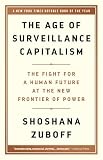
The Fight for a Human Future at the New Frontier of Power
by Shoshana Zuboff
Recommended by 7 notable people, including Barack Obama and Vinod Khosla
Check price on AmazonRecommended by public sources
Amazon availability
See customer reviews on Amazon →Zuboff builds a broad, argument-driven account of surveillance capitalism: tracing how firms collect behavioral data, turn it into prediction products, and shape markets and public life. The writing introduces a specific vocabulary and many cross-cutting examples that make the scale of the practice tangible. Strengths lie in its depth of cases and an urgent moral frame; limits are a dense, repetitive prose style and few concrete, ready-to-apply policy solutions. Best read with patience and attention rather than as a quick primer.
This summary and audience guidance are AI-generated from the book's description and its recommendation history, last updated May 2026. Recommendations, quotes and sources elsewhere on this page come from published material and are not generated.
The challenges to humanity posed by the digital future, the first detailed examination of the unprecedented form of power called "surveillance capitalism," and the quest by powerful corporations to predict and control our behavior.In this masterwork of original thinking and research, Shoshana Zuboff provides startling insights into the phenomenon t...
Difficulty:hard
Check formats, pricing, and availability options for Kindle, physical print, or audiobooks directly.
View available editions on AmazonWhy recommended
Recommended by 9 sources and appears in Sociology, Most Recommended Books, and Finance.
People and public figures who have recommended this book.
Recommendation proof is sourced from public posts, interviews, reading lists, and cited references.
Check formats, pricing, and availability options directly on Amazon.
Consider Outliers by Malcolm Gladwell. Recommended by 31 sources.
“Outliers reads like a series of captivating magazine profiles, each unpacking a hidden factor behind extraordinary success. Gladwell’s storytelling makes complex social science accessible, but the book relies on memorable anecdotes rather than offering systematic analysis. The book explores the idea that individual brilliance rarely stands alone; success often hinges on birth dates, cultural legacies, and the 10,000-hour rule. While the narratives are strong, the book overgeneralizes from handpicked examples, leaving skeptical readers questioning the conclusions. It’s most useful as a conversation starter about luck and timing—annoying if you want a rigorous academic treatise or a how-to guide for your own life.”


Each recommendation is collected from a public source — interviews, articles, or curated lists — and linked to its original URL. Books with many verifiable recommendations from respected people rank higher.