BookMentionsBookMentions
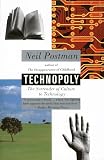
Technopoly
3 recommendations

Technopoly

The Surrender of Culture to Technology,

by Neil Postman

Recommended by Tristan Harris and Aaron Bastani

Recommended by Tristan Harris and Aaron Bastani

Check price on Amazon

Proof-backed recommendation

Amazon availability

Reading Profile

Difficulty:hard
Themes:technology-as-tool vs technology-as-sovereign

Should I read this?

Neil Postman writes in a brisk, opinionated voice that mixes cultural history, polemic, and wry aphorism. Reading it feels like being pressed to see familiar tools as forces that reorder politics, education, art, and truth. What works best is the book’s ability to supply striking language and memorable examples for talking about technology’s cultural consequences. Its main limitation is dated concrete examples and a rhetorical rather than empirical approach, so readers must translate cases to the social-media and AI era. Offers critique, not hands-on fixes.

Read this if...

  • a high-school history or civics teacher redesigning a media-literacy unit who needs memorable language and historical anecdotes to prompt classroom debate about how media shape meaning
  • a product manager at an education-technology company arguing internally against replacing human judgment with automated processes, because the book supplies rhetorical framing for the risks of privileging procedure over discretion
  • a graduate student in sociology or media studies assembling a literature review who wants a clear, quotable polemic to juxtapose with contemporary empirical work

Skip this if...

  • annoying if you prefer tightly sourced, data-driven analysis — the book relies on rhetoric and historical examples rather than modern statistics
  • you'll likely put it down when the polemical tone and similar cautionary examples recur mid-book; readers who want novel solutions or more contemporary case studies tend to lose patience there
  • annoying if you want practical steps or exercises — lacks hands-on recommendations and reads as critique rather than a how-to manual

In this witty, often terrifying work of cultural criticism, the author of Amusing Ourselves to Death chronicles our transformation into a Technopoly: a society that no longer merely uses Technology, as a support system but instead is shaped by itwith radical consequences for the meanings of politics, art, education, intelligence, and truth....

Before You Buy

Reading Specifications

Difficulty:hard

Themes:
technology-as-tool vs technology-as-sovereigneducation-as-human-formation vs schooling-as-technical-proceduretruth vs technical efficiency

Audience Fit

Recommended for:
  • a high-school history or civics teacher redesigning a media-literacy unit who needs memorable language and historical anecdotes to prompt classroom debate about how media shape meaning
  • a product manager at an education-technology company arguing internally against replacing human judgment with automated processes, because the book supplies rhetorical framing for the risks of privileging procedure over discretion
  • a graduate student in sociology or media studies assembling a literature review who wants a clear, quotable polemic to juxtapose with contemporary empirical work
Not ideal if you want:
  • annoying if you prefer tightly sourced, data-driven analysis — the book relies on rhetoric and historical examples rather than modern statistics
  • you'll likely put it down when the polemical tone and similar cautionary examples recur mid-book; readers who want novel solutions or more contemporary case studies tend to lose patience there
  • annoying if you want practical steps or exercises — lacks hands-on recommendations and reads as critique rather than a how-to manual

Check formats, pricing, and availability options for Kindle, physical print, or audiobooks directly.

View available editions on Amazon

Key themes

technology-as-tool vs technology-as-sovereigneducation-as-human-formation vs schooling-as-tech…truth vs technical efficiencymeaning-making vs information glutdemocratic deliberation vs automated decision-mak…

Why recommended

Recommended by 3 sources and appears in Most Recommended Books, Technology, and Philosophy.

Recommended by notable people

People and public figures who have recommended this book.

Recommendation Signals

Recommendation proof is sourced from public posts, interviews, reading lists, and cited references.

A

Aaron Bastani

I highly recommend. | Such an extraordinary book, & so lucidly written. I?d forgotten how conservative the implicit conclusions of it were. In the 21st C Postman would be sympathetic to those polities not enamoured by each new innovation that doesn?t serve human flourishing (they aren?t in the West). | Such an extraordinary book, & so lucidly written. I’d forgotten how conservative the implicit conclusions of it were. In the 21st C Postman would be sympathetic to those polities not enamoured by each new innovation that doesn’t serve human flourishing (they aren’t in the West).
View sources (2) ▾80%

Appears In

Outliers
Try This Instead

Not sure if this is the right fit?

Consider Outliers by Malcolm Gladwell. Recommended by 31 sources.

Outliers reads like a series of captivating magazine profiles, each unpacking a hidden factor behind extraordinary success. Gladwell’s storytelling makes complex social science accessible, but the book relies on memorable anecdotes rather than offering systematic analysis. The book explores the idea that individual brilliance rarely stands alone; success often hinges on birth dates, cultural legacies, and the 10,000-hour rule. While the narratives are strong, the book overgeneralizes from handpicked examples, leaving skeptical readers questioning the conclusions. It’s most useful as a conversation starter about luck and timing—annoying if you want a rigorous academic treatise or a how-to guide for your own life.

Similar books

How recommendation signals are reviewed

Each recommendation is collected from a public source — interviews, articles, or curated lists — and linked to its original URL. Books with many verifiable recommendations from respected people rank higher.