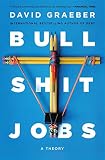
A Theory
by David Graeber
Recommended by 3 notable people, including Heinemeier Hansson and Darcie Wilder
Check price on AmazonRecommended by public sources
Amazon availability
See customer reviews on Amazon →Graeber expands his viral essay into a pointed, anecdote-heavy polemic that names kinds of pointless modern jobs and why they feel empty. The book's most useful material is the vivid examples and glossary-like language readers can borrow when discussing workplace malaise. Midbook stretches slow as similar outrages and historical detours recur, and the tone sometimes privileges moral argument over calm, methodical analysis. Best read as a stimulant for conversation and personal inventory rather than a blueprint for policy or reform.
This summary and audience guidance are AI-generated from the book's description and its recommendation history, last updated June 2026. Recommendations, quotes and sources elsewhere on this page come from published material and are not generated.
From bestselling writer David Graeber, a powerful argument against the rise of meaningless, unfulfilling jobs, and their consequences.Does your job make a meaningful contribution to the world In the spring of 2013, David Graeber asked this question in a playful, provocative essay titled ?On the Phenomenon of Bullshit Jobs.? It went viral. After a ...
Difficulty:hard
Check formats, pricing, and availability options for Kindle, physical print, or audiobooks directly.
View available editions on AmazonWhy recommended
Recommended by 3 sources and appears in Sociology, Most Recommended Books, and Finance.
People and public figures who have recommended this book.
Recommendation proof is sourced from public posts, interviews, reading lists, and cited references.
Check formats, pricing, and availability options directly on Amazon.
Consider Outliers by Malcolm Gladwell. Recommended by 31 sources.
“Outliers reads like a series of captivating magazine profiles, each unpacking a hidden factor behind extraordinary success. Gladwell’s storytelling makes complex social science accessible, but the book relies on memorable anecdotes rather than offering systematic analysis. The book explores the idea that individual brilliance rarely stands alone; success often hinges on birth dates, cultural legacies, and the 10,000-hour rule. While the narratives are strong, the book overgeneralizes from handpicked examples, leaving skeptical readers questioning the conclusions. It’s most useful as a conversation starter about luck and timing—annoying if you want a rigorous academic treatise or a how-to guide for your own life.”

Each recommendation is collected from a public source — interviews, articles, or curated lists — and linked to its original URL. Books with many verifiable recommendations from respected people rank higher.