BookMentionsBookMentions
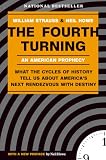
The Fourth Turning
7 recommendations

The Fourth Turning

What the Cycles of History Tell Us About America's Next Rendezvous with Destiny

by William Strauss

Recommended by Balaji S. Srinivasan, Raoul Pal +
3 more

More Recommenders

T

One of those books that is so often quoted that you almost feel like you know what it’s about. After years of being prodded I finally decided to give it a listen and it’s shocking how accurate the authors were. Totally worth your time. | Read this because you have to understand that life has seasons.

Source →
J

One of those books that is so often quoted that you almost feel like you know what it’s about. After years of being prodded I finally decided to give it a listen and it’s shocking how accurate the authors were. Totally worth your time. | Read this because you have to understand that life has seasons.

Source →
P

One of those books that is so often quoted that you almost feel like you know what it’s about. After years of being prodded I finally decided to give it a listen and it’s shocking how accurate the authors were. Totally worth your time. | Read this because you have to understand that life has seasons.

Source →

Recommended by 5 notable people, including Balaji S. Srinivasan and Raoul Pal

Check price on Amazon

Proof-backed recommendation

Amazon availability

Reading Profile

Difficulty:easy
Themes:generational archetypes vs individual variancecyclical determinism vs contingency

Should I read this?

This is a big-idea, polemical book that forces you to look at history as repeating generational turns. The useful payoff is a single organizing lens that makes sense of recurring political and cultural rhythms and sparks scenario-thinking about future crises. The main limitation is its appetite for broad generalization: long historical vignettes and typologies can feel selective and circular, and the predictive passages slide from plausible forecasting into speculative admonition.

Read this if...

  • a city planner building long-range resilience scenarios who needs a narrative frame to test how social cohesion might shift over decades — this book supplies a clear cyclical storyboard to stress-test plans
  • a political reporter covering generation-driven policy debates who wants a single, memorable vocabulary to frame why certain cohorts clash — useful now for quick explanatory shorthand
  • a history teacher designing a thematic unit on longue durée patterns who wants students to compare episodic events against a repeated-turns framework — good for sparking debate and assignments

Skip this if...

  • you'll likely put it down when the book repeats the same generational pattern across many eras; the middle section’s longueurs of example-heavy narrative are the usual drop-off point
  • annoying if you prefer tightly sourced, nuance-first histories — selective anecdotes and large categorical claims can feel overstated or cherry-picked
  • not suitable if you want practical steps or hands-on exercises — the book offers sweeping interpretation, not actionable toolkits

NATIONAL BESTSELLER "A startling vision of what the cycles of history predict for the future."USA Weekend William Strauss and Neil Howe will change the way you see the worldand your place in it. With blazing originality, The Fourth Turning illuminates the past, explains the present, and reimagines the future. Most remarkably, it offers an utt...

Before You Buy

Reading Specifications

Difficulty:easy

Themes:
generational archetypes vs individual variancecyclical determinism vs contingencypatterned history vs random events

Audience Fit

Recommended for:
  • a city planner building long-range resilience scenarios who needs a narrative frame to test how social cohesion might shift over decades — this book supplies a clear cyclical storyboard to stress-test plans
  • a political reporter covering generation-driven policy debates who wants a single, memorable vocabulary to frame why certain cohorts clash — useful now for quick explanatory shorthand
  • a history teacher designing a thematic unit on longue durée patterns who wants students to compare episodic events against a repeated-turns framework — good for sparking debate and assignments
Not ideal if you want:
  • you'll likely put it down when the book repeats the same generational pattern across many eras; the middle section’s longueurs of example-heavy narrative are the usual drop-off point
  • annoying if you prefer tightly sourced, nuance-first histories — selective anecdotes and large categorical claims can feel overstated or cherry-picked
  • not suitable if you want practical steps or hands-on exercises — the book offers sweeping interpretation, not actionable toolkits

Check formats, pricing, and availability options for Kindle, physical print, or audiobooks directly.

View available editions on Amazon

Key themes

generational archetypes vs individual variancecyclical determinism vs contingencypatterned history vs random eventsprediction vs moral warningsocial cohesion vs institutional decay

Why recommended

Recommended by 7 sources and appears in Most Recommended Books, Politics, and Philosophy.

Recommended by notable people

People and public figures who have recommended this book.

Recommendation Signals

Recommendation proof is sourced from public posts, interviews, reading lists, and cited references.

R

Raoul Pal

One of those books that is so often quoted that you almost feel like you know what it’s about. After years of being prodded I finally decided to give it a listen and it’s shocking how accurate the authors were. Totally worth your time. | Read this because you have to understand that life has seasons.
View sources (2) ▾80%

Appears In

Outliers
Try This Instead

Not sure if this is the right fit?

Consider Outliers by Malcolm Gladwell. Recommended by 31 sources.

Outliers reads like a series of captivating magazine profiles, each unpacking a hidden factor behind extraordinary success. Gladwell’s storytelling makes complex social science accessible, but the book relies on memorable anecdotes rather than offering systematic analysis. The book explores the idea that individual brilliance rarely stands alone; success often hinges on birth dates, cultural legacies, and the 10,000-hour rule. While the narratives are strong, the book overgeneralizes from handpicked examples, leaving skeptical readers questioning the conclusions. It’s most useful as a conversation starter about luck and timing—annoying if you want a rigorous academic treatise or a how-to guide for your own life.

Similar books

How recommendation signals are reviewed

Each recommendation is collected from a public source — interviews, articles, or curated lists — and linked to its original URL. Books with many verifiable recommendations from respected people rank higher.

The Fourth Turning

The Fourth Turning

View on Amazon →