BookMentionsBookMentions
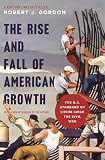
The Rise and Fall of American Growth
11 recommendations

The Rise and Fall of American Growth

The U.S. Standard of Living since the Civil War (The Princeton Economic History of the Western World)

by Robert J. Gordon

Bill GatesPatrick CollisonMarc Andreessen
Recommended by Bill Gates, Patrick Collison +
5 more

More Recommenders

Marc Andreessen

Co-founder of Andreessen Horowitz

@NewLowObserver Try Robert Gordon's book. It's really great... | @RossSchumann Read “The Rise and Fall of American Growth”. It’s a history book. No politics. It will clear it up for you. Wishing you the best. Also, read dark money to learn more about origin of current economic orthodoxy. | Covering everything from the combustion engine to the flush toilet—and judging recent breakthroughs with a skeptical eye—this work of economic history “concludes that innovation is the ultimate source of dramatic improvements in the human condition,” says Nadella. | I did find his historical analysis, which makes up the bulk of the book, utterly fascinating. | I flagged a few books that I thought were particularly great in green. | Some of my favorite books on this history: The Rise & Fall of American Growth by Robert Gordon The Fifties by David Halberstam The Big Change by Frederick Lewis Allen

Source →
S

@NewLowObserver Try Robert Gordon's book. It's really great... | @RossSchumann Read “The Rise and Fall of American Growth”. It’s a history book. No politics. It will clear it up for you. Wishing you the best. Also, read dark money to learn more about origin of current economic orthodoxy. | Covering everything from the combustion engine to the flush toilet—and judging recent breakthroughs with a skeptical eye—this work of economic history “concludes that innovation is the ultimate source of dramatic improvements in the human condition,” says Nadella. | I did find his historical analysis, which makes up the bulk of the book, utterly fascinating. | I flagged a few books that I thought were particularly great in green. | Some of my favorite books on this history: The Rise & Fall of American Growth by Robert Gordon The Fifties by David Halberstam The Big Change by Frederick Lewis Allen

Source →
B

@NewLowObserver Try Robert Gordon's book. It's really great... | @RossSchumann Read “The Rise and Fall of American Growth”. It’s a history book. No politics. It will clear it up for you. Wishing you the best. Also, read dark money to learn more about origin of current economic orthodoxy. | Covering everything from the combustion engine to the flush toilet—and judging recent breakthroughs with a skeptical eye—this work of economic history “concludes that innovation is the ultimate source of dramatic improvements in the human condition,” says Nadella. | I did find his historical analysis, which makes up the bulk of the book, utterly fascinating. | I flagged a few books that I thought were particularly great in green. | Some of my favorite books on this history: The Rise & Fall of American Growth by Robert Gordon The Fifties by David Halberstam The Big Change by Frederick Lewis Allen

Source →
D

@NewLowObserver Try Robert Gordon's book. It's really great... | @RossSchumann Read “The Rise and Fall of American Growth”. It’s a history book. No politics. It will clear it up for you. Wishing you the best. Also, read dark money to learn more about origin of current economic orthodoxy. | Covering everything from the combustion engine to the flush toilet—and judging recent breakthroughs with a skeptical eye—this work of economic history “concludes that innovation is the ultimate source of dramatic improvements in the human condition,” says Nadella. | I did find his historical analysis, which makes up the bulk of the book, utterly fascinating. | I flagged a few books that I thought were particularly great in green. | Some of my favorite books on this history: The Rise & Fall of American Growth by Robert Gordon The Fifties by David Halberstam The Big Change by Frederick Lewis Allen

Source →
D

@NewLowObserver Try Robert Gordon's book. It's really great... | @RossSchumann Read “The Rise and Fall of American Growth”. It’s a history book. No politics. It will clear it up for you. Wishing you the best. Also, read dark money to learn more about origin of current economic orthodoxy. | Covering everything from the combustion engine to the flush toilet—and judging recent breakthroughs with a skeptical eye—this work of economic history “concludes that innovation is the ultimate source of dramatic improvements in the human condition,” says Nadella. | I did find his historical analysis, which makes up the bulk of the book, utterly fascinating. | I flagged a few books that I thought were particularly great in green. | Some of my favorite books on this history: The Rise & Fall of American Growth by Robert Gordon The Fifties by David Halberstam The Big Change by Frederick Lewis Allen

Source →

Recommended by 7 notable people, including Bill Gates and Patrick Collison

Check price on Amazon

Proof-backed recommendation

Amazon availability

Reading Profile

Difficulty:hard
Themes:household comfort gains vs GDP measurement

Should I read this?

The book presents a history tying the late‑19th and early‑20th‑century flood of household-changing inventions to the rise in American living standards, and it argues that comparable gains are unlikely in coming decades. Reading moves between vivid household vignettes, dense statistical chapters, and policy-minded projection. Its most useful feature is the long-run frame and the detailed historical and statistical material; its main limitation is repetition and a mid‑book slog of numbers that can feel dry and over-argued.

Read this if...

  • a policy analyst at a state budget office preparing a 10–20 year fiscal forecast — the book's long-run scenarios and historical precedent may help frame demographic and productivity assumptions.
  • a history instructor building a unit on industrial and domestic change in America — the book presents concrete examples (electric lighting, indoor plumbing, automobiles) that link technology to everyday life and living standards.
  • a long-term investor or corporate strategist weighing secular demand scenarios for infrastructure or consumer markets — useful if you want conservative long-run scenarios because the book presents historical material that favors cautious growth assumptions.

Skip this if...

  • you'll likely put it down when the narrative turns into long chapters of GDP accounting and repeated statistical digressions — the middle of the book is a common drop-off point.
  • annoying if you prefer punchy, solution-oriented books — this is descriptive and argumentative rather than a how-to or prescriptive roadmap.
  • not for readers who dislike a polemical tone or frequent restatement — the author's certainty and repetition can feel one-sided and tiring.

How America's high standard of living came to be and why future growth is under threatIn the century after the Civil War, an economic revolution improved the American standard of living in ways previously unimaginable. Electric lighting, indoor plumbing, motor vehicles, air travel, and television transformed households and workplaces. But has that ...

Before You Buy

Reading Specifications

Difficulty:hard

Themes:
transformative inventions vs incremental innovationhousehold comfort gains vs GDP measurement20th-century demographic boost vs aging population

Audience Fit

Recommended for:
  • a policy analyst at a state budget office preparing a 10–20 year fiscal forecast — the book's long-run scenarios and historical precedent may help frame demographic and productivity assumptions.
  • a history instructor building a unit on industrial and domestic change in America — the book presents concrete examples (electric lighting, indoor plumbing, automobiles) that link technology to everyday life and living standards.
  • a long-term investor or corporate strategist weighing secular demand scenarios for infrastructure or consumer markets — useful if you want conservative long-run scenarios because the book presents historical material that favors cautious growth assumptions.
Not ideal if you want:
  • you'll likely put it down when the narrative turns into long chapters of GDP accounting and repeated statistical digressions — the middle of the book is a common drop-off point.
  • annoying if you prefer punchy, solution-oriented books — this is descriptive and argumentative rather than a how-to or prescriptive roadmap.
  • not for readers who dislike a polemical tone or frequent restatement — the author's certainty and repetition can feel one-sided and tiring.

Check formats, pricing, and availability options for Kindle, physical print, or audiobooks directly.

View available editions on Amazon

Key themes

transformative inventions vs incremental innovati…household comfort gains vs GDP measurement20th-century demographic boost vs aging populationproductivity metrics vs lived standards

Why recommended

Recommended by 11 sources and appears in Economics, Books Recommended by Bill Gates, and Books Recommended by CEOs.

Recommended by notable people

People and public figures who have recommended this book.

Recommendation Signals

Recommendation proof is sourced from public posts, interviews, reading lists, and cited references.

D

Dan Price

@NewLowObserver Try Robert Gordon's book. It's really great... | @RossSchumann Read “The Rise and Fall of American Growth”. It’s a history book. No politics. It will clear it up for you. Wishing you the best. Also, read dark money to learn more about origin of current economic orthodoxy. | Covering everything from the combustion engine to the flush toilet—and judging recent breakthroughs with a skeptical eye—this work of economic history “concludes that innovation is the ultimate source of dramatic improvements in the human condition,” says Nadella. | I did find his historical analysis, which makes up the bulk of the book, utterly fascinating. | I flagged a few books that I thought were particularly great in green. | Some of my favorite books on this history: The Rise & Fall of American Growth by Robert Gordon The Fifties by David Halberstam The Big Change by Frederick Lewis Allen
View sources (6) ▾80%

Appears In

The Undoing Project
Try This Instead

Not sure if this is the right fit?

Consider The Undoing Project by Michael Lewis. Recommended by 18 sources.

Michael Lewis chronicles the friendship and intellectual partnership of Daniel Kahneman and Amos Tversky, who championed the idea that cognitive biases shape our choices. The narrative reads like a buddy story, weaving their discoveries into personal anecdotes and the drama of their collaboration. You'll grasp key ideas—loss aversion, framing—through their story, but the book focuses on biography, not application. Helpful for understanding behavioral economics' origins; less useful if you want actionable advice. The emotional arc of their relationship can overshadow the science.

Similar books

How recommendation signals are reviewed

Each recommendation is collected from a public source — interviews, articles, or curated lists — and linked to its original URL. Books with many verifiable recommendations from respected people rank higher.

The Rise and Fall of American Growth

The Rise and Fall of American Growth

View on Amazon →