
Books Recommended by Naval Ravikant
Category75 books curated1,055 recommendations totalThe books Naval Ravikant recommends most — philosophy, wealth and leverage, decision-making, and the science and Stoicism he returns to. Gathered from his podcasts, essays and posts, each with a source.
Where to start: Books Recommended by Naval Ravikant recommended most often
Recommended books, ranked by how many of the 404 people behind this list recommended each one.
- 1Man's Search for Meaning90 recommendations · recommended by Naval Ravikant, Nat Eliason and Derek Sivers
- 2Sapiens88 recommendations · recommended by Naval Ravikant, Nat Eliason and Derek Sivers
- 3Thinking, Fast and Slow53 recommendations · recommended by Naval Ravikant, Derek Sivers and Bill Gates
- 4Principles53 recommendations · recommended by Naval Ravikant, Nat Eliason and Derek Sivers
- 5Meditations37 recommendations · recommended by Naval Ravikant, Nat Eliason and Derek Sivers
Recommended by Naval Ravikant, Nat Eliason, Derek Sivers and 67 others
Psychiatrist Viktor Frankl recounts his survival in Nazi death camps, weaving together brutal details and insights about finding meaning in suffering. The first half is a gripping, horrifying memoir; the second half shifts to a philosophical framework he calls logotherapy. The book’s core appeal is its raw demonstration that even in hell, a sense of purpose can keep you alive. Some readers find the shift jarring and the later sections abstract. The ideas resonate best if you accept the spiritual overtones and personal anecdotes over a more analytical approach.
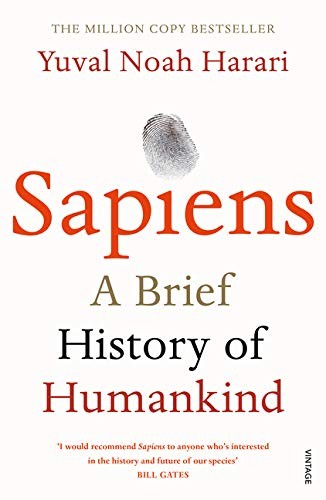
A Brief History of Humankind
Recommended by Naval Ravikant, Nat Eliason, Derek Sivers and 67 others
A sweeping narrative history of Homo sapiens from the Cognitive Revolution to the present. Harari argues that what makes humans dominate the planet is not physical strength but collective myths: shared fictions like money, religion, and nations that allow millions of strangers to cooperate. The book moves fast through 70,000 years, making big, debatable claims about agriculture, empire, capitalism, and happiness. It is less a history textbook than a provocative essay in chronological form, and best read as an argument rather than a reference.
Recommended by Naval Ravikant, Derek Sivers, Bill Gates and 45 others
This book walks you through two mental systems—one fast and intuitive, the other slow and analytical—using a cascade of clever experiments that reveal how easily we're fooled. The value lies in naming and demonstrating dozens of cognitive biases that affect decisions from shopping to investing. it reads as dense, rich, and often fascinating, but the parade of similar studies can feel repetitive, and the lack of practical shortcuts may frustrate readers wanting quick fixes. Some later research has questioned a few findings, which can gnaw at your trust as you go.
Life and Work
Recommended by Naval Ravikant, Nat Eliason, Derek Sivers and 37 others
This is Dalio’s operating manual for life and work—part memoir, part handbook. He distills his hedge fund’s culture into repeatable 'principles' for radical transparency and systematic thinking. The useful part is the concrete algorithms for error-logging and group decision-making; the annoying part is the cultish fervor around his own brilliance and the implication that his way scales universally. It reads like a boss’s extended memo, sometimes riveting, sometimes eye-rolling.
A Roman emperor's private journal in which Marcus Aurelius wrestles with anger, mortality, duty, and the difficulty of staying calm while running an empire. The book is a collection of fragmentary reflections organized into twelve short books, each a conversation with himself about not being derailed by other people's frustrations or the fear of death. It reads like a Stoic devotional—repetitive by design, since Marcus was reminding himself of the same truths daily. There is no plot, no system. There is a man trying not to lose himself to the weight of the job.

A Novel
Recommended by Naval Ravikant, Nat Eliason, Tim Ferriss and 19 others
The “brilliantly realized” (The New York Times Book Review) breakthrough novel from visionary author Neal Stephenson, a modern classic that predicted the metaverse and inspired generations of Silicon Valley innovators Hiro lives in a Los Angeles where franchises line the freeway…
La historia de Buda novelada por Herman Hesse.Esta novela, ambientada en la India tradicional, relata la vida de Siddhartha, un hombre para quien el camino de la verdad pasa por la renuncia y la comprensión de la unidad que subyace en todo lo existente.
What the New Science of Psychedelics Teaches Us About Consciousness, Dying, Addiction, Depression, and Transcendence
Recommended by Naval Ravikant, Tim Ferriss, Bill Gates and 19 others
“Pollan keeps you turning the pages . . . cleareyed and assured.” —New York Times A #1 New York Times Bestseller, New York Times Book Review 10 Best Books of 2018, and New York Times Notable Book A brilliant and brave investigation into the medical and scientific revolution…
Reading the Tao Te Ching feels like stepping into a mist of aphorisms—some luminous, some frustratingly opaque. Its usefulness lies in its ability to unsettle fixed thinking and open a space for intuitive understanding. But it will likely annoy you if you expect clear definitions or systematic philosophy; many verses feel contradictory, deliberately evading logical grasp. You’ll either find it a profound companion or an exercise in poetic vagueness.
Why We Do What We Do in Life and Business
Recommended by Naval Ravikant, Nat Eliason, Derek Sivers and 19 others
NEW YORK TIMES BESTSELLER • This instant classic explores how we can change our lives by changing our habits. NAMED ONE OF THE BEST BOOKS OF THE YEAR BY The Wall Street Journal • Financial Times In The Power of Habit, award-winning business reporter Charles Duhigg takes us to…
Things That Gain from Disorder (Incerto)
Recommended by Naval Ravikant, Nat Eliason, Tim Ferriss and 21 others
Taleb’s Antifragile reads like a sprawling, anecdote-heavy monologue from a sharp but abrasive dinner guest. The core idea — that some systems thrive on volatility — is genuinely useful for rethinking risk in careers, investing, and health. However, the book is padded with digressions, personal vendettas, and broad generalizations. You’ll gain a memorable mental model but likely lose patience with the self-congratulatory tone and absence of empirical rigor. Best absorbed in small doses, not as a coherent argument.
The Three-Body Problem, Book 1
Recommended by Naval Ravikant, Nat Eliason, Matt Mullenweg and 20 others
This novel starts as a mystery rooted in a woman’s tragic experience during China’s Cultural Revolution, then spirals into a high-concept alien contact story built on intricate physics and game theory. The useful part lies in its audacious imagination: a three-body solar system, a virtual reality game, and a shocking revelation about humanity’s place in the universe. The limiting part may be its cold, analytical style and flat characters; emotion takes a backseat to ideas, and the scientific digressions can feel like lectures. It’s a slow burn that rewards intellectual curiosity but might alienate those craving warmth or narrative immediacy.
Second Edition
Recommended by Naval Ravikant, Nat Eliason, Matt Mullenweg and 20 others
Taleb blends philosophy, finance, and personal anecdotes to argue that rare, high-impact events shape our world far more than we admit. The useful part is the mental shift away from overreliance on models and predictions. The annoying part: a rambling structure, frequent rants against ‘imbeciles,’ and an authorial voice so self-satisfied that it sometimes overshadows the ideas. You may finish it feeling sharper about uncertainty or just worn down by the attitude.

A Brief History of Tomorrow
Recommended by Naval Ravikant, Derek Sivers, Matt Mullenweg and 14 others
Hitchhiker's Guide to the Galaxy, Book 1
Recommended by Naval Ravikant, Tim Ferriss, Ankur Warikoo and 13 others
Reading this is like being cornered by a sharp, slightly manic friend who’s decided to explain why the meaning of life is 42. The joy comes from Douglas Adams’s relentless wit, playful footnotes, and a universe where bureaucracy is a cosmic horror. The main limitation is that the plot often meanders into extended comedy sketches; if you’re waiting for a conventional payoff, you’ll be left adrift. Its strength is also its weakness: the jokes never stop, but stakes barely register.
A Guide to Spiritual Enlightenment
Recommended by Naval Ravikant, Akshay M, Trevor Ncube and 14 others
Tolle delivers a series of teachings urging you to detach from past and future to find peace in the present moment. The writing is calm and direct, often circling back to the same core message: you are not your mind. Some passages feel like gentle revelations, while others repeat until they lose punch. The absence of concrete techniques may leave you stranded if you need more than insight. It works best as a contemplative slow read rather than a linear argument.

The Journey Beyond Yourself
Recommended by Naval Ravikant, James Altucher, Ryan Hoover and 7 others
How Prosperity Evolves (P.S.)
Recommended by Naval Ravikant, Bill Gates, Marc Andreessen and 10 others
Matt Ridley, acclaimed author of the classics Genome and Nature via Nurture, turns from investigating human nature to investigating human progress.
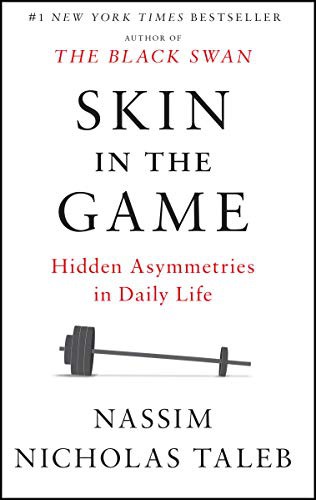
Hidden Asymmetries in Daily Life
Recommended by Naval Ravikant, Nat Eliason, Matt Mullenweg and 13 others
Taleb delivers a rambunctious, often scornful manifesto insisting that morality, economics, and knowledge all require 'skin in the game'— personal risk. The book is bracing, scattered with historical anecdotes, mathematical asides, and sharp critiques of experts who bear no consequences for failures. It genuinely reframes how you think about accountability and fairness. However, its tone can grate: it's repetitive, self-congratulatory, and dismissively bulldozes opposing views. It's useful as a provocation, but anyone wanting a tempered, systematic argument will be frustrated.
An Eternal Golden Braid
Recommended by Naval Ravikant, Nat Eliason, Sahil Lavingia and 9 others
A scientist and mathematician explores the mystery and complexity of human thought processes from an interdisciplinary point of view
Explanations That Transform the World
Recommended by Naval Ravikant, Nat Eliason, Sam Altman and 7 others
Deutsch builds a case that all progress—scientific, moral, political—stems from creating good explanations. The book reads like a series of interconnected arguments defending this idea with clarity and intellectual optimism, covering physics, biology, computing, and politics. Its useful part is a coherent, ambitious framework that challenges prevailing pessimism. The limitation is that the arguments can become repetitive, applying the same principles across many domains without much empirical grounding, and the confident tone may irritate readers who prefer more tentative philosophy.

Recommended by Naval Ravikant, Mohnish Pabrai, Nick Szabo and 7 others
An Inquiry into the Nature and Causes of the Wealth of Nations, generally referred to by its shortened title The Wealth of Nations, is the magnum opus of the Scottish economist and moral philosopher Adam Smith.
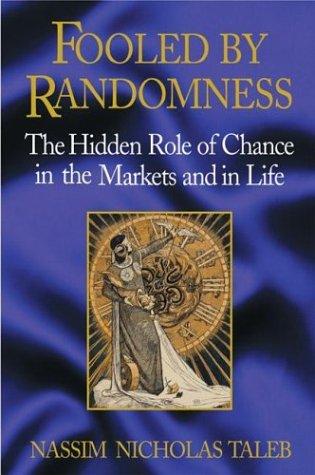
The Hidden Role of Chance in Life and in the Markets (Incerto)
Recommended by Naval Ravikant, Nat Eliason, Matt Mullenweg and 11 others
A brisk, abrasive tour through the ways randomness governs our lives, especially in markets. Taleb uses trading anecdotes and historical examples to dismantle the illusion of skill and expose survivorship bias. The book’s strength is its relentless skepticism, but it also indulges in repetition and self-congratulation. You’ll find sharp insights if you can tolerate the author’s combative tone and disregard for systematic exposition. Philosophical tangents on probability and stoicism are discussion-friendly, but the book offers no practical roadmap, only a cautionary lens. It’s a humbling read that sticks with you, though you might skim the self-indulgent parts.

A Guide to Wealth and Happiness
Recommended by Naval Ravikant, Tim Ferriss, Ankur Warikoo and 8 others
This collection of short, pithy maxims reads like scrolling through a curated Twitter feed. The advice on leverage, specific knowledge, and internal peace is distilled into memorable one-liners that are easy to revisit. However, the lack of narrative arc or substantive depth can make it feel repetitive and superficial, especially if you’re at burnout or seeking detailed how-tos. It works best as a quick-hit inspiration source, not a linear read. Entrepreneurs and self-improvement enthusiasts will dog-ear the wisdom, but anyone craving a coherent argument will put it down halfway.

Paths, Dangers, Strategies
Recommended by Naval Ravikant, Geoffrey Miller, David Kadavy and 5 others
A New York Times bestseller Superintelligence asks the questions: What happens when machines surpass humans in general intelligence Will artificial agents save or destroy us Nick Bostrom lays the foundation for understanding the future of humanity and intelligent life.The human…

Mastering the Transition to the Information Age
Recommended by Naval Ravikant, Ryan Shea, Erik Torenberg and 4 others
The Sovereign Individual reads like a dense, broad forecast of how digital technology will shift power from governments to individuals. It’s most useful as a provocative framework for thinking about financial independence and societal transformation. However, its grand historical theories and unwavering certainty can feel more like libertarian sermon than balanced analysis. The book is dated in parts, with some predictions that haven’t materialized, and its tone may alienate readers who prefer nuance over broad declarations.
Stories
Recommended by Naval Ravikant, Tim Ferriss, Mark Manson and 5 others
From an awardwinning science fiction writer (whose short story "The Story of Your Life" was the basis for the Academy Awardnominated movie Arrival), the longawaited new collection of stunningly original, humane, and already celebrated short storiesThis muchanticipated second…

Recommended by Naval Ravikant, Nat Eliason, Tom Bilyeu and 7 others
The Power Of Myth launched an extraordinary resurgence of interest in Joseph Campbell and his work. A preeminent scholar, writer, and teacher, he has had a profound influence on millions of people.

Or, a Young Lady's Illustrated Primer (Bantam Spectra Book)
Recommended by Naval Ravikant, Ev Williams, Geoffrey Miller and 5 others
The Diamond Age is a sprawling narrative that marries a Victorian-influenced future with nano-tech ubiquity, following Nell's coming-of-age guided by a stolen interactive 'Primer.' The reading is rich with inventive concepts and cultural satire, but also prone to digressions and side plots that fracture momentum. Its useful part is the Primer as a thought experiment about personalized education and consciousness. The limitation: Stephenson's ambition often outpaces his narrative cohesion, leaving threads dangling and the ending feeling more intellectual than emotionally satisfying.

The Shortest and Surest Way to Understand Basic Economics
Recommended by Naval Ravikant, Marc Andreessen, Changpeng Zhao and 4 others
Hazlitt patiently walks through dozens of economic fallacies—from broken windows to tariffs—using a single core principle: good economics considers both the seen and unseen. The prose is clear, and each short chapter feels like a mental exercise. But the relentless repetition of the same argumentative structure can feel like a sermon, and examples from the 1940s will strike some readers as musty. Best as a starting point for logical thinking, not a comprehensive economics course.
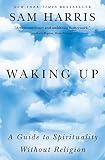
A Guide to Spirituality Without Religion
Recommended by Naval Ravikant, Nat Eliason, Nathaniel Drew and 4 others
Waking Up mixes plainspoken meditation guidance, first-person reports, and philosophical reflection framed in secular terms and informed by psychology and neuroscience. Its most useful move is offering nonreligious reasons to try meditation and clear, accessible explanations for beginners. The main limitation is an argumentative, sometimes dogmatic tone on consciousness and selfhood that can feel abstract or dismissive of religious nuance. Not a hands-on training manual—better as a provocative primer and a set of talking points than as a comprehensive how-to.
The Wit and Wisdom of Charles T. Munger, Expanded Third Edition
Recommended by Naval Ravikant, Derek Sivers, Ankur Warikoo and 6 others
For the first time ever, the wit and wisdom of Charlie Munger is available in a single volume: all his talks, lectures and public commentary. And, it has been written and compiled with both Charlie Munger and Warren Buffett's encouragement and cooperation.
Prince Arjuna faced a dilemma that many face sooner or laterwhether to take action that is necessary yet morally ambiguous. The difference is that Arjuna's action was to wage war against his own family. With the armies arrayed, Arjuna loses his nerve.

A Spiritual Guide to Mastering the Challenges of Women, Work, and Sexual Desire
Recommended by Naval Ravikant, Nat Eliason, Aubrey Marcus and 5 others
The mark of a true classic is that it becomes more relevant with the passage of time Twenty years ago, David Deida wrote The Way of the Superior Man share lessons on how a man can grow spiritually while passionately tussling with the challenges of women, work, and sexual desire,…
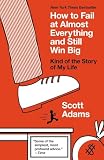
Kind of the Story of My Life
Recommended by Naval Ravikant, Nat Eliason, Derek Sivers and 4 others
Scott Adams blends memoir, workplace humor, and blunt self-help into short, punchy chapters that push simple career and productivity rules. The most useful material is pragmatic: a preference for systems over one-off goals, combining complementary skills, and managing energy so work fits a schedule you can sustain. Limits show up as confident, anecdote-heavy claims and a swaggering tone that sometimes repeats the same points. Best used selectively: skim for tactics that feel practical and ignore the rest rather than accept everything wholesale.

Towns, Buildings, Construction (Center for Environmental Structure Series)
Recommended by Naval Ravikant, Sam Altman, Stewart Brand and 3 others
The Perils and Opportunities of Reality
Recommended by Naval Ravikant, Tim Ferriss, Ben Greenfield and 2 others
The heart of Anthony de Mello's bestselling spiritual message is awareness. Mixing Christian spirituality, Buddhist parables, Hindu breathing exercises, and psychological insight, de Mello's words of hope come together in Awareness in a grand synthesis.In short chapters for…

Recommended by Naval Ravikant, Tim Ferriss, Cleo Abram and 5 others
Ted Chiang's first published story, "Tower of Babylon," won the Nebula Award in 1990. Subsequent stories have won the Asimov's SF Magazine reader poll, a second Nebula Award, the Theodore Sturgeon Memorial Award, and the Sidewise Award for alternate history. He won the John W.

And Why It Flourishes in Freedom
Recommended by Naval Ravikant, James Altucher, Geoffrey Miller and 5 others
Innovation is the main event of the modern age, the reason we experience both dramatic improvements in our living standards and unsettling changes in our society.

Recommended by Naval Ravikant, Sahil Lavingia, Austen Allred and 5 others
For twelve thousand years the Galactic Empire has ruled supreme. Now it is dying. But only Hari Seldon, creator of the revolutionary science of psychohistory, can see into the future to a dark age of ignorance, barbarism, and warfare that will last thirty thousand years.

The Prehistoric Origins of Modern Sexuality
Recommended by Naval Ravikant, Aubrey Marcus, Joe Rogan and 5 others
Sex at Dawn reads as a spirited, argumentative synthesis of anthropology, history, and popular science that challenges the default narrative of innate sexual monogamy. Its useful contribution lies in assembling cross-cultural examples and provocative counterexamples that force readers to question assumptions about pair-bonding and sexual norms. Its chief limitation is a tendency toward selective evidence and rhetorical flourish; readers seeking a cautiously balanced, heavily sourced academic treatment will find the tone polemical and some claims overstated. Repetition and combative language sometimes wear thin.
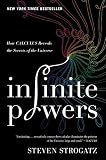
How Calculus Reveals the Secrets of the Universe
Recommended by Naval Ravikant, Michael Mauboussin, Kirk Borne and 5 others
Strogatz writes like an engaging guide who treats calculus as a human story: equations come with everyday analogies, historical side trips, and visual intuition. What works best is making why calculus matters—velocity, accumulation, and infinity—feel concrete without heavy formalism, so a reader finishes with better conceptual tools for understanding technology and science. The main limitation is pace: readers wanting rigorous proofs or a practice-based learning path will find it light and occasionally repetitive in examples and anecdotes.
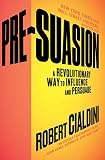
A Revolutionary Way to Influence and Persuade
Recommended by Naval Ravikant, Derek Sivers, Michael Mauboussin and 2 others
Robert Cialdini shows how small cues set up a message before it’s delivered, using staged experiments, marketing case studies, and sales vignettes to illustrate moments that raise receptivity. The useful part is a steady supply of specific attention-shaping tactics you can try in pitches, emails, or landing pages. The writing is conversational and example-heavy, which makes ideas memorable but also lets anecdotes pile up. Limitations: repetition softens the novelty and the book stops short of step-by-step protocols or hands-on drills for implementation.
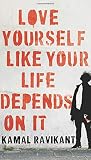
Recommended by Naval Ravikant, James Clear, Adam Townsend and 2 others
This short, direct book reads like a stripped-down personal confession paired with simple, repeatable prescriptions for practicing self-compassion. Its useful part is immediacy: brief passages and blunt instructions that are easy to remember and try between daily tasks. The main limitation is scope—the narrative and the same handful of techniques are repeated often, so readers seeking nuance, empirical support, or a step-by-step curriculum will find it thin. Best used as a portable nudge rather than a comprehensive guide.

Sex and the Evolution of Human Nature
Recommended by Naval Ravikant, Aubrey Marcus, Nick Szabo and 2 others
Referring to Lewis Carroll's Red Queen from Through the LookingGlass, a character who has to keep running to stay in the same place, Matt Ridley demonstrates why sex is humanity's best strategy for outwitting its constantly mutating internal predators.
Hidden Motives in Everyday Life
Recommended by Naval Ravikant, Matthew Kobach, Joe Gadway and 2 others
Human beings are primates, and primates are political animals. Our brains, therefore, are designed not just to hunt and gather, but also to help us get ahead socially, often via deception and selfdeception.
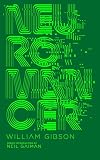
Sprawl, Book 1
Recommended by Naval Ravikant, Tim Ferriss, Meltem Demirors and 3 others
Neuromancer opens at high speed: terse sentences, noir atmosphere, and worldbuilding dropped as image-heavy fragments rather than spelled-out explanation. Its useful part is concentrated atmosphere — layered sensory detail and economical action that make cyberspace feel immediate without long exposition. Its main limitation is deliberate opacity: invented slang, abrupt scene cuts, and characters who often remain coolly distant can leave the plot feeling elliptical and some emotional moments thin. Best read focused and willing to re-read passages for payoff.

50th Anniversary, One Vol. Edition
Recommended by Naval Ravikant, Reid Hoffman, Paul Graham and 1 other
One Ring to rule them all, One Ring to find them, One Ring to bring them all and in the darkness bind themIn ancient times the Rings of Power were crafted by the Elvensmiths, and Sauron, the Dark Lord, forged the One Ring, filling it with his own power so that he could rule all…

This Hugo Awardwinning graphic novel chronicles the fall from grace of a group of superheroes plagued by alltoohuman failings.

Recommended by Naval Ravikant, Nat Eliason, Ryan Holiday and 2 others
The power and wealth which Seneca the Younger (c.4 B.C. A.D. 65) acquired as Nero's minister were in conflict with his Stoic beliefs. Nevertheless he was the outstanding figure of his age.

Recommended by Naval Ravikant, Jordan Peterson and Book Recommendations (43 Books)
Charlie Gordon is about to embark upon an unprecedented journey. Born with an unusually low IQ, he has been chosen as the perfect subject for an experimental surgery that researchers hope will increase his intelligencea procedure that has already been highly successful when…

The Science of Parallel Universesand Its Implications
Recommended by Naval Ravikant, Chris Anderson and Steve Jurvetson
The New Science of Cause and Effect
Recommended by Naval Ravikant, Keith Rabois, D.A. Wallach and 1 other
Wonderful ... Illuminating ... Fun to read' Daniel Kahneman, author of Thinking, Fast and Slow A pioneer of Artificial Intelligence, shows how the study of causality revolutionized science and the world'Correlation does not imply causation.' This mantra was invoked by scientists…

An Entrepreneur's Vision of the Future
Recommended by Naval Ravikant, Alfred Lin, Brad Feld and 1 other
The #1 New York Times and Wall Street Journal bestseller from Steve Case—the cofounder of AOL—presents “a compelling roadmap for the future…that can help us make sense of the technological changes reshaping our economy and the world.

A Novel
Recommended by Naval Ravikant, Pamela L. Gay and David Deutsch
This reads as a sprawling, idea-heavy science fiction ride that opens as a near-future corporate-tech thriller and then shifts into an extended virtual-afterlife fable. Its useful part is imaginative scale: bold set pieces, provocative questions about mind-uploading and digital legacy, and dense worldbuilding that lingers in the reader's head. Its chief limitation is bloat—long digressions, repeated themes, and uneven pacing that turn scenes into extended essays. Treat it as a long haul: rewards for patience, frustration for those who want tight plotting.
Recommended by Naval Ravikant, Sam Altman and Adam Robinson
At the heart of this classic, seminal book is Julian Jaynes's stillcontroversial thesis that human consciousness did not begin far back in animal evolution but instead is a learned process that came about only three thousand years ago and is still developing.

This valuable book provides a complete manual for the study and practice of Raja Yoga, the path of concentration and meditation. This new edition of these timeless teachings is a treasure to be read and referred to again and again by seekers treading the spiritual path.
Fats, Carbs, and the Controversial Science of Diet and Health
Recommended by Naval Ravikant, Nassim Nicholas Taleb, Peter Attia and 1 other
Challenging the Conventional Wisdom on Diet, Weight, and DiseaseIn this groundbreaking book, the result of seven years of research in every science connected with the impact of nutrition on health, awardwinning science writer Gary Taubes shows us that almost everything we…

Complicated Stuff in Simple Words
Recommended by Naval Ravikant, Bill Gates and Cleo Abram
In Thing Explainer: Complicated Stuff in Simple Words, things are explained in the style of Up Goer Five, using only drawings and a vocabulary of the 1,000 (or "ten hundred") most common words.
Ancient DNA and the New Science of the Human Past
Recommended by Naval Ravikant, Michael Mauboussin, Marc Andreessen and 2 others
A groundbreaking book about how technological advances in genomics and the extraction of ancient DNA have profoundly changed our understanding of human prehistory while resolving many longstanding controversies.Massive technological innovations now allow scientists to extract…

Recommended by Naval Ravikant, Sahil Lavingia, Richa Chadha and 2 others
Tumble down the rabbit hole with Alice for a fantastical adventure from Walt Disney Pictures and Tim Burton. Inviting and magical, ALICE IN WONDERLAND is an imaginative new twist on one of the most beloved stories of all time.
Earth is long since dead. On a colony planet, a band of men has gained control of Technology,, made themselves immortal, and now rule their world as the gods of the Hindu pantheon. Only one dares oppose them: he who was once Siddhartha and is now Mahasamatman.
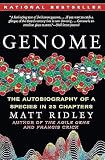
The Autobiography Of A Species In 23 Chapters
Recommended by Naval Ravikant, Nick Szabo, Mark Zuckerberg and 1 other
Arguably the most significant scientific discovery of the new century, the mapping of the twentythree pairs of chromosomes that make up the human genome raises almost as many questions as it answers.

Among Shakespeare's plays, "Hamlet" is considered by many his masterpiece. Among actors, the role of Hamlet, Prince of Denmark, is considered the jewel in the crown of a triumphant theatrical career.
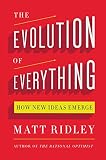
How New Ideas Emerge
Recommended by Naval Ravikant and Tobi Lutke
Ridley argues that language, technology, markets and morals mostly emerge through incremental trial-and-error rather than top-down design. The prose is lively and stuffed with cross-domain examples, which makes the central idea easy to picture and use as a heuristic. Main value: a single, simple lens for spotting spontaneous order in messy real-world institutions. Main limitation: the thesis is pushed strongly and counterpoints often get short shrift, so the book can feel one-sided and repetitive.
Philosophical and Practical Aphorisms (Incerto)
Recommended by Naval Ravikant, Nat Eliason, Derek Sivers and 1 other
The Bed of Procrustes is a standalone book in Nassim Nicholas Taleb's landmark Incerto series, an investigation of opacity, luck, uncertainty, probability, human error, risk, and decisionmaking in a world we don't understand.
The Strange Theory of Light and Matter (Princeton Science Library)
Recommended by Naval Ravikant, Ryan Shea and Larry Page
Celebrated for his brilliantly quirky insights into the physical world, Nobel laureate Richard Feynman also possessed an extraordinary talent for explaining difficult concepts to the general public.

A Savage Journey to the Heart of the American Dream
Recommended by Naval Ravikant, Jordan Peterson, Brian Quinn and 1 other
Fear and Loathing in Las Vegas is the best chronicle of drugsoaked, addlebrained, rollicking good times ever committed to the printed page.
What happens when your digital self overpowers your physical selfA life in Permutation City is unlike any life to which you’re accustomed. You have Eternal Life, the power to live forever. Immortality is a real thing, just not the thing you’d expect.Life is just electronic code.

The Enlightenment Trilogy, Book 1
Recommended by Naval Ravikant
From a Spiritual Master Unlike Any, A Spiritual Masterpiece Like No OtherAUTHOR, TEACHER AND SPIRITUAL MASTER Jed McKenna tells it like it's never been told before.

My Journey into Life's Perfection
Recommended by Naval Ravikant, Noah Kagan and Ali Abdaal
Quiet, personal memoir documenting an extended experiment in surrender: trading constant control for a practice of saying yes to life’s invitations. The prose is calm, reflective, and anchored in long, detailed anecdotes about career, relationships, and inner life. The most useful material is the concrete, surprising episodes that show consequences of choosing openness. Limitation: the text repeatedly restates its core lesson through more stories than practical instruction, so those wanting systematic guidance or critical distance may find it repetitive.

Douglas Adams changed the face of science fiction with his cosmically comic novel The Hitchhikers Guide to the Galaxy and its classic sequels. Sadly for his countless admirers, he hitched his own ride to the great beyond much too soon.
Show 3 more books with a single recommendation

Guns and bombs are children's toys. A true war wages, and you're invited. IT'S AN INVITATION you may not be able to accept if you want to, or decline if you don't.
The Enlightenment Trilogy, Book 2
Recommended by Naval Ravikant
Spiritually Incorrect Enlightenment Isn't One Kind of Enlightenment It's the Only KindTHE MARK OF A TRUE MASTER is that he can express a subject of the utmost complexity with uncanny simplicity.

Mankind gets an upgradeIn the near future, the experimental nanodrug Nexus can link humans together, mind to mind. There are some who want to improve it. There are some who want to eradicate it.
Recommended Books Recommended by Naval Ravikant by Naval Ravikant
Naval Ravikant recommends 75 books on this list. See all book recommendations by Naval Ravikant
Recommended Books Recommended by Naval Ravikant by Nat Eliason
Nat Eliason recommends 21 books on this list. See all book recommendations by Nat Eliason
Recommended Books Recommended by Naval Ravikant by Derek Sivers
Derek Sivers recommends 12 books on this list. See all book recommendations by Derek Sivers
Books Recommended by Naval Ravikant: common questions
- What are the most recommended books recommended by naval ravikant?
- Man's Search for Meaning, Sapiens and Thinking, Fast and Slow are the most recommended books recommended by naval ravikant on BookMentions, ranked by how many people recommended them.
- Who recommends books recommended by naval ravikant?
- Naval Ravikant, Nat Eliason, Derek Sivers and Tim Ferriss are among the people who recommend books on this list. Each name links to their full set of book recommendations.
- Which of these books recommended by naval ravikant should I read first?
- Man's Search for Meaning is the most recommended here with 90 recommendations, which makes it the safest place to start.
Built from recommendation data, category signals, and source-backed book records. Use this list as a starting point; open any book to see proof, context, and Amazon options where available.
Explore more lists
Best Investing Books
83 booksA curated collection of the highest-rated investing books, covering value investing, behavioral finance, portfolio theory, and personal wealth building.
Best Science Fiction Books
115 booksScience fiction recommended most by novelists, scientists and technologists — space opera, cyberpunk and hard SF. Plus the dystopias that aged into documentaries, each with its original source.
Best Cognitive Psychology Books
15 booksCognitive Psychology books, including titles recommended by Derek Sivers, Naval Ravikant and Ev Williams. Most recommended here: Thinking, Fast and Slow, Grit and The Untethered Soul.
Best Social Psychology Books
16 booksSocial Psychology books, including titles recommended by Derek Sivers, Ev Williams and Naval Ravikant. Most recommended here: Thinking, Fast and Slow, The Power of Habit and Quiet.
Best Economics Books
69 booksEconomics books, including titles recommended by Bill Gates, Marc Andreessen and Naval Ravikant. Most recommended here: Thinking, Fast and Slow, Factfulness and Guns, Germs, and Steel.
Best Philosophy Books
71 booksThe philosophy books that writers, scientists and founders return to most — ethics, metaphysics, existentialism, Stoicism and the ancient Greeks. Recommended reading for beginners and rereaders alike, with the source behind every pick.
About this list
This list aggregates books that appear in public recommendation sources, reader-interest signals, and category data. Books are ranked by their position from the source list; recommendation counts and ratings are shown where available. Open any book to see source-backed recommendation proof, editorial context, and Amazon options — the per-book detail page is where the trust signals live.
Recommended books by person: who recommends books recommended by naval ravikant
Books recommended by the people below. Open a profile to see everything they recommend, with the source behind each pick.
- Naval RavikantBooks recommended by Naval: 75

- Nat EliasonBooks recommended by Nat: 21
- Derek SiversBooks recommended by Derek: 12

- Tim FerrissBooks recommended by Tim: 12

- Bill GatesBooks recommended by Bill: 9

- Matt MullenwegBooks recommended by Matt: 9
- Ankur WarikooBooks recommended by Ankur: 8
- Sahil LavingiaBooks recommended by Sahil: 8
- James AltucherBooks recommended by James: 7
- Akshay MBooks recommended by Akshay: 6
- Ev WilliamsBooks recommended by Ev: 6

- James ClearBooks recommended by James: 6
