
Best Philosophy Books
Category100 of 738 books384 recommendations totalThe philosophy books writers, scientists and founders return to most — ethics, metaphysics, existentialism and Stoicism. Ancient Greeks included, each with the source behind the pick.
Where to start: Philosophy Books recommended most often
Recommended books, ranked by how many of the 215 people behind this list recommended each one.
- 1Meditations37 recommendations · recommended by Naval Ravikant, Nat Eliason and Stewart Brand
- 2The Four Agreements33 recommendations · recommended by Aubrey Marcus, Joe Rogan and Charlamagne Tha God
- 3Enlightenment Now19 recommendations · recommended by Bill Gates, Jordan Peterson and Daniel Petre
- 4The Rational Optimist18 recommendations · recommended by Naval Ravikant, Bill Gates and Jordan Peterson
- 5Ego Is the Enemy17 recommendations · recommended by Derek Sivers, Aubrey Marcus and Mark Manson
Recommended by Naval Ravikant, Nat Eliason, Stewart Brand and 29 others
A Roman emperor's private journal in which Marcus Aurelius wrestles with anger, mortality, duty, and the difficulty of staying calm while running an empire. The book is a collection of fragmentary reflections organized into twelve short books, each a conversation with himself about not being derailed by other people's frustrations or the fear of death. It reads like a Stoic devotional—repetitive by design, since Marcus was reminding himself of the same truths daily. There is no plot, no system. There is a man trying not to lose himself to the weight of the job.
A Practical Guide to Personal Freedom
Recommended by Aubrey Marcus, Joe Rogan, Charlamagne Tha God and 23 others
A slim, conversational guide that draws on Toltec spiritual tradition to propose four internal agreements for reducing suffering. The reading feels like listening to an encouraging elder: warm, repetitive, and full of anecdotes. Its value is in persistent reminders that most emotional pain comes from unchecked assumptions and taking things personally. The limitation is a lack of nuance and no practical exercises; it assumes you can reframe your mind through sheer intention. Without follow-up, the advice can feel like fortune-cookie wisdom.
The Case for Reason, Science, Humanism, and Progress
Recommended by Bill Gates, Jordan Peterson, Daniel Petre and 11 others
Reading feels like sitting through a TED talk with endless slides: each chapter serves up a dataset on declining violence, rising wealth, spreading education. The book shines as a reference for the facts behind the 'good news' narrative. But the monotone optimism wears thin; Pinker rarely stops to acknowledge that the same data can be read as evidence of persistent inequality. The argument gets preachy, and if you need nuance, you'll find the brush too broad. It's a heady dose of progress boosterism that makes its case at full volume, but the cheerful tone clashes with the gravity some readers will feel about real-world problems.
How Prosperity Evolves (P.S.)
Recommended by Naval Ravikant, Bill Gates, Jordan Peterson and 12 others
Matt Ridley, acclaimed author of the classics Genome and Nature via Nurture, turns from investigating human nature to investigating human progress.

Recommended by Derek Sivers, Aubrey Marcus, Mark Manson and 12 others
Reading 'Ego Is the Enemy' feels like sitting through a stern but engaging lecture where history's cautionary tales are used to hammer home a single point. The book's value lies in its vivid, memorable examples—from generals to CEOs—that make the dangers of pride tangible. However, the lesson can grow repetitive; the same idea is restated across similar stories, and the tone sometimes veers into moralizing. If you're looking for nuance or actionable exercises, this isn't it.
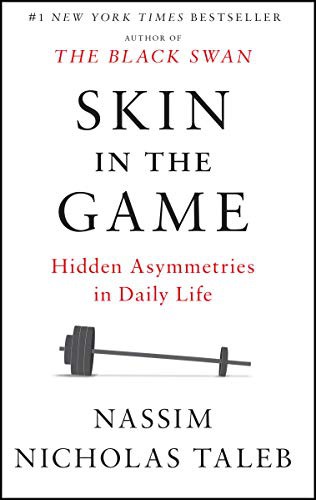
Hidden Asymmetries in Daily Life
Recommended by Naval Ravikant, Nat Eliason, Ankur Warikoo and 13 others
Taleb delivers a rambunctious, often scornful manifesto insisting that morality, economics, and knowledge all require 'skin in the game'— personal risk. The book is bracing, scattered with historical anecdotes, mathematical asides, and sharp critiques of experts who bear no consequences for failures. It genuinely reframes how you think about accountability and fairness. However, its tone can grate: it's repetitive, self-congratulatory, and dismissively bulldozes opposing views. It's useful as a provocation, but anyone wanting a tempered, systematic argument will be frustrated.

Recommended by Mark Manson, Jordan Peterson, Tai Lopez and 7 others
Winner of the Pulitzer prize in 1974 and the culmination of a life's work, The Denial of Death is Ernest Becker's brilliant and impassioned answer to the "why" of human existence.
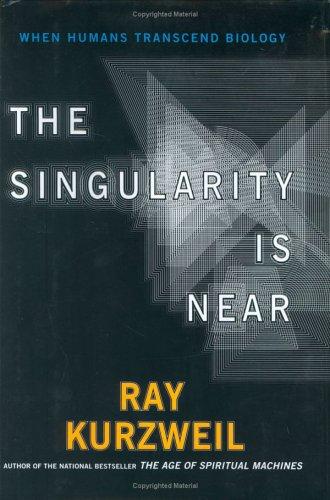
When Humans Transcend Biology
Recommended by Stewart Brand, Mark Manson, Tony Robbins and 6 others
Kurzweil’s manifesto bombards you with trend lines and bulleted predictions, zooming out to a 2040s where humans merge with machines. The useful part: you get a detailed, almost cinematic vision of a radically altered future—health, energy, intelligence—that’s hard to find elsewhere. The drag: his certainty grates, the prose feels like a sales deck, and the middle chapters recycle the same exponential insight until you’re numb. You’ll either emerge fired up or fed up.

Being Human in the Age of Artificial Intelligence,
Recommended by Bill Gates, Derek Sivers, Lex Fridman and 9 others
Life 3.0 reads like a long, wide-ranging conversation with a physicist who loves big if-then thought experiments. The useful part is its panoramic sweep across possible AI futures—from job automation to cosmic colonization—forcing you to consider timelines you might otherwise avoid. The limitation is that the speculative breadth often outruns the depth; chapters can feel meandering, and some readers will find the cosmic-scale scenarios too detached from practical concerns, making it hard to ground in real urgency.
Recommended by Ankur Warikoo, Maples, Jr., Tony Hsieh and 7 others
How do you lead a fulfilling life That profound question animates this book of inspiration and insight from worldclass business strategist and bestselling author of The Innovator's Dilemma, Clayton Christensen.After beating a heart attack, advancedstage cancer and a stroke in…

Recommended by Jordan Hughes, Andrew Wilkinson, Earthling Ed and 5 others
Jonathan Safran Foer spent much of his life oscillating between enthusiastic carnivore and occasional vegetarian. Once he started a family, the moral dimensions of food became increasingly important.Faced with the prospect of being unable to explain why we eat some animals and…

As it was in Anna Karenina, Madame Bovary, and Othello, so it is in life. Most forms of private vice and public evil are kindled and sustained by lies.
“I wrote this book not sure I could follow the road to character, but I wanted at least to know what the road looks like and how other people have trodden it.”—David Brooks With the wisdom, humor, curiosity, and sharp insights that have brought millions of readers to his New…

Recommended by Ankur Warikoo, Jordan Hughes, Manu Ginobili and 5 others
Short chapters stitch together Stoic aphorisms, Buddhist touchpoints, and contemporary anecdotes into a steady prompt to slow down. The most useful parts are concise rules of thumb and repeated reminders that attention and presence matter in high-pressure lives. The main limitation is repetition: themes reappear in slightly different costumes, so the book feels dense with reiteration rather than layered development. Expect concrete, readable prose but not systematic exercises; value comes from pausing and applying ideas to your life, not from built-in practice guides.
The Authoritative Translation and Guide
Recommended by Sam Altman, Neil deGrasse Tyson, Paul Graham and 2 others
In his monumental 1687 work Philosophiae Naturalis Principia Mathematica, known familiarly as the Principia, Isaac Newton laid out in mathematical terms the principles of time, force, and motion that have guided the development of modern physical science.
What the Cycles of History Tell Us About America's Next Rendezvous with Destiny
Recommended by Tony Robbins, Raoul Pal, Packy McCormick and 2 others
This is a big-idea, polemical book that forces you to look at history as repeating generational turns. The useful payoff is a single organizing lens that makes sense of recurring political and cultural rhythms and sparks scenario-thinking about future crises. The main limitation is its appetite for broad generalization: long historical vignettes and typologies can feel selective and circular, and the predictive passages slide from plausible forecasting into speculative admonition.

Recommended by Naval Ravikant, Nat Eliason, Ryan Holiday and 3 others
The power and wealth which Seneca the Younger (c.4 B.C. A.D. 65) acquired as Nero's minister were in conflict with his Stoic beliefs. Nevertheless he was the outstanding figure of his age.

The Science of Parallel Universesand Its Implications
Recommended by Naval Ravikant, Chris Anderson and Steve Jurvetson

New Visions
Recommended by Emma Watson, Juliana Castro Varón, Scottie Beam and 2 others
"The word "love" is most often defined as a noun, yet...we would all love better if we used it as a verb," writes bell hooks as she comes out fighting and on fire in All About Love.
Recommended by David Heinemeier Hansson, Frank Chimero, Susan J. Fowler and 2 others
Written in 1914 but not published until 1925, a year after Kafka’s death, The Trial is the terrifying tale of Josef K., a respectable bank officer who is suddenly and inexplicably arrested and must defend himself against a charge about which he can get no information.
Recommended by Jeffrey Snover, Chris Fralic, Sergei Guriev and 1 other
In the words of economist and scholar Arnold Kling, Martin Gurri saw it coming.Technology, has categorically reversed the information balance of power between the public and the elites who manage the great hierarchical institutions of the industrial age government, political…
Imagination and the Erotic Life of Property
Recommended by Stewart Brand, Frank Chimero, Michael Bierut and 2 others
Thirty True Things You Need to Know Now
Recommended by Nat Eliason, Naval Ravikant and Derek Sivers
After service in Vietnam, as a surgeon for the 11th Armored Cavalry Regiment in 196869, at the height of the war, Dr. Gordon Livingston returned to the U.S. and began work as a psychiatrist.
Meditation, Consciousness, and Creativity
Recommended by Emma Watson, Brian Koppelman and Arianna Huffington
Where do ideas come fromIn Catching the Big Fish, internationally acclaimed filmmaker David Lynch provides a rare window into his methods as an artist, his personal working style, and the immense creative benefits he has experienced from the practice of meditation.Lynch…
Recommended by Tai Lopez, James Altucher and Library Mindset
Robert Greene is a master guide for millions of readers, distilling ancient wisdom and philosophy into essential texts for seekers of power, understanding and mastery.
The Act of Creation begins where this view ceases to be true. Koestler affirms that all creatures have the capacity for creative activity, frequently suppressed by the automatic routines of thought and behavior that dominate their lives.

Safe, Therapeutic, and Sacred Journeys
Recommended by Nat Eliason, Michael Pollan and Peter Attia
Psychedelics for spiritual, therapeutic, and problemsolving use Presents practices for safe and successful psychedelic voyages, including the benefits of having a guide and how to be a guide Reviews the value of psychedelics for healing and selfdiscovery as well as how LSD has…
Recommended by Naval Ravikant, Chris Anderson and AnneLaure Le Cunff
One of TIME's Ten Best Nonfiction Books of 2018 "Meet the new Stephen Hawking . . . The Order of Time is a dazzling book." The Sunday Times From the bestselling author of Seven Brief Lessons on Physics, comes a concise, elegant exploration of time.Why do we remember the past and…

A Study in Human Nature
Recommended by Mark Zuckerberg, Brian Greene and Joyce Oates
"I am neither a theologian, nor a scholar learned in the history of religions, nor an anthropologist. Psychology is the only branch of learning in which I am particularly versed.
A Brief Guide to the Fundamental Mystery of the Mind
Recommended by Adam Grant, AnneLaure Le Cunff and Matt Mullenweg
NEW YORK TIMES BESTSELLER"If you’ve ever wondered how you have the capacity to wonder, some fascinating insights await you in these pages.” Adam Grant, New York Times bestselling author of OriginalsAs concise and enlightening as Seven Brief Lessons on Physics and Astrophysics…

Heaven and Hell (Thinking Classics)
Recommended by Michael Pollan, Michelle Rodriguez and Victor Asemota
In 1953, in the presence of an investigator, Aldous Huxley took fourtenths of a gramme of mescalin, sat down and waited to see what would happen. Huxley described his experience in 'The Doors of Perception' and its sequel 'Heaven and Hell'.
Maxims and Reflections is a collection of several hundred brilliant, unforgettable paragraphs and aphorisms by the legendary German Renaissance writer Johann Wolfgang von Goethe, divided into the categories Life and Character, Literature and Art, Science and Nature.
A new edition of the bestselling work from one of the most forwardthinking and important philosophers of our time. Join one of the greatest contemporary philosophers on a breathtaking tour of time and the Kosmosfrom the Big Bang right up to the eve of the twenty-first century.
How Stories Make Us Human
Recommended by Bill Gurley, Michael Mauboussin and Harini Calamur
Recommended by Michael Pollan and Tony Robbins
Introduction by Mary OliverCommentary by Henry James, Robert Frost, Matthew Arnold, Oliver Wendell Holmes, and Henry David Thoreau The definitive collection of Emerson’s major speeches, essays, and poetry, The Essential Writings of Ralph Waldo Emerson chronicles the life’s work…
This book is about the great moral issues underlying many of the headlinemaking political controversies of our times. It is not a comforting book but a book about disturbing and dangerous trends.

How to Do Your Part to End World Poverty
Recommended by Money Mustache, Peter Adeney and Nigel Warburton
For the first time in history, eradicating world poverty is within our reach. Yet around the world, a billion people struggle to live each day on less than many of us pay for bottled water.

Economics as if People Mattered (Harper Perennial Modern Thought)
Recommended by Emma Watson and Ramachandra Guha
Pressfield delivers a compact, declarative set of essays about courage, duty, and a warrior’s inner code. Short chapters and martial anecdotes make for brisk, rhetorical reading that supplies memorable lines and moral argumentation useful for framing leadership or personal discipline. The main limitation is repetition: points are hammered home in similar examples, and the voice can lean toward romanticizing combat-style virtues while offering few concrete, hands-on practices for everyday life.

The fiftieth Anniversary Edition of the groundbreaking international bestseller that has shown millions of readers how to achieve rich, productive lives by developing their hidden capacities for loveMost people are unable to love on the only level that truly matters: love that…

Impossible Idealism, Drastic Choices, and the Urge to Help
Recommended by Nick Thompson
What does it mean to devote yourself wholly to helping others In Strangers Drowning, Larissa MacFarquhar seeks out people living lives of extreme ethical commitment and tells their deeply intimate stories; their stubborn integrity and their compromises; their bravery and their…
'Liquid life' is the kind of life commonly lived in our contemporary, liquidmodern society. Liquid life cannot stay on course, as liquidmodern society cannot keep its shape for long. Liquid life is a precarious life, lived under conditions of constant uncertainty.
How Reason and Moral Purpose Made the West Great
Recommended by Ravi Zacharias
In 2016, Ben Shapiro spoke at UC Berkeley. Hundreds of police officers were required from 10 UC campuses across the state to protect his speech, which was ironically about the necessity for free speech and rational debate.
How Asians and Westerners Think Differently...and Why
Recommended by Satya Nadella and Wolfgang Blau
Students of political theory will welcome the return to print of this brilliant defense of ordered liberty. Impugning John Stuart Mill’s famous treatise, On Liberty, Stephen criticized Mill for turning abstract doctrines of the French Revolution into “the creed of a…
A Neuroscientist's Case for the Existence of the Soul
Recommended by Ray Dalio
Do religious experiences come from God, or are they merely the random firing of neurons in the brain Drawing on his own research with Carmelite nuns, neuroscientist Mario Beauregard shows that genuine, lifechanging spiritual events can be documented.
The Complete Bhagavad Gita: A Commentary for Modern Readers
Recommended by Morgan Spurlock
The Bhagavad Gita tells the story of how Arjuna, the great warrior, is seated in his chariot about to engage in battle, when he sees his own kinsmen and his revered teacher arrayed in battle against him, and feels that he cannot fight.

Money, Gift, and Society in the Age of Transition
Recommended by Alex Honnold
Sacred Economics traces the history of money from ancient gift economies to modern capitalism, revealing how the money system has contributed to alienation, competition, and scarcity, destroyed community, and necessitated endless growth.

The Age of Reason represents the results of years of study and reflection by Thomas Paine on the place of religion in society.Paine wrote: "Of all the tyrannies that affect mankind, tyranny in religion is the worst; every other species of tyranny is limited to the world we live…

The Search for the Original Tree of Knowledge A Radical History of Plants, Drugs, and Human Evolution
Recommended by Joe Rogan
A Radical History of Plants, Drugs & Human EvolutionFor the first time in paperback, the counterculture manifesto on mindaltering drugs & hallucinogens. Illustrated.

Planetary Astronomy in the Development of Western Thought
Recommended by Paul Graham
For scientist and layman alike this book provides vivid evidence that the Copernican Revolution has by no means lost its significance today.
The Wisdom of Life Arthur Schopenhauer A leading German metaphysician of the 19th century, Arthur Schopenhauer (17881860) exerted an influence far beyond the hermetic world of philosophy, with adherents ranging from Richard Wagner and Friedrich Nietzsche to Leo Tolstoy and…
The Conquest of Happiness is Bertrand Russell's recipe for good living. First published in 1930, it predates the current obsession with selfhelp by decades.
The Secret History of the American Left, From Mussolini to the Politics of Change
Recommended by Dennis Prager
Finding Fulfillment in a World Obsessed with Happiness
Recommended by Adam Grant and Amy Cuddy
"This wise, stirring book argues that the search for meaning can immeasurably deepen our lives and is far more fulfilling than the pursuit of personal happiness.
Show 44 more books with a single recommendation
Any Baedeker will tell us where we ought to travel, but only Alain de Botton will tell us how and why. With the same intelligence and insouciant charm he brought to How Proust Can Save Your Life, de Botton considers the pleasures of anticipation; the allure of the exotic, and…

In this classic work that continues to inspire its many readers, Jim Lovelock puts forward his idea that life on earth functions as a single organism.
"More than just a story of an abiding cultural preoccupation, The Longing For Less peels back the commodified husk of minimalism to reveal something surprising and thoroughly alive." Jenny Odell, author of How to Do Nothing "Thoughtful and absorbing . . .
"We can place this book on the shelf that holds the writings of Thoreau and John Muir." San Francisco ChronicleThese astonishing portraits of the natural world explore the breathtaking diversity of the unspoiled American landscape the mountains and the prairies, the deserts and…
The international bestselling author is bck with a pageturning tale of the origins of the peaceful warriorIn the heart of nineteenth century Tsarist Russia an orphaned boy born of both Jewish and Cossack blood desperately seeks to find a place in a dangerous world.
A fascinating discussion on sex, gender, and human instincts, as relevant today as ever.In the course of a lively drinking party, a group of Athenian intellectuals exchange views on eros, or desire.
Christian Humanism in an Age of Crisis
Recommended by Timothy Keller
By early 1943, it had become increasingly clear that the Allies would win the Second World War. Around the same time, it also became increasingly clear to many Christian intellectuals on both sides of the Atlantic that the soontobevictorious nations were not culturally or…
Author Bhante Gunaratana, a renowned meditation master, takes us step by step through the myths, realities, and benefits of meditation and the practice of mindfulness.
Gifford Lectures Given at Aberdeen, Scotland AprilNovember 1985
Recommended by Stewart Brand
Infinite in All Directions is a popularized science at its best. In Dyson's view, science and religion are two windows through which we can look out at the world around us.
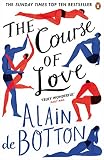
Modern love is never easy. Society is obsessed with stories of romance, but what comes after happily ever afterThis is a love story with a difference.
Soren Kierkegaard was a Danish philosopher, theologian, and religious author interested in human psychology. He is regarded as a leading pioneer of existentialism and one of the greatest philosophers of the 19th Century.In Fear and Trembling, Kierkegaard wanted to understand the…

2014 Reprint of 1955 Edition. Full facsimile of the original edition. Not reproduced with Optical Recognition Software. In "Homo Ludens," the classic evaluation of play that has become a "mustread" for those in game design, Dutch philosopher Johan Huizinga defines play as the…
Most people, believers and nonbelievers alike, are unfamiliar with the variety and force of arguments for the impossibility of God.
and the Letter to Marcus Herz, February 1772 (Hackett Classics)
Kant's Prolegomena, although a small book, is indubitably the most important of his writings. It furnishes us with a key to his main work, The Critique of Pure Reason; in fact, it is an extract containing all the salient ideas of Kant's system.
Straight Talk about Illusions, Past Lives, Religion, Sex, Politics, and the Miracles of Forgiveness
What would you do if you were sitting quietly in your living room when a mysterious couple appeared from out of nowhereand then told you they were "ascended masters" who had come to reveal some shocking secrets of existence and teach you the miraculous powers of advanced…
Peuton être philosophe dans n'importe quelle société et dans n'importe quelle situation Ou, plus précisément, peuton philosopher quand on est l'homme le plus riche de son temps Peuton philosopher quand on est pris dans les obligations de la vie sociale Ces interrogations sont…
A Very Short Introduction (Very Short Introductions)
Logic is often perceived as having little to do with the rest of philosophy, and even less to do with real life. In this lively and accessible introduction, Graham Priest shows how wrong this conception is.

The Ancient Philosophy behind the Military Mind
While few soldiers may have read the works of Epictetus or Marcus Aurelius, it is undoubtedly true that the ancient philosophy known as Stoicism guides the actions of many in the military.

The Philosophy, History, and Practice of a Timeless Tradition
Tantra Illuminated takes the reader on a fascinating journey to the very heart of Tantra: its key teachings, foundational lineages, and transformative practices.
Lucius Annaeus Seneca (4 BCE?65 CE) was a Roman Stoic philosopher, dramatist, statesman, and advisor to the emperor Nero, all during the Silver Age of Latin literature.
Translations of the Principal Sources, with Philosophical Commentary
Volume 1 presents the texts in new translations by the authors, and these are accompanied by a philosophical and historical commentary designed for use by all readers, including those with no background in the classical world.

Since its publication in 1987, "Being Peace" has become a classic of contemporary religious literature. In his simple and readable style, Thich Nhat Hanh shows how our state of mind and body can make the world a peaceful place.
The Liberating Practice of Insight Meditation (Shambhala Classics)
Big Ideas Simply Explained
Now in paperback, "The Philosophy Book" explores the history and concepts of philosophy, and demystifies what can often be daunting subject matter.Are the ideas of Rene Descartes, Mary Wollstonecraft, John Locke, and Thomas Hobbes still relevant today "The Philosophy Book"…
The classic novel of fly fishing and spirituality republished with a new Afterword by the author. Since its publication in 1983, The River Why has become a classic.

The Art of Transforming Suffering
The secret to happiness is to acknowledge and transform suffering, not to run away from it. In No Mud, No Lotus, Thich Nhat Hanh offers practices and inspiration for transforming suffering and finding true joy.
The Stoics on the Nature and Function of Philosophy (BCPaperbacks)
It is a commonplace to say that in antiquity philosophy was conceived as a way of life or an art of living, but precisely what such claims amount to has remained unclear.
One of the most influential works of this century, this is a crucial exposition of existentialist thought. Influenced by works such as Don Juan, and the novels of Kafka, these essays begin with a meditation on suicide: the question of living or not living in an absurd universe…
The Last Days of Socrates, written by legendary author Plato, is widely considered to be one of the greatest classic texts of all time. This great classic will surely attract a whole new generation of readers.

Through his writing and his own personal philosophy, Ralph Waldo Emerson unburdened his young country of Europe's traditional sense of history and showed Americans how to be creators of their own circumstances.

The Life and Legacy of Cato, Mortal Enemy of Caesar
"Cato, history's most famous foe of authoritarian power, was the pivotal political man of Rome; an inspiration to our Founding Fathers; and a cautionary figure for our times.
A History of Insanity in the Age of Reason
Librarian note: an alternate cover for this edition can be found here.Michel Foucault examines the archeology of madness in the West from 1500 to 1800 ?
A Treatise in the Sociology, of Knowledge
Called the "fifthmost important sociological book of the 20th century" by the International Sociological Association, this groundbreaking study of knowledge introduces the concept of "social construction" into the social sciences for the first time.

This book makes no pretence to be anything but a popular sketch of a great historical character who ought to be more popular. Its aim will be achieved, if it leads those who have hardly even heard of St. Thomas Aquinas to read about him in better books.

A Freewheeling History of the Modern American Libertarian Movement
On Wall Street, in the culture of high tech, in American government: Libertarianism the simple but radical idea that the only purpose of government is to protect its citizens and their property against direct violence and threat has become an extremely influential strain of…
The Quest for the Secret Force of the Universe
?A big, bold, brilliantly crafted pageturner with HUGE ideas that challenge every last view about how the world works. This is both a primer to understand the law of attraction and the essential book of our age.? ?
Heart Advice from the Great Tibetan Masters
Histories of Cultural Materialism)
The publication of Simulacra et Simulation in 1981 marked Jean Baudrillard's first important step toward theorizing the postmodern.
The Eye in the Pyramid, The Golden Apple, Leviathan
Recommended Philosophy Books by Nat Eliason
Nat Eliason recommends 7 books on this list. See all book recommendations by Nat Eliason
Recommended Philosophy Books by Naval Ravikant
Naval Ravikant recommends 7 books on this list. See all book recommendations by Naval Ravikant
Recommended Philosophy Books by Stewart Brand
Stewart Brand recommends 6 books on this list. See all book recommendations by Stewart Brand
Philosophy Books: common questions
- What are the most recommended philosophy books?
- Meditations, The Four Agreements and Enlightenment Now are the most recommended philosophy books on BookMentions, ranked by how many people recommended them.
- Who recommends philosophy books?
- Nat Eliason, Naval Ravikant, Stewart Brand and Ankur Warikoo are among the people who recommend books on this list. Each name links to their full set of book recommendations.
- Which of these philosophy books should I read first?
- Meditations is the most recommended here with 37 recommendations, which makes it the safest place to start.
Built from recommendation data, category signals, and source-backed book records. Use this list as a starting point; open any book to see proof, context, and Amazon options where available.
Explore more lists
Best Philosophy Books
71 booksThe philosophy books that writers, scientists and founders return to most — ethics, metaphysics, existentialism, Stoicism and the ancient Greeks. Recommended reading for beginners and rereaders alike, with the source behind every pick.
Best Stoicism Books
68 booksStoicism books, including titles recommended by Ryan Holiday, Derek Sivers and Naval Ravikant. Most recommended here: Meditations, A Guide to the Good Life and The Daily Stoic.
Best Buddhism Books
126 booksThe Buddhist books teachers, writers and long-time practitioners recommend most — meditation, mindfulness, Zen and Tibetan Buddhism. Core texts included, each linking back to who recommended it.
Best Sociology Books
187 booksSociology recommended most by researchers and writers — inequality, cities, institutions, race and class. Including the fieldwork that changed how the questions get asked.
Best Books on Psychedelics
39 booksBooks on psychedelics, including titles recommended by Tim Ferriss, Joe Rogan and Jordan Peterson. Most recommended here: How to Change Your Mind, Be Here Now and DMT.
Best Physics Books
142 booksPhysics books recommended most by physicists and science writers — quantum mechanics, relativity, cosmology and particle physics. Popular accounts that keep the mathematics honest.
About this list
This list aggregates books that appear in public recommendation sources, reader-interest signals, and category data. Books are ranked by their position from the source list; recommendation counts and ratings are shown where available. Open any book to see source-backed recommendation proof, editorial context, and Amazon options — the per-book detail page is where the trust signals live.
Recommended books by person: who recommends philosophy books
Books recommended by the people below. Open a profile to see everything they recommend, with the source behind each pick.
- Nat EliasonBooks recommended by Nat: 7
- Naval RavikantBooks recommended by Naval: 7

- Stewart BrandBooks recommended by Stewart: 6

- Ankur WarikooBooks recommended by Ankur: 4
- Aubrey MarcusBooks recommended by Aubrey: 4
- Bill GatesBooks recommended by Bill: 4

- Derek SiversBooks recommended by Derek: 4

- Mark MansonBooks recommended by Mark: 4
- David Heinemeier HanssonBooks recommended by David: 3
- Emma WatsonBooks recommended by Emma: 3

- Joe RoganBooks recommended by Joe: 3

- Jordan HughesBooks recommended by Jordan: 3