
Books Recommended by Paul Graham
Category75 books curated389 recommendations totalBooks recommended by Paul Graham, Y Combinator co-founder and essayist — startups, writing, history, and the thinkers behind his essays. Sourced from those essays, interviews and talks.
Where to start: Books Recommended by Paul Graham recommended most often
Recommended books, ranked by how many of the 160 people behind this list recommended each one.
- 1How to Win Friends and Influence People43 recommendations · recommended by Paul Graham, Ankur Warikoo and Alexis Ohanian
- 2The Selfish Gene28 recommendations · recommended by Paul Graham, Elon Musk and Charlie Munger
- 3Zen and the Art of Motorcycle Maintenance21 recommendations · recommended by Paul Graham, Ryan Holiday and Drew Houston
- 4Benjamin Franklin16 recommendations · recommended by Paul Graham, Elon Musk and Charlie Munger
- 5The Mythical Man-Month15 recommendations · recommended by Paul Graham, Martin Shkreli and Alan Kay
Recommended by Paul Graham, Ankur Warikoo, Alexis Ohanian and 29 others
Do you feel stuck in life, not knowing how to make it more successful? Do you wish to become more popular? Are you craving to earn more? Do you wish to expand your horizon, earn new clients and win people over with your ideas?
40th Anniversary Edition (Oxford Landmark Science)
Recommended by Paul Graham, Elon Musk, Charlie Munger and 18 others
Dawkins delivers evolution as you've never seen it—genes as calculating strategists, organisms as disposable vehicles. The prose is lucid and urgent, building a case that feels both electrifying and claustrophobic. Most useful: the vivid logic of kin selection and the birth of the meme concept. Limitation: the relentless certainty can wear you down, and some analogies strain under pressure. You'll likely emerge with a sharper worldview, though maybe a bit resentful of being so thoroughly cornered.

An Inquiry Into Values
Recommended by Paul Graham, Ryan Holiday, Drew Houston and 13 others
You’re strapped into a mental road trip where every roadside repair becomes a treatise on Quality. Pirsig’s narrator, haunted by a former self, meditates on technology and madness while struggling to connect with his son. The useful part: it rewires how you think about craft, reason, and what makes something ‘good.’ The frustration: the ride keeps stopping for lectures that some will find illuminating and others self-indulgent; the thin characters and dated psychology may leave you stranded.
An American Life
Recommended by Paul Graham, Elon Musk, Charlie Munger and 9 others
Isaacson’s biography links Franklin’s many roles into a coherent life story, useful for readers who want to see how his public achievements and private contradictions intertwined. The parts on his pragmatic brilliance and self-fashioned image keep things moving, but the diplomatic intricacies and political maneuvering can drag. The personal side, including his strained family relationships, adds depth, though some readers will wish for sharper criticism. It rewards patience but will lose anyone wanting a leaner account.
Essays on Software Engineering, Anniversary Edition (2nd Edition)
Recommended by Paul Graham, Martin Shkreli, Alan Kay and 7 others
Reading it feels like listening to Frederick P. Brooks Jr. deliver a set of terse, experience-packed essays drawn from his time managing the IBM System/360 project. The most useful material: concise maxims about staffing, scheduling, documentation, and interface boundaries that give language for hard organizational limitations. Limits include dated technical examples, a single-author, prescriptive voice, and repeated restatements; readers looking for modern case studies or practical templates will find no hands-on exercises. Best read slowly to mine specific heuristics rather than as a how-to playbook.

Recommended by Paul Graham, Elon Musk, Charlie Munger and 7 others
Franklin writes as if chatting with a clever, didactic friend, dispensing advice on industry and frugality. The most useful sections delve into his methodical pursuit of virtue and revealing anecdotes about his rise. However, the narrative breaks off long before his major achievements, leaving a gaping hole. His tone—equal parts pragmatic and self-congratulatory—can grate. Readers seeking a full biography or emotional intimacy will feel shortchanged.

Recommended by Paul Graham, Elon Musk, Bill Gates and 2 others
For fans of ArtemisThe visionary tour de force from "one of the grand masters of science fiction" (The Wall Street Journal).Widely acknowledged as one of Robert A.
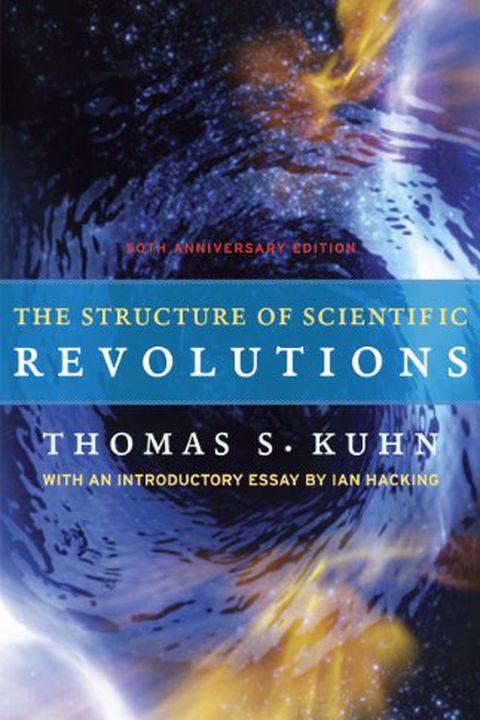
50th Anniversary Edition
Recommended by Paul Graham, Scott Young, David Deutsch and 6 others

Stories of Startups' Early Days
Recommended by Paul Graham, Ryan Holiday, Drew Houston and 5 others
Now available in paperbackwith a new preface and interview with Jessica Livingston about Y Combinator!Founders at Work: Stories of Startups' Early Days is a collection of interviews with founders of famous Technology, companies about what happened in the very earliest days.
How the Shipping Container Made the World Smaller and the World Economy Bigger
Recommended by Paul Graham, Bill Gates, Tobi Lütke and 2 others
The book traces containerization from an early voyage into an industry-wide overhaul, presenting company anecdotes, policy fights, and shipping economics. Reading feels like a succession of episodes that argue an unglamorous box altered trade routes, port design, and business models; the narrative emphasizes logistics mechanics and macroeconomic ripple effects. Limitation: detail-heavy reporting and industry jargon slow the pace, and readers seeking broad cultural synthesis or personal memoir may find the focus strictly structural. The author presents examples intended to show how cost, standardization, and port politics converged to make containerization practical.
At Peleliu and Okinawa
Recommended by Paul Graham, James Mattis, Rami Malek and 3 others
Eugene B. Sledge was part of the war's famous 1st Marine Division 3d Battalion, 5th Marines. Based on notes that Sledge secretly kept in a copy of the New Testament, With the Old Breed captures with utter simplicity and intense frankness the experience of a Marine in the fierce…

For twelve thousand years the Galactic Empire has ruled supreme. Now it is dying. But only Hari Seldon, creator of the revolutionary science of psychohistory, can see into the future to a dark age of ignorance, barbarism, and warfare that will last thirty thousand years.

The Lord of the Rings, Book 1
Recommended by Paul Graham, Richard Branson, John Gruber and 3 others
Bilbo Baggins is a hobbit who enjoys a comfortable, unambitious life, rarely traveling any farther than his pantry or cellar. But his contentment is disturbed when the wizard Gandalf and a company of dwarves arrive on his doorstep one day to whisk him away on an adventure.

A Surfing Life
Recommended by Paul Graham, Sahil Bloom, Richard Branson and 3 others
Finnegan writes a travel-stamped memoir that spends long stretches inside surf sessions, travel logistics, and the social worlds that grow around a lifetime of chasing waves. What works best is precise, sensory description — salty air, board mechanics, and the patience of practice — which makes the reader feel present in each outing. The main limitation is length and repetition: chapters can linger over technical detail and circuitous anecdotes, which will test patience if you prefer forward-moving plot.
The Authoritative Translation and Guide
Recommended by Paul Graham, Sam Altman, Alan Kay and 2 others
In his monumental 1687 work Philosophiae Naturalis Principia Mathematica, known familiarly as the Principia, Isaac Newton laid out in mathematical terms the principles of time, force, and motion that have guided the development of modern physical science.
Bill Bradley at Princeton
Recommended by Paul Graham, Daniel Pink, Jim Collins and 2 others
When John McPhee met Bill Bradley, both were at the beginning of their careers. A Sense of Where You Are, McPhee's first book, is about Bradley when he was the best basketball player Princeton had ever seen.

The Fighter Pilot Who Changed the Art of War
Recommended by Paul Graham, Ryan Holiday, James Mattis and 2 others
John Boyd may be the most remarkable unsung hero in all of American military history. Some remember him as the greatest U.S. fighter pilot ever the man who, in simulated airtoair combat, defeated every challenger in less than forty seconds.

A New Translation by Peter Green
Recommended by Paul Graham, Stewart Brand, Joe Gadway and 2 others
One of the oldest extant works of Western literature, the Iliad is a timeless epic poem of great warriors trapped between their own heroic pride and the arbitrary, often vicious decisions of fate and the gods.
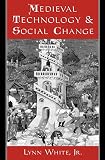
Recommended by Paul Graham, Sam Altman and Patrick Collison
Dense and argumentative rather than anecdotal, this book walks through how concrete technological changes — new mills, harnesses, and agricultural implements — altered labor patterns and landed power in medieval Europe. Its useful part is the clear line it draws between material innovations and changing social arrangements, supported by period examples. Its main limitation is a dated, sometimes deterministic tone and an academic prose style that assumes patience; readers seeking modern theoretical nuance or comparative global perspective may find it narrow.

50th Anniversary, One Vol. Edition
Recommended by Paul Graham, Elon Musk, Naval Ravikant and 3 others
One Ring to rule them all, One Ring to find them, One Ring to bring them all and in the darkness bind themIn ancient times the Rings of Power were crafted by the Elvensmiths, and Sauron, the Dark Lord, forged the One Ring, filling it with his own power so that he could rule all…

A Story of the First People
Recommended by Paul Graham, Sam Altman and Patrick Collison
One of our most influential anthropologists reevaluates her long and illustrious career by returning to her rootsand the roots of life as we know it.When Elizabeth Marshall Thomas first arrived in Africa to live among the Kalahari San, or bushmen, it was 1950, she was nineteen…

Recommended by Paul Graham, Bill Gurley, Brad Feld and 2 others
The computer revolution brought with it new methods of getting work done—just look at today's news for reports of harddriven, highlymotivated young software and online commerce developers who sacrifice evenings and weekends to meet impossible deadlines.
Hedge Funds and the Making of a New Elite (Council on Foreign Relations Books (Penguin Press))
Recommended by Paul Graham, Tim Ferriss, Arianna Simpson and 1 other
"Splendid...the definitive history of the hedge fund, a compelling narrative full of largerthanlife characters and dramatic tales." The Washington Post Wealthy, powerful, and potentially dangerous, hedge fund moguls have become the It Boys of twenty-first century capitalism.

A Personal Account of the Discovery of the Structure of DNA
Recommended by Paul Graham, Matt Ridley, Mark Russinovich and 2 others

Recommended by Paul Graham, Martin Shkreli, Patrick Collison and 2 others
Structure and Interpretation of Computer Programs has had a dramatic impact on computer science curricula over the past decade. This longawaited revision contains changes throughout the text.
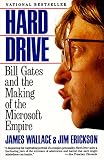
Bill Gates and the Making of the Microsoft Empire
Recommended by Paul Graham, Charlie Munger, Drew Houston and 1 other
Hard Drive reads like a close reporter’s portrait of an emerging software magnate: scene-setting, anecdote-rich, and driven more by personality and deal-by-deal drama than by macroeconomic analysis. Its most useful material is the granular reporting on negotiations, rivalries with larger hardware firms, and the personal quirks that shaped aggressive business tactics. The main limitation is repetition and an anecdotal tone that can feel gossipy or thin on sourcing; readers seeking analytical, data-driven treatment of industry trends will probably be disappointed.
A Life of the Genius Ramanujan
Recommended by Paul Graham, Balaji S. Srinivasan and Sophie Bakalar
Soon to be a major motion picture, the story of one of the most improbable and productive collaborations ever chronicled, between a young unschooled Indian prodigy and a great English mathematician.In 1913, a young unschooled Indian clerk wrote a letter to G H Hardy, begging the…
An American Banking Dynasty and the Rise of Modern Finance
Recommended by Paul Graham, Max Levchin and Sam Ball
The winner of the National Book Award and now considered a classic, The House of Morgan is the most ambitious history ever written about an American banking dynasty.
How Google Thinks, Works, and Shapes Our Lives
Recommended by Paul Graham, Charlie Munger, Drew Houston and 1 other
Written with full cooperation from top management, including cofounders Sergey Brin and Larry Page, this is the inside story behind Google, the most successful and most admired Technology, company of our time, told by one of our best Technology, writers.Few companies in history…
Masterhistorian Charles Oman tells the story of the evolution of military combat from the end of the Roman Empire through the Dark Ages and into the Middle Ages. Oman's beautiful prose captures the tactically complexity and the emotional horror of war in the Middle Ages.
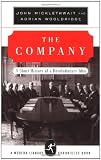
A Short History of a Revolutionary Idea (Modern Library Chronicles)
Recommended by Paul Graham, Patrick O'Shaughnessy, Sriram Krishnan and 1 other
Reading The Company feels like a brisk sweep through modern economic history anchored by the claim that the corporation, not the state or party, is the basic unit of modern society. Micklethwait traces corporate origins, growth, and global spread with illustrative episodes and policy-minded takeaways; the useful part is a broad timeline tying historical moments to today's corporate roles. Limitation: the tone favors broad interpretation over deep, case-by-case evidence, so readers wanting granular data or skeptical counterarguments may find it thin. Prose reads like brisk magazine reporting, not deep academic treatment.
Calvin and Hobbes, Book 18
Recommended by Paul Graham and Grady Booch
Join Calvin and Hobbes on all their adventures in this fourvolume collection of every comic strip from the comic strips eleven year history (1985 to1996).Calvin and Hobbes is unquestionably one of the most popular comic strips of all time.
This is the engrossing, hilarious, and utterly compelling story of how the Stephen the world knows (or thinks it knows) found his way. Tales of champagne, love, and conspicuous consumption jostle with insights into Broadway and TV stardom.
One of the most salient features of our culture is that there is so much bullshit. Everyone knows this. Each of us contributes his share. But we tend to take the situation for granted.
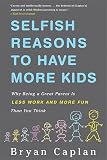
Why Being a Great Parent is Less Work and More Fun Than You Think
Recommended by Paul Graham and Geoffrey Miller
Bryan Caplan presents a brisk, provocative argument that genetics matter far more than most parents assume, citing twin and adoption research to justify lighter, less anxious parenting and even having more children. The book's usefulness is psychological: it frees overinvested parents to reallocate time and money and to question social pressure. Main limitations are tone and selectivity—Caplan is polemical, repeats key points, and offers few emotionally grounded, concrete parenting techniques for readers seeking gentle, balanced counsel.
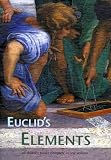
Green Lion Press has prepared a new onevolume edition of T.L. Heath's translation of the thirteen books of Euclid's Elements.
When the unconventional Durrell family can no longer endure the damp, gray English climate, they do what any sensible family would do: sell their house and relocate to the sunny Greek isle of Corfu.

A number one bestseller in Britain, Stephen Fry's astonishingly frank, funny, wise memoir is the book that his fans everywhere have been waiting for.
G. H. Hardy was one of this century's finest mathematical thinkers, renowned among his contemporaries as a 'real mathematician the purest of the pure'. He was also, as C. P. Snow recounts in his Foreword, 'unorthodox, eccentric, radical, ready to talk about anything'.
This letter was dated 30th April, 1876. I will give here as much of it as concerns the public: "I wish you to accept as a gift from me, given you now, the accompanying pages which contain a memoir of my life.
Packed with facts, attributions, and entertaining anecdotes about his contemporaries, Vasari's collection of biographical accounts also presents a highly influential theory of the development of Renaissance art.Beginning with Cimabue and Giotto, who represent the infancy of art,…
Beginning in the year 711 and continuing for nearly a thousand years, the Islamic presence survived in Spain, at times flourishing, and at other times dwindling into warring fiefdoms.
Rodrigo Diaz, the legendary warriorknight of eleventhcentury Castile known as El Cid, is remembered today as the Christian hero of the Spanish crusade who waged wars of reconquest for the triumph of the Cross over the Crescent.
Volume 1: Roman and Anglo-Saxon Britain
Recommended by Paul Graham
The Oxford History of Britain traces the story of Britain and its peoples from Roman times to the present day in five compact volumes.

The World We Have Lost is a seminal work in the study of family and class, kinship and community in England after the Middle Ages and before the changes brought about by the Industrial Revolution.
Sense and SensibilityPride and PrejudiceMansfield ParkEmmaNorthanger AbbeyPersuasionLady SusanJane Austen is without question, one of England's most enduring and skilled novelists.
Tales of a Consulting Detective
Recommended by Paul Graham and Robert Downey Jr
Coming of Age in Ireland, London, and New York
Recommended by Paul Graham
Anjelica Hustons gorgeously written (O, The Oprah Magazine) memoir is an elegant, funny, and frequently haunting reminiscence of the first two decades of her lifeA classic (Vanity Fair).In her first, dazzling memoir, Anjelica Huston shares the story of her deeply unconventional…
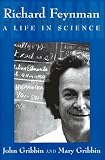
Few human beings have advanced science further than Richard Feynman. Even fewer scientists have made their work so profoundly human.
All skools make some sort at teaching the pupils things and the headmaster pin up a huge timetable of lessons ect. which make the heart sink when you look at it.Nigel Molesworth is back, this time taking the tinies in hand and showing that they can survive the first term as long…
A Social and Architectural History
Recommended by Paul Graham
The English country house has flourished over the centuries because of its ability to adapt to the changes in English society. This book is an account of the ways in which the upperclass life style were reflected in the houses in which the wealthy and powerful lived.
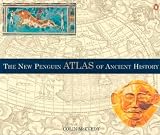
The atlas reads as a map-first tour through ancient Europe, the Mediterranean and the Near East, from 50,000 B.C. to the fourth century A.D. Its useful part is the sweep: chronological maps turn migrations, borders and demographic shifts into a single visual thread that’s easy to follow. Expect minimal interpretive prose and compact captions rather than deep argument; that economy keeps the book focused but can feel reductive or repetitive if you wanted narrative, dense citing, or sustained local detail.
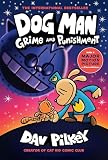
Dog Man reads like a turbocharged comic for early readers: bright panels, slapstick pacing, and punchlines that land more as repeated gags than plot beats. Its useful part is engagement—reluctant 6–8-year-old readers often keep turning pages because the visuals and short bursts of humor reward momentum. Its main limitation is depth: character arcs are shallow and many jokes rely on potty/silliness and repetition, so adults seeking subtlety or kids craving quieter emotional scenes may find it thin.
A classic of reportage, Oranges was first conceived as a short magazine article about oranges and orange juice, but the author kept encountering so much irresistible information that he eventually found that he had in fact written a book.
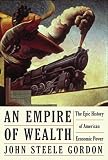
The Epic History of American Economic Power
Recommended by Paul Graham and Meb Faber
An Empire of Wealth argues that American global dominance rested more on the generation of staggering private wealth than on conquest. The prose moves between broad historical sweep and close financial episodes, offering useful chronological connective tissue between Rome, Britain, and modern America. The book's useful part is its long-view tracing of institutions and capital; its main limitation is uneven depth—chapters sometimes dwell on arcane monetary detail and anecdotal listings instead of sustained critical synthesis.
In this superbly illustrated volume, Athens and Rome, the two greatest cities of antiquity, spring to life under the masterful pen of Peter Connolly.

Planetary Astronomy in the Development of Western Thought
Recommended by Paul Graham
For scientist and layman alike this book provides vivid evidence that the Copernican Revolution has by no means lost its significance today.

West African Kingdoms in the Fourteenth Century
Recommended by Paul Graham
"This book is the liveliest account of African history ever written, covering over [one] thousand years of transSaharan trade. "Finely written and researched. ...
Born Red is an artistically wrought personal account, written very much from inside the experience, of the years 19661969, when the author was a young teenager at middle school.

First published in 1997. Routledge is an imprint of Taylor & Francis, an informa company.

2017 Reprint of 1939 Edition. Full facsimile of the original edition, not reproduced with Optical Recognition software. Henri Pirenne's classic history of Europe between the fifth and ninth centuries, Mohammed and Charlemagne, although published on the eve of the Second World…

The Firsthand Account of the Mission that Killed Osama Bin Laden
Recommended by Paul Graham
The #1 New York Times bestselling firstperson account of the planning and execution of the Bin Laden raid from a Navy SEAL who confronted the terrorist mastermind and witnessed his final moments.From the streets of Iraq to the rescue of Captain Richard Phillips in the Indian…
"Gaul is divided into three parts."" Originally composed for propaganda purposes, Julius Caesar's war diary is one of the earliest examples of a military science manual, detailing arms Technology,, tactical maneuvers, battlefield politics, espionage, intelligence and even the…

The German Generals who survived Hitler's Reich talk over World War II with Capt. Liddell Hart, noted British miltary strategist and writer. They speak as professional soldiers to a man they know and respect.
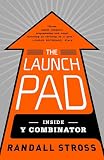
Stross takes readers inside a high-profile accelerator with close-up portraits of founders, pitch rooms, and three-month pressure cooker moments. What works best is vivid, on-the-ground description of selection, mentorship, and demo-day dynamics that change how teams behave. The main limitation is an episodic, anecdote-driven approach and a selective sample—readers seeking broad statistics, prescriptive how-to advice, or deep structural analysis will likely feel the book is light on those fronts.

How Modern Companies Use Entrepreneurial Management to Transform Culture and Drive LongTerm Growth
Recommended by Paul Graham and Aaron Levie
Entrepreneur and bestselling author of The Lean Startup Eric Ries reveals how entrepreneurial principles can be used by businesses ranging from established companies to earlystage startups to grow revenues, drive innovation, and emerge as truly modern organizations poised to…
Show 9 more books with a single recommendation

A sweeping and original work of economic history by Michael Lind, one of Americas leading intellectuals, Land of Promise recounts the epic story of Americas rise to become the worlds dominant economy.
A masterful commentary on the history of science from the Greeks to modern times, by Nobel Prizewinning physicist Steven Weinberg—a thoughtprovoking and important book by one of the most distinguished scientists and intellectuals of our time.In this rich, irreverent, and…
Susan Ferrier sold more copies of her novels than her contemporary, Jane Austen.Sir Walter Scott declared her his equal. Why, then has she been lost to history On the 200th anniversary of this sharply observed, comic novel, it is time to rediscover her brilliance.'What have you…
The Kings Depart is the definitive story of a brief, pivotal moment in human history when the course and shape of the twentieth century might have been altered. Author Richard M.
This classic account shows how the fall of Constantinople in May 1453, after a siege of several weeks, came as a bitter shock to Western Christendom. The city's plight had been neglected, and negligible help was sent in this crisis.

Slow, cozy children's fantasy that opens in daily routines and small-town markets, then eases into low-stakes magic centered on a clever cat and a practical child. Reading feels domestic and unhurried: short chapters, plain language, and quiet humor make it easy to read aloud or to hand to early independent readers. Useful if you want calming, animal-led adventures that reinforce thrift, small moral choices, and neat resolutions. Annoying if you prefer brisk plotting, strong conflicts, or ambiguous endings—the middle can drag on repetitive domestic scenes.
Having won an unprecedented series of victories and acquired huge new territories in 1942, Germany and Japan seemed poised to dominate most of the world. A year later both empires were reeling back in the face of Allied assaults.
For fans of the PBS Masterpiece Theater series, The Durrells in Corfuhere's what happened next! After leaving the island of Corfu, Durrell, his mother, his brother Leslie and their Greek maid Maria Kondos moved back to Britain in 1939.
The Wright Brothers and the Great Race for Flight
Recommended by Paul Graham
From the Kansas City Star, "A wonderful story, wonderfully told, a history that delivers all the suspense and heartache of a novel, and is as difficult to put down"
Recommended Books Recommended by Paul Graham by Paul Graham
Paul Graham recommends 75 books on this list. See all book recommendations by Paul Graham
Recommended Books Recommended by Paul Graham by Elon Musk
Elon Musk recommends 6 books on this list. See all book recommendations by Elon Musk
Recommended Books Recommended by Paul Graham by Charlie Munger
Charlie Munger recommends 5 books on this list. See all book recommendations by Charlie Munger
Books Recommended by Paul Graham: common questions
- What are the most recommended books recommended by paul graham?
- How to Win Friends and Influence People, The Selfish Gene and Zen and the Art of Motorcycle Maintenance are the most recommended books recommended by paul graham on BookMentions, ranked by how many people recommended them.
- Who recommends books recommended by paul graham?
- Paul Graham, Elon Musk, Charlie Munger and Drew Houston are among the people who recommend books on this list. Each name links to their full set of book recommendations.
- Which of these books recommended by paul graham should I read first?
- How to Win Friends and Influence People is the most recommended here with 43 recommendations, which makes it the safest place to start.
Built from recommendation data, category signals, and source-backed book records. Use this list as a starting point; open any book to see proof, context, and Amazon options where available.
Explore more lists
Best Memoirs
71 booksThe memoirs people recommend most — lives told by the person who lived them, from sport and science to business and war. Each pick links back to who recommended it and where they said it.
Best Biographies
90 booksThe biographies people recommend most — founders, scientists, politicians and builders, told by the writers who studied them. Ranked by how many distinct people recommended each title.
Best War Books
16 booksWar books, including titles recommended by James Mattis, Jocko Willink and Elon Musk. Most recommended here: The Art of War, War and Peace and Slaughterhouse-Five.
Best Military Books
59 booksMilitary books, including titles recommended by James Mattis, Jocko Willink and Paul Graham. Most recommended here: The Art of War, With the Old Breed and On War.
Best Biology Books
38 booksBiology books, including titles recommended by Paul Graham, Bill Gates and Sam Altman. Most recommended here: The Selfish Gene, The Vital Question and The Double Helix.
Best Math Books
189 booksMathematics books recommended most by mathematicians and teachers — number theory, proof and statistics. Plus the popular accounts that convey the ideas without diluting them.
About this list
This list aggregates books that appear in public recommendation sources, reader-interest signals, and category data. Books are ranked by their position from the source list; recommendation counts and ratings are shown where available. Open any book to see source-backed recommendation proof, editorial context, and Amazon options — the per-book detail page is where the trust signals live.
Recommended books by person: who recommends books recommended by paul graham
Books recommended by the people below. Open a profile to see everything they recommend, with the source behind each pick.
- Paul GrahamBooks recommended by Paul: 75
- Elon MuskBooks recommended by Elon: 6

- Charlie MungerBooks recommended by Charlie: 5
- Drew HoustonBooks recommended by Drew: 4

- Martin ShkreliBooks recommended by Martin: 4
- Ryan HolidayBooks recommended by Ryan: 4

- Sam AltmanBooks recommended by Sam: 4

- Ankur WarikooBooks recommended by Ankur: 3
- Patrick CollisonBooks recommended by Patrick: 3

- Scott YoungBooks recommended by Scott: 3
- Aaron LevieBooks recommended by Aaron: 2
- Alan KayBooks recommended by Alan: 2