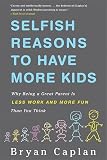
Why Being a Great Parent is Less Work and More Fun Than You Think
by Bryan Caplan
Proof-backed recommendation
Amazon availability
Bryan Caplan presents a brisk, provocative argument that genetics matter far more than most parents assume, citing twin and adoption research to justify lighter, less anxious parenting and even having more children. The book's usefulness is psychological: it frees overinvested parents to reallocate time and money and to question social pressure. Main limitations are tone and selectivity—Caplan is polemical, repeats key points, and offers few emotionally grounded, concrete parenting techniques for readers seeking gentle, balanced counsel.
This summary and audience guidance are AI-generated from the book's description and its recommendation history, last updated June 2026. Recommendations, quotes and sources elsewhere on this page come from published material and are not generated.
We've needlessly turned parenting into an unpleasant chore. Parents invest more time and money in their kids than ever, but the shocking lesson of twin and adoption research is that upbringing is much less important than genetics in the long run. These revelations have surprising implications for how we parent and how we spend time with our kids. T...
Difficulty:easy
Check formats, pricing, and availability options for Kindle, physical print, or audiobooks directly.
View available editions on AmazonWhy recommended
Recommended by 3 sources and appears in Books Recommended by Paul Graham, Parenting, and Relationships & Family.
People and public figures who have recommended this book.
Recommendation proof is sourced from public posts, interviews, reading lists, and cited references.
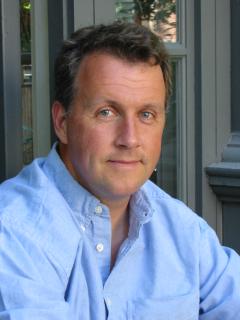
Paul Graham
Co-founder of Y Combinator; essayist
“The book 'Selfish reasons to have more kids' by @bryan_caplan is the best book on parenting. Because it's one of the few to take genetics seriously.”
Check formats, pricing, and availability options directly on Amazon.
Consider The Undoing Project by Michael Lewis. Recommended by 18 sources.
“Michael Lewis chronicles the friendship and intellectual partnership of Daniel Kahneman and Amos Tversky, who championed the idea that cognitive biases shape our choices. The narrative reads like a buddy story, weaving their discoveries into personal anecdotes and the drama of their collaboration. You'll grasp key ideas—loss aversion, framing—through their story, but the book focuses on biography, not application. Helpful for understanding behavioral economics' origins; less useful if you want actionable advice. The emotional arc of their relationship can overshadow the science.”


Each recommendation is collected from a public source — interviews, articles, or curated lists — and linked to its original URL. Books with many verifiable recommendations from respected people rank higher.