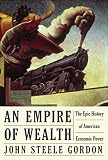
The Epic History of American Economic Power
by John Steele Gordon
Proof-backed recommendation
Amazon availability
An Empire of Wealth argues that American global dominance rested more on the generation of staggering private wealth than on conquest. The prose moves between broad historical sweep and close financial episodes, offering useful chronological connective tissue between Rome, Britain, and modern America. The book's useful part is its long-view tracing of institutions and capital; its main limitation is uneven depth—chapters sometimes dwell on arcane monetary detail and anecdotal listings instead of sustained critical synthesis.
This summary and audience guidance are AI-generated from the book's description and its recommendation history, last updated June 2026. Recommendations, quotes and sources elsewhere on this page come from published material and are not generated.
Throughout time, from ancient Rome to modern Britain, the great empires built and maintained their domination through force of arms and political power. But not the United States. America has dominated the world in a new, peaceful, and pervasive way through the continued creation of staggering wealth. In this authoritative, engrossing history, J...
Difficulty:hard
Check formats, pricing, and availability options for Kindle, physical print, or audiobooks directly.
View available editions on AmazonWhy recommended
Recommended by 2 sources and appears in Books Recommended by Paul Graham, American History, and Finance.
People and public figures who have recommended this book.
Recommendation proof is sourced from public posts, interviews, reading lists, and cited references.

Paul Graham
Co-founder of Y Combinator; essayist
“Recently enjoyed reading Americana by @bhu_srinivasan ... Any other favorite books on economic history Three more favorites: Birth of Plenty/Splendid Exchange by Bernstein Empire of Wealth by Gordon Ascent of Money by Ferguson”
Check formats, pricing, and availability options directly on Amazon.
Consider The Undoing Project by Michael Lewis. Recommended by 18 sources.
“Michael Lewis chronicles the friendship and intellectual partnership of Daniel Kahneman and Amos Tversky, who championed the idea that cognitive biases shape our choices. The narrative reads like a buddy story, weaving their discoveries into personal anecdotes and the drama of their collaboration. You'll grasp key ideas—loss aversion, framing—through their story, but the book focuses on biography, not application. Helpful for understanding behavioral economics' origins; less useful if you want actionable advice. The emotional arc of their relationship can overshadow the science.”


Each recommendation is collected from a public source — interviews, articles, or curated lists — and linked to its original URL. Books with many verifiable recommendations from respected people rank higher.