BookMentionsBookMentions
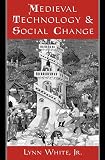
Medieval Technology, and Social Change
6 recommendations

Medieval Technology, and Social Change

by Lynn White

Paul GrahamPatrick CollisonSam Altman
Recommended by Paul Graham, Patrick Collison +
1 more

More Recommenders

Sam Altman

CEO of OpenAI

@mikebala @mckaywrigley Bartlett's Making of Europe, White's Medieval Technology, and Social Change, Fletcher's Quest for El Cid to start with. | @paulg it really is great.

Source →

Recommended by 3 notable people, including Paul Graham and Patrick Collison

Check price on Amazon

Proof-backed recommendation

Amazon availability

Reading Profile

Difficulty:hard
Themes:technology vs social structuretools vs institutions

Should I read this?

Dense and argumentative rather than anecdotal, this book walks through how concrete technological changes — new mills, harnesses, and agricultural implements — altered labor patterns and landed power in medieval Europe. Its useful part is the clear line it draws between material innovations and changing social arrangements, supported by period examples. Its main limitation is a dated, sometimes deterministic tone and an academic prose style that assumes patience; readers seeking modern theoretical nuance or comparative global perspective may find it narrow.

Read this if...

  • a medieval-history grad student preparing a seminar on economic change: useful as a focused case study linking tools to institutions and as a source of specific examples to critique or support class discussion
  • a museum curator designing a medieval-technology exhibit: good for locating objects (mills, plows, harnesses) inside larger social transformations and framing exhibit labels around cause-and-effect
  • a history teacher building a unit on the late medieval economy: helpful for turning abstract terms like ‘manorial’ and ‘feudal’ into concrete technological drivers students can visualise

Skip this if...

  • you’ll likely put it down when long chapters shift into technical descriptions of machines with little narrative momentum — slow, detail-heavy sections can feel arid
  • annoying if you prefer contemporary theoretical framing or comparative, global history — the focus is Eurocentric and assumes older historiographical positions
  • no exercises or practical applications — if you want hands-on activities, modern pedagogy, or a workbook-style approach, this is not that book

In Medieval Technology, and Social Change, Lynn White considers the effects of technological innovation on the societies of medieval Europe: the slow collapse of feudalism with the development of machines and tools that introduced factories in place of cottage industries, and the development of the manorial system with the introduction of new kinds ...

Before You Buy

Reading Specifications

Difficulty:hard

Themes:
technology vs social structuretools vs institutionsmechanization vs cottage production

Audience Fit

Recommended for:
  • a medieval-history grad student preparing a seminar on economic change: useful as a focused case study linking tools to institutions and as a source of specific examples to critique or support class discussion
  • a museum curator designing a medieval-technology exhibit: good for locating objects (mills, plows, harnesses) inside larger social transformations and framing exhibit labels around cause-and-effect
  • a history teacher building a unit on the late medieval economy: helpful for turning abstract terms like ‘manorial’ and ‘feudal’ into concrete technological drivers students can visualise
Not ideal if you want:
  • you’ll likely put it down when long chapters shift into technical descriptions of machines with little narrative momentum — slow, detail-heavy sections can feel arid
  • annoying if you prefer contemporary theoretical framing or comparative, global history — the focus is Eurocentric and assumes older historiographical positions
  • no exercises or practical applications — if you want hands-on activities, modern pedagogy, or a workbook-style approach, this is not that book

Check formats, pricing, and availability options for Kindle, physical print, or audiobooks directly.

View available editions on Amazon

Key themes

technology vs social structuretools vs institutionsmechanization vs cottage productionmaterial causes vs human agencylocal practice vs systemic change

Why recommended

Recommended by 6 sources and appears in Books Recommended by Paul Graham, Most Recommended Books, and Technology.

Recommended by notable people

People and public figures who have recommended this book.

Recommendation Signals

Recommendation proof is sourced from public posts, interviews, reading lists, and cited references.

Sam Altman

Sam Altman

CEO of OpenAI

@mikebala @mckaywrigley Bartlett's Making of Europe, White's Medieval Technology, and Social Change, Fletcher's Quest for El Cid to start with. | @paulg it really is great.
View sources (2) ▾80%

Appears In

Accidental Presidents
Try This Instead

Not sure if this is the right fit?

Consider Accidental Presidents by Jared Cohen. Recommended by 10 sources.

Accidental Presidents offers eight narrative portraits of men who succeeded to the U.S. presidency without election, using anecdote-rich scenes and readable context to show how personality and circumstance interact with office power. It’s strongest as a set of self-contained stories that make succession stakes concrete for non-specialist readers; it does not prioritize dense archival argument or exhaustive methodology, so expect some interpretive generalizations and repeated themes across cases. Use it for fast historical orientation rather than scholarly deep-dives.

Similar books

How recommendation signals are reviewed

Each recommendation is collected from a public source — interviews, articles, or curated lists — and linked to its original URL. Books with many verifiable recommendations from respected people rank higher.

Medieval Technology, and Social Change

Medieval Technology, and Social Change

View on Amazon →