Best Physics Books
Category100 of 142 books200 recommendations totalPhysics books recommended most by physicists and science writers — quantum mechanics, relativity, cosmology and particle physics. Popular accounts that keep the mathematics honest.
Where to start: Physics Books recommended most often
Recommended books, ranked by how many of the 95 people behind this list recommended each one.
- 1"Surely You're Joking, Mr. Feynman!"24 recommendations · recommended by Naval Ravikant, Mark Russinovich and Bill Gates
- 2The Beginning of Infinity16 recommendations · recommended by Naval Ravikant, Mark Zuckerberg and Sam Altman
- 3Einstein16 recommendations · recommended by Mark Russinovich, Mark Zuckerberg and Charlie Munger
- 4The Big Picture10 recommendations · recommended by Scott Young, K Ken Nakamura and Brian Greene
- 5Scale10 recommendations · recommended by Michael Mauboussin, Stewart Brand and Vinod Khosla
Adventures of a Curious Character
Recommended by Naval Ravikant, Mark Russinovich, Bill Gates and 18 others
This book reads like an evening with a hyper-curious, prankish genius who can't stop telling you about his exploits. Feynman's stories—from cracking safes at Los Alamos to picking up art just to see if he could—are often hilarious and always driven by a relentless itch to figure things out. You'll enjoy it most if you're here for the mischief, not the science. Annoyingly, the anecdotes sometimes feel like a victory lap, and the lack of structure may leave you wondering where it's all heading.
Explanations That Transform the World
Recommended by Naval Ravikant, Mark Zuckerberg, Sam Altman and 9 others
Deutsch builds a case that all progress—scientific, moral, political—stems from creating good explanations. The book reads like a series of interconnected arguments defending this idea with clarity and intellectual optimism, covering physics, biology, computing, and politics. Its useful part is a coherent, ambitious framework that challenges prevailing pessimism. The limitation is that the arguments can become repetitive, applying the same principles across many domains without much empirical grounding, and the confident tone may irritate readers who prefer more tentative philosophy.
His Life and Universe
Recommended by Mark Russinovich, Mark Zuckerberg, Charlie Munger and 10 others
This isn’t a dry recitation of equations—Isaacson reconstructs Einstein’s life like a sprawling historical drama, from his patent-office daydreams to his later years as a global conscience. The most useful part is how it shows the messy, intuitive leaps behind scientific revolutions, making relativity feel almost graspable without math. The main limitation? It’s exhaustive, occasionally to a fault. If you’re here for the science alone, the deep dives into his marriages, quarrels, and Zionist activism might feel like padding, and the final chapters on his unfinished work can lose momentum.
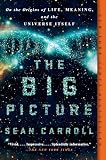
On the Origins of Life, Meaning, and the Universe Itself
Recommended by Scott Young, K Ken Nakamura, Brian Greene and 5 others
Sean Carroll offers a wide-angle synthesis tying together cosmology, emergence, and consciousness from a naturalistic-physics perspective, written for intelligent general readers rather than specialists. What works best is a coherent, science-grounded orientation that helps you see how current physics can inform questions about meaning and mind, with clear explanations of key ideas. The main limitation is pacing: extended philosophical assertions and occasional technical detours can feel argumentative or dense, and readers seeking memoir or anecdote-driven hooks may find it repetitious.

The Universal Laws of Life, Growth, and Death in Organisms, Cities, and Companies
Recommended by Michael Mauboussin, Stewart Brand, Vinod Khosla and 5 others
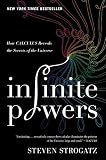
How Calculus Reveals the Secrets of the Universe
Recommended by Naval Ravikant, Michael Mauboussin, Brian Greene and 5 others
Strogatz writes like an engaging guide who treats calculus as a human story: equations come with everyday analogies, historical side trips, and visual intuition. What works best is making why calculus matters—velocity, accumulation, and infinity—feel concrete without heavy formalism, so a reader finishes with better conceptual tools for understanding technology and science. The main limitation is pace: readers wanting rigorous proofs or a practice-based learning path will find it light and occasionally repetitive in examples and anecdotes.
Recommended by John Sipher, Hilary Mason, Chris Dixon and 1 other
The Authoritative Translation and Guide
Recommended by Sam Altman, Neil deGrasse Tyson, Paul Graham and 2 others
In his monumental 1687 work Philosophiae Naturalis Principia Mathematica, known familiarly as the Principia, Isaac Newton laid out in mathematical terms the principles of time, force, and motion that have guided the development of modern physical science.
Quantum Worlds and the Emergence of Spacetime
Recommended by K Ken Nakamura, Dallas Campbell, Sean Carroll and 3 others
As you read these words, copies of you are being created. Sean Carroll, theoretical physicist and one of this worlds most celebrated writers on science, rewrites the history of 20th century physics.

The Science of Parallel Universesand Its Implications
Recommended by Naval Ravikant, Chris Anderson and Steve Jurvetson
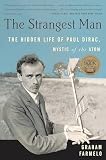
The Hidden Life of Paul Dirac, Mystic of the Atom
Recommended by Eric Weinstein and Adam Rutherford
Reading this feels like a patient, archival reconstruction of a sharp, private 20th‑century theoretical physicist. Most useful are the careful timelines and the step‑by‑step account of scientific developments that connect ideas to the institutions and papers around them. The main limitation is frequent technical detours and dense archival detail that slow narrative momentum and can intimidate readers who prefer a human‑first portrait. Best approached in focused chunks rather than read straight through.
The Strange Theory of Light and Matter (Princeton Science Library)
Recommended by Naval Ravikant, Larry Page and Ryan Shea
Celebrated for his brilliantly quirky insights into the physical world, Nobel laureate Richard Feynman also possessed an extraordinary talent for explaining difficult concepts to the general public.

From the Big Bang to Black Holes
Recommended by AnneLaure Le Cunff, Richard Branson, Sarah Drasner and 1 other
Was there a beginning of time Could time run backwards Is the universe infinite or does it have boundariesThese are just some of the questions considered in the internationally acclaimed masterpiece by the world renowned physicist generally considered to have been one of the…
Recommended by Naval Ravikant, Chris Anderson and AnneLaure Le Cunff
One of TIME's Ten Best Nonfiction Books of 2018 "Meet the new Stephen Hawking . . . The Order of Time is a dazzling book." The Sunday Times From the bestselling author of Seven Brief Lessons on Physics, comes a concise, elegant exploration of time.Why do we remember the past and…
How Science Will Shape Human Destiny and Our Daily Lives by the Year 2100
Recommended by Michael Dell and Samir Arora
Welcome to the future, where you'll be able to take an elevator hundreds of miles into space, the internet will be in your contact lens, nanobots will scan your DNA for signs of disease and you'll be able to control computers with your brain and even rearrange the physical world…
First published in 1973, Gravitation is a landmark graduatelevel textbook that presents Einstein's general theory of relativity and offers a rigorous, fullyear course on the physics of gravitation.
Written by noted quantum computing theorist Scott Aaronson, this book takes readers on a tour through some of the deepest ideas of maths, computer science and physics. Full of insights, arguments and philosophical perspectives, the book covers an amazing array of topics.
The Best Short Works of Richard P. Feynman (Helix Books)
Recommended by Larry Page and Brian Armstrong
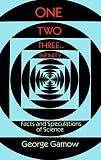
Facts and Speculations of Science
Recommended by Neil deGrasse Tyson and Steven Pinker
". . . full of intellectual treats and tricks, of whimsy and deep scientific philosophy. It is highbrow entertainment at its best, a teasing challenge to all who aspire to think about the universe." — New York Herald TribuneOne of the world's foremost nuclear physicists…
Economics as Social Physics, Physics as Nature's Economics
Recommended by Eric Weinstein and Michael Mauboussin
This is a history of how physics has drawn some inspiration from economics and how economics has sought to emulate physics, especially with regard to the theory of value.
Recommended by Naval Ravikant, Pete Buttigieg and Jonas Bonér
The Science of Self-organized Criticality
Recommended by Nassim Nicholas Taleb and Tren Griffin
and acknowledgments Selforganized criticality is a new way of viewing nature. The basic picture is one where nature is perpetually out of balance, but organized in a poised statethe critical statewhere anything can happen within welldefined statistical laws.
Why There Is Something Rather than Nothing
Recommended by Charlie Munger and Christopher Paolini

A Brief History of Predicting the Unpredictable
Recommended by Eric Weinstein and Martin Shkreli
“Weatherall probes an epochal shift in financial strategizing with lucidity, explaining how it occurred and what it means for modern finance.”—Peter Galison, author of Einstein’s Clocks, Poincare’s MapsAfter the economic meltdown of 2008, many pundits placed the blame on…
How Two Men Revolutionized Physics
Recommended by Naval Ravikant and Charlie Munger
The story of two brilliant nineteenthcentury scientists who discovered the electromagnetic field, laying the groundwork for the amazing technological and theoretical breakthroughs of the twentieth centuryTwo of the boldest and most creative scientists of all time were Michael…
The aim of this groundbreaking new text is to bring general relativity into the undergraduate curriculum and make this fundamental theory accessible to all physics majors. Using a "physics first" approach to the subject, renowned relativist James B.

The Journey to Quantum Gravity
Recommended by Naval Ravikant
"The man who makes physics sexy . . . the scientist they're calling the next Stephen Hawking." The Times Magazine From the New York Timesbestselling author of Seven Brief Lessons on Physics and the forthcoming The Order of Time, a closer look at the mindbending nature of the…
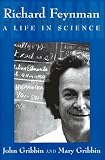
Few human beings have advanced science further than Richard Feynman. Even fewer scientists have made their work so profoundly human.

Reviews from the First Edition:"An excellent text ... The postulates of quantum mechanics and the mathematical underpinnings are discussed in a clear, succinct manner." (American Scientist)"No matter how gently one introduces students to the concept of Dirac's bras and kets,…
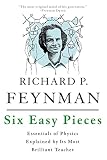
Essentials of Physics Explained by Its Most Brilliant Teacher
Recommended by Naval Ravikant
Learn from a Nobel Peace Prize winner in this entertaining and educational guide to physics, written for the enjoyment of curious beginners and aspiring scientists alike.It was Richard Feynman's outrageous and scintillating method of teaching that earned him legendary status…
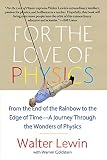
From the End of the Rainbow to the Edge of Time A Journey Through the Wonders of Physics
Recommended by Bill Gates
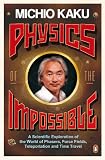
A Scientific Exploration of the World of Phasers, Force Fields, Teleportation and Time Travel
Recommended by Mark Zuckerberg
The Ptolemaic system of the universe, with the earth at the center, had held sway since antiquity as authoritative in philosophy, science, and church teaching.
What You Need to Know to Start Doing Physics
Recommended by Eric Weinstein

New York Times bestseller Life on the Edge alters our understanding of our world's fundamental dynamics through the use of quantum mechanics.Life is the most extraordinary phenomenon in the known universe; but how did it come to be Even in an age of cloning and artificial…
Show 63 more books with a single recommendation
Are there "natural laws" that govern the ways in which humans behave and organize themselves, just as there are physical laws that govern the motions of atoms and planets Unlikely as it may seem, such laws now seem to be emerging from attempts to bring the tools and concepts of…

In dit succesvolle boek verklaart Chad Orzel basisbegrippen van de natuurkunde, waarbij hij het gedrag van zijn hond Emmy als uitgangspunt neemt. Emmy is niet zo maar een hond!

From the Crisis in Physics to the Future of the Universe
Recommended by Ken Nakamura

The World You Thought You Knew
From the acclaimed author of Einstein's Dreams and Mr g, a meditation on the unexpected ways in which recent scientific findings have shaped our understanding of ourselves and our place in the cosmos.With all the passion, curiosity, and precise yet lyrical prose that have marked…
A masterful commentary on the history of science from the Greeks to modern times, by Nobel Prizewinning physicist Steven Weinberg—a thoughtprovoking and important book by one of the most distinguished scientists and intellectuals of our time.In this rich, irreverent, and…
(And Why Anything That Can Happen, Does)
Recommended by Mark Russinovich
In The Quantum Universe , Brian Cox and Jeff Forshaw approach the world of quantum mechanics in the same way they did in Why Does E=mc2 and make fundamental scientific principles accessible—and fascinating—to everyone.The subatomic realm has a reputation for weirdness, spawning…
An acclaimed biography of the Enlightenment's greatest mathematicianThis is the first fullscale biography of Leonhard Euler (17071783), one of the greatest mathematicians and theoretical physicists of all time.
The Millenium Edition, Vol. 1
Recommended by Bill Gates
The experience feels like learning physics by watching someone think: definitions, assumptions, and derivations are laid out so the “why” stays visible. This helps most when you enjoy building understanding from scratch and rereading tough steps. The limitation is that the book is mostly exposition rather than hands-on practice, so you may feel stuck without feedback. You’ll likely get annoyed if you want a tightly modern presentation, or if you expect lots of guided problems.
From the acclaimed author of The Information and Chaos, here is a mindbending exploration of time travel: its subversive origins, its evolution in literature and science, and its influence on our understanding of time itself.
This wellknown undergraduate electrodynamics textbook is now available in a more affordable printing from Cambridge University Press.
For 50 years, Edward M. Purcell's classic textbook has introduced students to the world of electricity and magnetism. The third edition has been brought up to date and is now in SI units.
Stephen Hawking was recognized as one of the greatest minds of our time and a figure of inspiration after defying his ALS diagnosis at age twentyone.
The Theoretical Minimum
From the bestselling author of The Theoretical Minimum, a DIY introduction to the math and science of quantum physicsFirst he taught you classical mechanics.
An Introduction to Quantum Field Theory is a textbook intended for the graduate physics course covering relativistic quantum mechanics, quantum electrodynamics, and Feynman diagrams.


My Quest for the Ultimate Nature of Reality
Recommended by Mark Cuban
Our Mathematical Universe is a journey to explore the mysteries uncovered by cosmology and to discover the nature of reality. Our Big Bang, our distant future, parallel worlds, the subatomic and intergalactic none of them are what they seem.
A Discussion of the Mysteries of Quantum Physics (Canto)
Anybody who is not shocked by quantum theory has not understood it. Niels Bohr's dictum bears witness to the bewildering impact of quantum theory, flying in the face of classical physics and dramatically transforming scientists' outlook on our relationship with the material…

What Temperature Reveals about the Past and Future of Our Species, Planet, and Universe
Recommended by Charlie Munger
In a wonderful synthesis of science, history, and imagination, Gino Segrè, an internationally renowned theoretical physicist, embarks on a wideranging exploration of how the fundamental scientific concept of temperature is bound up with the very essence of both life and matter.
Quantum Field Theory and the Hunt for an Orderly Universe
Recommended by K Ken Nakamura
Gifford Lectures Given at Aberdeen, Scotland AprilNovember 1985
Recommended by Stewart Brand
Infinite in All Directions is a popularized science at its best. In Dyson's view, science and religion are two windows through which we can look out at the world around us.
Around 1900, physicists started to discover particles like electrons, protons, and neutrons, and with these discoveries believed they could predict the internal behavior of the atom.
A SelfTeaching Guide
The fast, easy way to master the fundamentals of physicsHere is the most practical, complete, and easytouse guideavailable for understanding physics and the physical world.
Table of Contents 1. Measurements 2. Describing Motion 3. Force and Acceleration 4. Gravitation 5. Work, Energy and Power 6.

This is a much awaited revision of a modern classic that covers all the major topics in modern physics, including relativity, quantum physics, and their applications.
A Strategic Approach with Modern Physics (4th Edition)
A researchdriven approach, finetuned for even greater easeofuse and student success For the Fourth Edition of Physics for Scientists and Engineers, Knight continues to build on strong researchbased foundations with finetuned and streamlined content, hallmark features, and an…
Mechanics, Relativity, and Thermodynamics (The Open Yale Courses Series)
Professor R. Shankar, a wellknown physicist and contagiously enthusiastic educator, was among the first to offer a course through the innovative Open Yale Course program. His popular online video lectures on introductory physics have been viewed over a million times.
Problems in General PhysicsArihant PublicationsI E Irodov2016EDN6
Thoughts on Life and Death at the Brink of the Millennium
Reading feels like a series of public lectures turned into intimate essays: clear, conversational, and often playful about origins, the fate of the universe, and why science matters to daily life. The book's strength is plainspoken exposition paired with reflective asides that link cosmic scale to human concerns. Limitations appear as repeated metaphors and sentimental detours that slow momentum. Expect storytelling and reflection rather than dense mathematical demonstration or step-by-step technical argument.
The Quest of the Valiant Swabian
Reading feels like a guided tour through the origins of quantum thought, alternating close readings of original papers with clear, non‑flashy physics explanations. Most useful for reconstructing why certain debates mattered and how specific calculations and thought experiments were framed. Main limitation is pacing: extended archival excerpts and periodic technical derivations slow momentum, so readers seeking a light narrative will find stretches plodding. It rewards patience with precise context but asks for tolerance of detail.

H C Verma s Concepts Of Physics is an allinclusive book, which serves to detail out the ABC of physics in an intricate manner making it an ideal book for not only the higher secondary students, but also for those who are preparing for their competitive examinations.Physics as a…
In the Messenger Lectures, originally delivered at Cornell University & recorded for TV by the BBC, Feynman offers an overview of selected physical laws & gathers their common features into one broad principle of invariance.
International Paperback Edition, Same as per description, Economy edition, May have been Printed in Asia with restrictions on cover like not for sale outside asia etc, Legal to use as per US Courts.
If the Universe Is the Answer, What Is the Question
In this extraordinarily accessible and enormously witty book, the Nobel Prizewinning physicist Leon Lederman guides us on a fascinating tour of the history of particle physics.
Einstein's Outrageous Legacy (Commonwealth Fund Book Program)
Ever since Albert Einstein's general theory of relativity burst upon the world in 1915 some of the most brilliant minds of our century have sought to decipher the mysteries bequeathed by that theory, a legacy so unthinkable in some respects that even Einstein himself rejected…
The Science Classic Made More Accessible
Stephen Hawking's worldwide bestseller, A Brief History of Time, has been a landmark volume in scientific writing. Its author's engaging voice is one reason, and the compelling subjects he addresses is another; the nature of space and time, the role of God in creation, the…
For 40 years, Kleppner and Kolenkow's classic text has introduced students to the principles of mechanics. Now brought up to date, this revised and improved second edition is ideal for classical mechanics courses for first and secondyear undergraduates with foundation skills in…
The Origin and Fate of the Universe
Based on a series of lectures given at Cambridge University, Professor Hawking's work introduced "the history of ideas about the universe" as well as today's most important scientific theories about time, space, and the cosmos in a clear, easytounderstand way.
A Father, a Daughter, the Meaning of Nothing, and the Beginning of Everything by Gefter, Amanda (2014) Hardcover
Changes and additions to the new edition of this classic textbook include a new chapter on symmetries, new problems and examples, improved explanations, more numerical problems to be worked on a computer, new applications to solid state physics, and consolidated treatment of…
Einstein, Bohr, and the Great Debate about the Nature of Reality
For most people, quantum theory is a byword for mysterious, impenetrable science. And yet for many years it was equally baffling for scientists themselves.
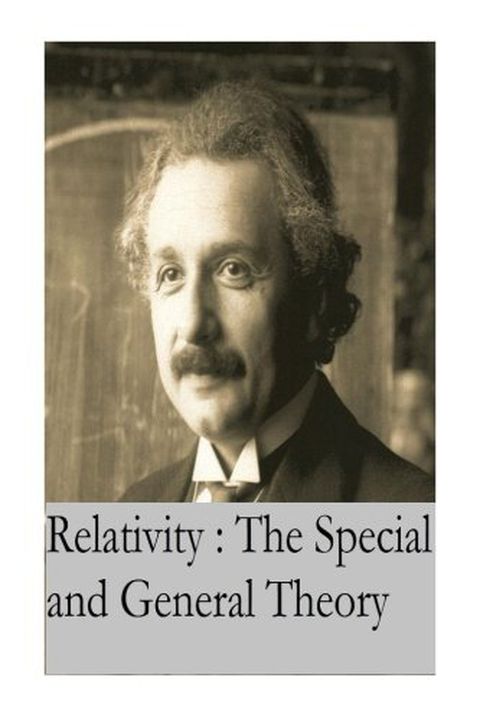
the Special and General Theory
An accesible version of Einstein's masterpiece of theory, written by the genius himselfAccording to Einstein himself, this book is intended "to give an exact insight into the theory of Relativity to those readers who, from a general scientific and philosophical point of view,…
The Origin of the Universe (P.S.)
A half century ago, a shocking Washington Post headline claimed that the world began in five cataclysmic minutes rather than having existed for all time; a skeptical scientist dubbed the maverick theory the Big Bang.
"It would be hard to imagine a better guide to this difficult subject." Scientific American In Three Roads to Quantum Gravity, Lee Smolin provides an accessible overview of the attempts to build a final "theory of everything." He explains in simple terms what scientists are…
The Standard Model, the Unsung Triumph of Modern Physics
There are two scientific theories that, taken together, explain the entire universe. The first, which describes the force of gravity, is widely known: Einstein's General Theory of Relativity.
Physics Encounters Consciousness
In trying to understand the atom, physicists built quantum mechanics, the most successful theory in science and the basis of onethird of our economy. They found, to their embarrassment, that with their theory, physics encounters consciousness.

Richard Feynman's Life in Science (Great Discoveries)
Perhaps the greatest physicist of the second half of the twentieth century, Richard Feynman changed the way we think about quantum mechanics, the most perplexing of all physical theories. Here Lawrence M.
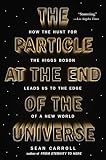
How the Hunt for the Higgs Boson Leads Us to the Edge of a New World
A Complete Guide to the Laws of the Universe
Roger Penrose, one of the most accomplished scientists of our time, presents the only comprehensive and comprehensible account of the physics of the universe.
Life and Thought (Canto Classics)
Erwin Schrodinger was a brilliant and charming Austrian, a great scientist, and a man with a passionate interest in people and ideas.
How Beauty Leads Physics Astray
A contrarian argues that modern physicists' obsession with beauty has given us wonderful math but bad science. Whether pondering black holes or predicting discoveries at CERN, physicists believe the best theories are beautiful, natural, and elegant, and this standard separates…
An accessible introduction to an exciting new area in computation, explaining such topics as qubits, entanglement, and quantum teleportation for the general reader.Quantum computing is a beautiful fusion of quantum physics and computer science, incorporating some of the most…
Modern Research on the Foundations of Quantum Mechanics (Physics and Astronomy)
The Quantum Challenge, Second Edition, is an engaging and thorough treatment of the extraordinary phenomena of quantum mechanics and of the enormous challenge they present to our conception of the physical world.
The Science Behind the Headlines
The Rise of String Theory, the Fall of a Science, and What Comes Next by Lee Smolin (20060919)
In this groundbreaking book, the renowned theoretical physicist Lee Smolin argues that physics ? the basis for all other sciences ? has lost its way. For more than two centuries, our understanding of the laws of nature expanded rapidly.
Leading Scientists Explore the Origin, Mysteries, and Future of the Cosmos (Best of Edge Series)
Recommended Physics Books by Naval Ravikant
Naval Ravikant recommends 11 books on this list. See all book recommendations by Naval Ravikant
Recommended Physics Books by Eric Weinstein
Eric Weinstein recommends 6 books on this list. See all book recommendations by Eric Weinstein
Recommended Physics Books by Mark Russinovich
Mark Russinovich recommends 5 books on this list. See all book recommendations by Mark Russinovich
Physics Books: common questions
- What are the most recommended physics books?
- "Surely You're Joking, Mr. Feynman!", The Beginning of Infinity and Einstein are the most recommended physics books on BookMentions, ranked by how many people recommended them.
- Who recommends physics books?
- Naval Ravikant, Eric Weinstein, Mark Russinovich and Bill Gates are among the people who recommend books on this list. Each name links to their full set of book recommendations.
- Which of these physics books should I read first?
- "Surely You're Joking, Mr. Feynman!" is the most recommended here with 24 recommendations, which makes it the safest place to start.
Built from recommendation data, category signals, and source-backed book records. Use this list as a starting point; open any book to see proof, context, and Amazon options where available.
Explore more lists
Best Physics Books
89 booksPhysics books recommended most by physicists and science writers — quantum mechanics, relativity and cosmology. Plus the popular accounts that keep the mathematics honest.
Best Math Books
189 booksMathematics books recommended most by mathematicians and teachers — number theory, proof and statistics. Plus the popular accounts that convey the ideas without diluting them.
Best Biohacking Books
25 booksBiohacking books, including titles recommended by Vinod Khosla, Joe Rogan and Nassim Nicholas Taleb. Most recommended here: Why We Sleep, Lifespan and Breath.
Best Economics Books
69 booksEconomics books, including titles recommended by Bill Gates, Marc Andreessen and Naval Ravikant. Most recommended here: Thinking, Fast and Slow, Factfulness and Guns, Germs, and Steel.
Best Memoirs
71 booksThe memoirs people recommend most — lives told by the person who lived them, from sport and science to business and war. Each pick links back to who recommended it and where they said it.
Best Biographies
90 booksThe biographies people recommend most — founders, scientists, politicians and builders, told by the writers who studied them. Ranked by how many distinct people recommended each title.
About this list
This list aggregates books that appear in public recommendation sources, reader-interest signals, and category data. Books are ranked by their position from the source list; recommendation counts and ratings are shown where available. Open any book to see source-backed recommendation proof, editorial context, and Amazon options — the per-book detail page is where the trust signals live.
Recommended books by person: who recommends physics books
Books recommended by the people below. Open a profile to see everything they recommend, with the source behind each pick.
- Naval RavikantBooks recommended by Naval: 11

- Eric WeinsteinBooks recommended by Eric: 6

- Mark RussinovichBooks recommended by Mark: 5
- Bill GatesBooks recommended by Bill: 4

- Charlie MungerBooks recommended by Charlie: 4
- Mark ZuckerbergBooks recommended by Mark: 4

- Chris AndersonBooks recommended by Chris: 3

- K Ken NakamuraBooks recommended by K: 3
- Larry PageBooks recommended by Larry: 3

- Michael MauboussinBooks recommended by Michael: 3
- Neil deGrasse TysonBooks recommended by Neil: 3
- Paul GrahamBooks recommended by Paul: 3