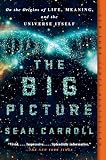
The Big Picture
On the Origins of Life, Meaning, and the Universe Itself
by Sean Carroll
6 more
More Recommenders
“Favourite reads of 2018: Fiction: Three Body Problem (trilogy) Non Fiction: The Big Picture Blog Post: | Highly recommend anything by Sean Carroll | I finished "The BIG Picture" by @seanmcarroll It is a great book, must read for everyone. I have 2 comments: 1) In P134, the author implied that even History can be considered a science, which was quite surprise for me. (to be continued) | The most "tour de force" fun book I ever read was Godel, Escher, Bach: An Eternal Golden Braid by Hofstadter but the most tourdeforce "nonfun" book was The Big Picture by Sean Carroll Both deep stuff & highly recommended.”
Source →“Favourite reads of 2018: Fiction: Three Body Problem (trilogy) Non Fiction: The Big Picture Blog Post: | Highly recommend anything by Sean Carroll | I finished "The BIG Picture" by @seanmcarroll It is a great book, must read for everyone. I have 2 comments: 1) In P134, the author implied that even History can be considered a science, which was quite surprise for me. (to be continued) | The most "tour de force" fun book I ever read was Godel, Escher, Bach: An Eternal Golden Braid by Hofstadter but the most tourdeforce "nonfun" book was The Big Picture by Sean Carroll Both deep stuff & highly recommended.”
Source →Recommended by 8 notable people, including Elon Musk and Scott Young
Check price on AmazonProof-backed recommendation
Amazon availability
Reading Profile
Should I read this?
Sean Carroll offers a wide-angle synthesis tying together cosmology, emergence, and consciousness from a naturalistic-physics perspective, written for intelligent general readers rather than specialists. What works best is a coherent, science-grounded orientation that helps you see how current physics can inform questions about meaning and mind, with clear explanations of key ideas. The main limitation is pacing: extended philosophical assertions and occasional technical detours can feel argumentative or dense, and readers seeking memoir or anecdote-driven hooks may find it repetitious.
Read this if...
- •a philosophy graduate student prepping a seminar on naturalism and the philosophy of mind who needs a physics-informed synthesis to anchor classroom debate
- •an engineer or technical professional rethinking personal worldview who wants a readable, scientifically grounded map of how cosmology and emergence relate to everyday meaning
- •a book-club host organizing a discussion on science and meaning who wants passages that spark argument and can be assigned by chapter for conversation
Skip this if...
- •you'll likely put it down when the author launches into sustained metaphysical argument or technical derivations — that stretch is where readers tend to stop
- •annoying if you prefer narrative-driven anecdotes, memoir, or storytelling rather than conceptual synthesis and argument
- •not for readers wanting hands-on exercises or practical life advice — the book lacks hands-on exercises and offers ideas rather than actionable steps
The instant New York Times bestseller about humanity's place in the universeand how we understand it."Vivid...impressive....Splendidly informative."The New York Times "Succeeds spectacularly."Science"A tour de force."Salon Already internationally acclaimed for his elegant, lucid writing on the most challenging notions in modern physics, Se ...
Before You Buy
Reading Specifications
Difficulty:hard
Audience Fit
- a philosophy graduate student prepping a seminar on naturalism and the philosophy of mind who needs a physics-informed synthesis to anchor classroom debate
- an engineer or technical professional rethinking personal worldview who wants a readable, scientifically grounded map of how cosmology and emergence relate to everyday meaning
- a book-club host organizing a discussion on science and meaning who wants passages that spark argument and can be assigned by chapter for conversation
- you'll likely put it down when the author launches into sustained metaphysical argument or technical derivations — that stretch is where readers tend to stop
- annoying if you prefer narrative-driven anecdotes, memoir, or storytelling rather than conceptual synthesis and argument
- not for readers wanting hands-on exercises or practical life advice — the book lacks hands-on exercises and offers ideas rather than actionable steps
Check formats, pricing, and availability options for Kindle, physical print, or audiobooks directly.
View available editions on AmazonKey themes
Why recommended
Recommended by 10 sources and appears in Books Recommended by Elon Musk, Most Recommended Books, and Philosophy.
Recommended by notable people
People and public figures who have recommended this book.
Recommendation Signals
Recommendation proof is sourced from public posts, interviews, reading lists, and cited references.
Liv Boeree
“Favourite reads of 2018: Fiction: Three Body Problem (trilogy) Non Fiction: The Big Picture Blog Post: | Highly recommend anything by Sean Carroll | I finished "The BIG Picture" by @seanmcarroll It is a great book, must read for everyone. I have 2 comments: 1) In P134, the author implied that even History can be considered a science, which was quite surprise for me. (to be continued) | The most "tour de force" fun book I ever read was Godel, Escher, Bach: An Eternal Golden Braid by Hofstadter but the most tourdeforce "nonfun" book was The Big Picture by Sean Carroll Both deep stuff & highly recommended.”
View sources (4) ▾80%
Appears In

Not sure if this is the right fit?
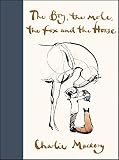
Consider The Boy, the Mole, the Fox and the Horse by Charlie Mackesy. Recommended by 8 sources.
“Soft-spoken, heavily illustrated fable built from short dialogues and watercolor sketches. Each spread pairs a spare line of text with a loose drawing, so the pleasure is visual and aphoristic rather than narrative; readers collect felt-true sentences more than plot. Most useful when you want quick consolations, a prompt for conversation with a child, or a pause during a rough day. Limiting if you want sustained argument, concrete advice, or tightly plotted storytelling: the repetition of gentleness can feel sentimental or thin after a while.”
Similar books

The Boy, the Mole, the Fox and the Horse
Charlie Mackesy
The World as It Is
Ben Rhodes
Out of Control
Kevin Kelly
The Bully Pulpit
Doris Kearns Goodwin
The Seven Spiritual Laws of Success
Deepak Chopra
Billions and Billions
Carl Sagan
Anger
Gary ChapmanFactfulness
Hans RoslingHow recommendation signals are reviewed
Each recommendation is collected from a public source — interviews, articles, or curated lists — and linked to its original URL. Books with many verifiable recommendations from respected people rank higher.