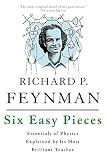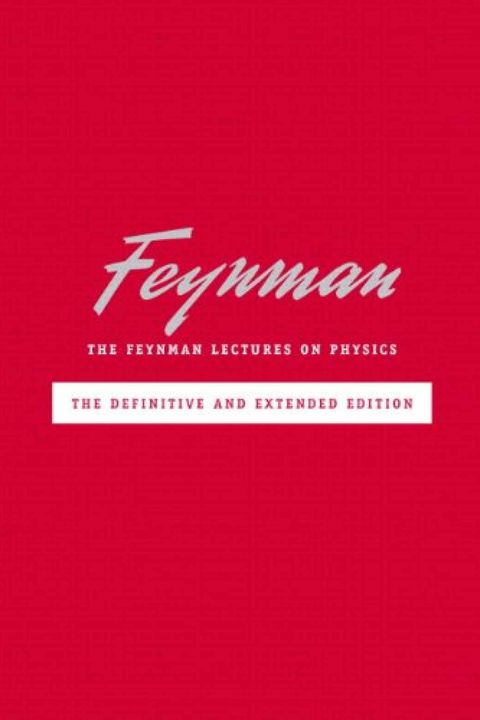
The Millenium Edition, Vol. 1
by Richard P. Feynman

Recommended by Bill Gates
Check price on AmazonProof-backed recommendation
Amazon availability
The experience feels like learning physics by watching someone think: definitions, assumptions, and derivations are laid out so the “why” stays visible. This helps most when you enjoy building understanding from scratch and rereading tough steps. The limitation is that the book is mostly exposition rather than hands-on practice, so you may feel stuck without feedback. You’ll likely get annoyed if you want a tightly modern presentation, or if you expect lots of guided problems.
This summary and audience guidance are AI-generated from the book's description and its recommendation history, last updated May 2026. Recommendations, quotes and sources elsewhere on this page come from published material and are not generated.
"The whole thing was basically an experiment," Richard Feynman said late in his career, looking back on the origins of his lectures. The experiment turned out to be hugely successful, spawning publications that have remained definitive and introductory to physics for decades. Ranging from the basic principles of Newtonian physics through such formi...
Difficulty:hard
Check formats, pricing, and availability options for Kindle, physical print, or audiobooks directly.
View available editions on AmazonWhy recommended
Recommended by 1 source and appears in Physics, Physics, and Science.
People and public figures who have recommended this book.
Recommendation proof is sourced from public posts, interviews, reading lists, and cited references.
Bill Gates
Co-founder of Microsoft; co-chair of the Gates Foundation
“You don't have to take a course to learn physics. If you're hardcore, read the Feynman book and do the problems.”
Check formats, pricing, and availability options directly on Amazon.
Consider Infinite Powers by Steven Strogatz. Recommended by 10 sources.
“Strogatz writes like an engaging guide who treats calculus as a human story: equations come with everyday analogies, historical side trips, and visual intuition. What works best is making why calculus matters—velocity, accumulation, and infinity—feel concrete without heavy formalism, so a reader finishes with better conceptual tools for understanding technology and science. The main limitation is pace: readers wanting rigorous proofs or a practice-based learning path will find it light and occasionally repetitive in examples and anecdotes.”
Each recommendation is collected from a public source — interviews, articles, or curated lists — and linked to its original URL. Books with many verifiable recommendations from respected people rank higher.