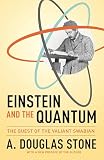
The Quest of the Valiant Swabian
by A. Douglas Stone
Reading feels like a guided tour through the origins of quantum thought, alternating close readings of original papers with clear, non‑flashy physics explanations. Most useful for reconstructing why certain debates mattered and how specific calculations and thought experiments were framed. Main limitation is pacing: extended archival excerpts and periodic technical derivations slow momentum, so readers seeking a light narrative will find stretches plodding. It rewards patience with precise context but asks for tolerance of detail.
This summary and audience guidance are AI-generated from the book's description and its recommendation history, last updated June 2026. Recommendations, quotes and sources elsewhere on this page come from published material and are not generated.
"Einstein and the Quantum" reveals for the first time the full significance of Albert Einstein's contributions to quantum theory. Einstein famously rejected quantum mechanics, observing that God does not play dice. But, in fact, he thought more about the nature of atoms, molecules, and the emission and absorption of lightthe core of what we now k...
Difficulty:hard
Check formats, pricing, and availability options for Kindle, physical print, or audiobooks directly.
View available editions on AmazonWhy recommended
appears in Physics, Physics, and Science.
Recommendation proof is sourced from public posts, interviews, reading lists, and cited references.
No verified recommendation proof available yet.
Check formats, pricing, and availability options directly on Amazon.
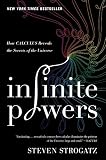
Consider Infinite Powers by Steven Strogatz. Recommended by 10 sources.
“Strogatz writes like an engaging guide who treats calculus as a human story: equations come with everyday analogies, historical side trips, and visual intuition. What works best is making why calculus matters—velocity, accumulation, and infinity—feel concrete without heavy formalism, so a reader finishes with better conceptual tools for understanding technology and science. The main limitation is pace: readers wanting rigorous proofs or a practice-based learning path will find it light and occasionally repetitive in examples and anecdotes.”
Each recommendation is collected from a public source — interviews, articles, or curated lists — and linked to its original URL. Books with many verifiable recommendations from respected people rank higher.