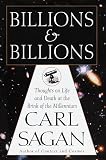
Thoughts on Life and Death at the Brink of the Millennium
by Carl Sagan
Reading feels like a series of public lectures turned into intimate essays: clear, conversational, and often playful about origins, the fate of the universe, and why science matters to daily life. The book's strength is plainspoken exposition paired with reflective asides that link cosmic scale to human concerns. Limitations appear as repeated metaphors and sentimental detours that slow momentum. Expect storytelling and reflection rather than dense mathematical demonstration or step-by-step technical argument.
This summary and audience guidance are AI-generated from the book's description and its recommendation history, last updated June 2026. Recommendations, quotes and sources elsewhere on this page come from published material and are not generated.
In the final book of his astonishing career, Carl Sagan brilliantly examines the burning questions of our lives, our world, and the universe around us. These luminous, entertaining essays travel both the vastness of the cosmos and the intimacy of the human mind, posing such fascinating questions as how did the universe originate and how will it end...
Difficulty:hard
Check formats, pricing, and availability options for Kindle, physical print, or audiobooks directly.
View available editions on AmazonWhy recommended
appears in Physics, Physics, and Philosophy.
Recommendation proof is sourced from public posts, interviews, reading lists, and cited references.
No verified recommendation proof available yet.
Check formats, pricing, and availability options directly on Amazon.
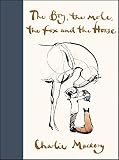
Consider The Boy, the Mole, the Fox and the Horse by Charlie Mackesy. Recommended by 8 sources.
“Soft-spoken, heavily illustrated fable built from short dialogues and watercolor sketches. Each spread pairs a spare line of text with a loose drawing, so the pleasure is visual and aphoristic rather than narrative; readers collect felt-true sentences more than plot. Most useful when you want quick consolations, a prompt for conversation with a child, or a pause during a rough day. Limiting if you want sustained argument, concrete advice, or tightly plotted storytelling: the repetition of gentleness can feel sentimental or thin after a while.”
Each recommendation is collected from a public source — interviews, articles, or curated lists — and linked to its original URL. Books with many verifiable recommendations from respected people rank higher.