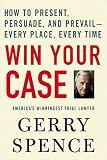
How to Present, Persuade, and PrevailEvery Place, Every Time
by Gerry Spence
Recommended by Scott Adams
Check price on AmazonProof-backed recommendation
Amazon availability
Win Your Case reads like a clinic in persuasive performance: conversational, anecdote-rich, and heavy on courtroom theater. Its most useful material is blunt, rhetorically focused advice for openings, closings, witness handling, and presence that readers can adapt for pitches and high-stakes presentations. The main limitation is the lack of step-by-step checklists and the insistently anecdotal tone—advice arrives as examples and exhortation rather than tight procedural instruction. Expect practical phrasing and showmanship, but not systematic drills.
This summary and audience guidance are AI-generated from the book's description and its recommendation history, last updated June 2026. Recommendations, quotes and sources elsewhere on this page come from published material and are not generated.
From renowned trial attorney and New York Times bestselling author Gerry Spence: a must own book for every lawyer and business professional seeking to make cuttingedge winning presentationsin court, at work, everywhere, any timeGerry Spence is perhaps America's most renowned and successful trial lawyer, a man known for his deep convictions and h...
Difficulty:medium
Check formats, pricing, and availability options for Kindle, physical print, or audiobooks directly.
View available editions on AmazonWhy recommended
Recommended by 2 sources and appears in Most Recommended Books and Personal Development.
People and public figures who have recommended this book.
Recommendation proof is sourced from public posts, interviews, reading lists, and cited references.
Check formats, pricing, and availability options directly on Amazon.
Consider How to Fail at Almost Everything and Still Win Big by Scott Adams. Recommended by 10 sources.
“Scott Adams blends memoir, workplace humor, and blunt self-help into short, punchy chapters that push simple career and productivity rules. The most useful material is pragmatic: a preference for systems over one-off goals, combining complementary skills, and managing energy so work fits a schedule you can sustain. Limits show up as confident, anecdote-heavy claims and a swaggering tone that sometimes repeats the same points. Best used selectively: skim for tactics that feel practical and ignore the rest rather than accept everything wholesale.”
Each recommendation is collected from a public source — interviews, articles, or curated lists — and linked to its original URL. Books with many verifiable recommendations from respected people rank higher.