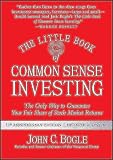
The Little Book of Common Sense Investing
The Only Way to Guarantee Your Fair Share of Stock Market Returns (Little Books. Big Profits)
by John C. Bogle
4 more
More Recommenders
“A useful contribution to the author's fellow citizens. | Read any book by John C. Bogle, the founder of Vangard. | There are a few investment managers, of course, who are very good — though in the short run, it’s difficult to determine whether a great record is due to luck or talent. Rather than listening to their siren songs, investors — large and small — should instead read The Little Book of Common Sense Investing.”
Source →“A useful contribution to the author's fellow citizens. | Read any book by John C. Bogle, the founder of Vangard. | There are a few investment managers, of course, who are very good — though in the short run, it’s difficult to determine whether a great record is due to luck or talent. Rather than listening to their siren songs, investors — large and small — should instead read The Little Book of Common Sense Investing.”
Source →Recommended by 6 notable people, including Warren Buffett and Money Mustache
Check price on AmazonProof-backed recommendation
Amazon availability
Reading Profile
Should I read this?
The Little Book of Common Sense Investing makes a plainspoken, cost-centered case for using broadly diversified index funds as the backbone of a long-term portfolio. Early chapters set out the arithmetic of fees and market returns in simple terms, the middle reiterates those points with examples, and the close argues for patience and buy-and-hold discipline. Useful as a concise justification for a passive stance; limiting if you want detailed portfolio construction, tactical advice, or an extensive debate with proponents of active management.
Read this if...
- •a 30-something software engineer rolling over a 401(k) this month who wants a low-maintenance retirement plan and a simple, practical rationale to pick low-fee broad-market index funds before committing savings
- •a mid-career financial planner consolidating multiple client accounts this quarter who needs short, plainspoken talking points to show conservative retirees why fund costs should guide portfolio choices now
- •a startup founder with irregular cash flow setting up automated monthly savings before an upcoming fundraising round who wants a set-and-forget baseline allocation to implement immediately without active stock research
Skip this if...
- •you’ll likely put it down when the book spends pages restating the same fee-versus-return point and rehashing index-superiority arguments — repetition is a common drop-off point
- •annoying if you prefer hands-on, tactical guides: the book lacks step-by-step portfolio templates, worksheets, or trading how-tos
- •you’ll lose interest if you already favor complex portfolio engineering, factor tilts, tax-harvesting strategies, or short-term market timing — the tone is deliberately simple and prescriptive
The bestselling investing "bible" offers new information, new insights, and new perspectives The Little Book of Common Sense Investing is the classic guide to getting smart about the market. Legendary mutual fund pioneer John C. Bogle reveals his key to getting more out of investing: lowcost index funds. Bogle describes the simplest and most effe...
Before You Buy
Reading Specifications
Difficulty:easy
Audience Fit
- a 30-something software engineer rolling over a 401(k) this month who wants a low-maintenance retirement plan and a simple, practical rationale to pick low-fee broad-market index funds before committing savings
- a mid-career financial planner consolidating multiple client accounts this quarter who needs short, plainspoken talking points to show conservative retirees why fund costs should guide portfolio choices now
- a startup founder with irregular cash flow setting up automated monthly savings before an upcoming fundraising round who wants a set-and-forget baseline allocation to implement immediately without active stock research
- you’ll likely put it down when the book spends pages restating the same fee-versus-return point and rehashing index-superiority arguments — repetition is a common drop-off point
- annoying if you prefer hands-on, tactical guides: the book lacks step-by-step portfolio templates, worksheets, or trading how-tos
- you’ll lose interest if you already favor complex portfolio engineering, factor tilts, tax-harvesting strategies, or short-term market timing — the tone is deliberately simple and prescriptive
Check formats, pricing, and availability options for Kindle, physical print, or audiobooks directly.
View available editions on AmazonKey themes
Why recommended
Recommended by 8 sources and appears in Stocks, Stock Market, and Stock Trading.
Recommended by notable people
People and public figures who have recommended this book.
Recommendation Signals
Recommendation proof is sourced from public posts, interviews, reading lists, and cited references.
Money Mustache
“A useful contribution to the author's fellow citizens. | Read any book by John C. Bogle, the founder of Vangard. | There are a few investment managers, of course, who are very good — though in the short run, it’s difficult to determine whether a great record is due to luck or talent. Rather than listening to their siren songs, investors — large and small — should instead read The Little Book of Common Sense Investing.”
View sources (3) ▾80%
Appears In
Not sure if this is the right fit?
Consider The Intelligent Investor by Benjamin Graham. Recommended by 23 sources.
“This is a slow, meticulous read that builds value investing principles through exhaustive stock comparisons and portfolio theory. The core useful insight is Graham’s emphasis on a margin of safety and treating market fluctuations as your servant, not your guide. The limitation: many examples hail from the 1940s-1970s, making the data feel irrelevant, and the prose can be pedantic, stretching patience. You'll get the timeless philosophy but must wade through antiquated case studies.”
Similar books

Common Sense on Mutual Funds
John C. BogleThe Intelligent Investor
Benjamin GrahamThe Undoing Project
Michael Lewis
Stress Test
Timothy F. Geithner
The Clash of the Cultures
John C. Bogle
The General Theory of Employment, Interest, and Money
John Maynard Keynes
Bull
Maggie Mahar
Financial Shenanigans
Howard SchilitHow recommendation signals are reviewed
Each recommendation is collected from a public source — interviews, articles, or curated lists — and linked to its original URL. Books with many verifiable recommendations from respected people rank higher.