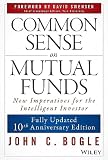
Fully Updated 10th Anniversary Edition
by John C. Bogle
More Recommenders
Recommended by 6 notable people, including Warren Buffett and Money Mustache
Check price on AmazonRecommended by public sources
Amazon availability
See customer reviews on Amazon →John C. Bogle writes in direct, opinionated prose arguing that low costs, low turnover, and index exposure are central to mutual-fund investing success. The clearest value is the repeated, practical attention to expense ratios, turnover, and tax drag — readers leave better able to judge fund fees and marketing claims. Frustrations include frequent repetition and long historical critiques of the mutual-fund industry that slow momentum. It supplies argument and conviction more than step-by-step portfolio worksheets; no exercises are provided.
This summary and audience guidance are AI-generated from the book's description and its recommendation history, last updated May 2026. Recommendations, quotes and sources elsewhere on this page come from published material and are not generated.
John C. Bogle shares his extensive insights on investing in mutual funds Since the first edition of Common Sense on Mutual Funds was published in 1999, much has changed, and no one is more aware of this than mutual fund pioneer John Bogle. Now, in this completely updated Second Edition, Bogle returns to take another critical look at the mutual fund...
Difficulty:easy
Check formats, pricing, and availability options for Kindle, physical print, or audiobooks directly.
View available editions on AmazonWhy recommended
Recommended by 8 sources and appears in Books Recommended by Warren Buffett, Most Recommended Books, and Finance.
People and public figures who have recommended this book.
Recommendation proof is sourced from public posts, interviews, reading lists, and cited references.
Check formats, pricing, and availability options directly on Amazon.
Consider The Intelligent Investor by Benjamin Graham. Recommended by 23 sources.
“This is a slow, meticulous read that builds value investing principles through exhaustive stock comparisons and portfolio theory. The core useful insight is Graham’s emphasis on a margin of safety and treating market fluctuations as your servant, not your guide. The limitation: many examples hail from the 1940s-1970s, making the data feel irrelevant, and the prose can be pedantic, stretching patience. You'll get the timeless philosophy but must wade through antiquated case studies.”
Each recommendation is collected from a public source — interviews, articles, or curated lists — and linked to its original URL. Books with many verifiable recommendations from respected people rank higher.