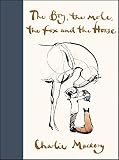
by Charlie Mackesy
Recommended by 8 notable people, including Simon Smith and Fedor Holz
Check price on AmazonRecommended by public sources
Amazon availability
See customer reviews on Amazon →Soft-spoken, heavily illustrated fable built from short dialogues and watercolor sketches. Each spread pairs a spare line of text with a loose drawing, so the pleasure is visual and aphoristic rather than narrative; readers collect felt-true sentences more than plot. Most useful when you want quick consolations, a prompt for conversation with a child, or a pause during a rough day. Limiting if you want sustained argument, concrete advice, or tightly plotted storytelling: the repetition of gentleness can feel sentimental or thin after a while.
This summary and audience guidance are AI-generated from the book's description and its recommendation history, last updated May 2026. Recommendations, quotes and sources elsewhere on this page come from published material and are not generated.
From the revered British illustrator, a modern fable for all ages that explores life’s universal lessons, featuring 100 color and blackandwhite drawings.“What do you want to be when you grow up” asked the mole.“Kind,” said the boy.Charlie Mackesy offers inspiration and hope in uncertain times in this beautiful book based on his famous quartet of...
Difficulty:hard
Check formats, pricing, and availability options for Kindle, physical print, or audiobooks directly.
View available editions on AmazonWhy recommended
Recommended by 8 sources and appears in Philosophy, Art, and Personal Development.
People and public figures who have recommended this book.
Recommendation proof is sourced from public posts, interviews, reading lists, and cited references.
Check formats, pricing, and availability options directly on Amazon.

Consider The World as It Is by Ben Rhodes. Recommended by 7 sources.
“Starts as a lively, behind-the-scenes memoir mixing speechwriting polish with national-security detail, giving chapter-level scenes of fast decisions, diplomatic conversations, and public messaging. Its useful part is granular, first-person access to the limitations between idealism and practical constraint; you get a sense of what choices felt like from the inside. Its main limitation is a defensive tone and episodic digressions into lists and operational minutiae that slow momentum and leave systematic lessons sparse.”
Each recommendation is collected from a public source — interviews, articles, or curated lists — and linked to its original URL. Books with many verifiable recommendations from respected people rank higher.