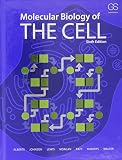
by Bruce Alberts
Proof-backed recommendation
Amazon availability
Molecular Biology of the Cell reads like a carefully organized, illustration-rich textbook: clear prose introduces cellular concepts and detailed diagrams carry much of the explanatory weight. It assembles molecular mechanisms, pathways, and visual summaries that work well when you need a factual scaffold for exams or to refresh a specific topic. Its limitation is sheer density—many chapters move into biochemical minutiae that reward slow, repeated reading but repel casual readers. Best approached in focused sittings and used as a reference for targeted lookups rather than a light, continuous read.
This summary and audience guidance are AI-generated from the book's description and its recommendation history, last updated June 2026. Recommendations, quotes and sources elsewhere on this page come from published material and are not generated.
As the amount of information in biology expands dramatically, it becomes increasingly important for textbooks to distill the vast amount of scientific knowledge into concise principles and enduring concepts.As with previous editions, Molecular Biology of the Cell, Sixth Edition accomplishes this goal with clear writing and beautiful illustrations. ...
Difficulty:hard
Check formats, pricing, and availability options for Kindle, physical print, or audiobooks directly.
View available editions on AmazonWhy recommended
Recommended by 4 sources and appears in Most Recommended Books, Science, and Nonfiction.
People and public figures who have recommended this book.
Recommendation proof is sourced from public posts, interviews, reading lists, and cited references.

Sam Altman
CEO of OpenAI
“For many years it has been the best single volume narrative of 'life from scratch'.”
Check formats, pricing, and availability options directly on Amazon.
Consider The Blind Watchmaker by Richard Dawkins. Recommended by 12 sources.
“Reading feels brisk and combative: clear metaphors and thought experiments carry much of the book, making abstract evolutionary mechanics concrete for a general reader. The most useful material offers step-by-step dismantling of purposive explanations and replaces them with probabilistic accounts of variation and selection. Main limitation is tone and repetition—several chapters restate the same counterarguments at length—and occasional technical detours into probability and genetics that slow readers who prefer story over demonstration. No hands-on exercises.”
Each recommendation is collected from a public source — interviews, articles, or curated lists — and linked to its original URL. Books with many verifiable recommendations from respected people rank higher.
