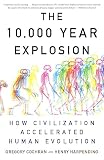
How Civilization Accelerated Human Evolution
by Gregory Cochran
Recommended by public sources
Amazon availability
Starts with an audacious thesis that human evolution accelerated in the last ten thousand years and follows with case studies that marry genetic talk to historical episodes. Reading feels bracing at first: clear, polemical, and impatient with received wisdom. Useful if you want concrete, provocative examples that force you to rethink timelines; limiting when the authors lean on speculative links or technical population-genetics passages that assume background knowledge. Expect argument-heavy prose rather than gentle synthesis or careful consensus-building.
This summary and audience guidance are AI-generated from the book's description and its recommendation history, last updated June 2026. Recommendations, quotes and sources elsewhere on this page come from published material and are not generated.
A manifesto for and an example of a new kind of history, a biological history, and not just of the prehistoric era Scientists have long believed that the 'great leap forward' that occurred some 40,000 to 50,000 years ago in Europe marked the end of significant biological evolution in humans. In this stunning account of our evolutionary history, top...
Difficulty:hard
Check formats, pricing, and availability options for Kindle, physical print, or audiobooks directly.
View available editions on AmazonWhy recommended
Recommended by 3 sources and appears in Most Recommended Books, Science, and History.
People and public figures who have recommended this book.
Recommendation proof is sourced from public posts, interviews, reading lists, and cited references.
Check formats, pricing, and availability options directly on Amazon.
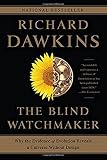
Consider The Blind Watchmaker by Richard Dawkins. Recommended by 12 sources.
“Reading feels brisk and combative: clear metaphors and thought experiments carry much of the book, making abstract evolutionary mechanics concrete for a general reader. The most useful material offers step-by-step dismantling of purposive explanations and replaces them with probabilistic accounts of variation and selection. Main limitation is tone and repetition—several chapters restate the same counterarguments at length—and occasional technical detours into probability and genetics that slow readers who prefer story over demonstration. No hands-on exercises.”

Each recommendation is collected from a public source — interviews, articles, or curated lists — and linked to its original URL. Books with many verifiable recommendations from respected people rank higher.