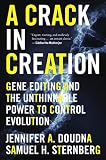
A Crack in Creation
Gene Editing and the Unthinkable Power to Control Evolution
by Jennifer A. Doudna
1 more
More Recommenders
“@arupthenomad Jennifer doudna’s book. | Really enjoyed the book "A Crack in Creation" coauthored by Jennifer Doudna, one of the scientists who discovered CRISPR. It goes over the history of gene editing, how it works (gets pretty technical), fascinating experiments, and future implications | been reading this book about CRISPR and it makes me want to learn more about biology :) :)”
Source →Recommended by 3 notable people, including Linda Xie and Matt Ridley
Check price on AmazonProof-backed recommendation
Amazon availability
Reading Profile
Should I read this?
A Crack in Creation reads as an accessible scientist-to-public account that mixes plain-language explanations of CRISPR’s molecular basics with lab anecdotes and urgent chapters on ethics and governance. Its useful part is making how gene editing works clear enough to inform civic decisions, illustrating possible medical and agricultural applications alongside regulatory questions. Its main limitation is uneven pacing: technical digressions and repeated ethical cautions can feel dense or advocacy-leaning, so readers wanting bench-level protocols or a neutral, detached overview may be frustrated.
Read this if...
- •high-school or undergraduate biology teacher preparing a unit on gene editing who needs clear, classroom-ready explanations and humanized lab stories to frame class discussion.
- •policy analyst at a municipal or state agency drafting initial biotech guidance who wants an accessible primer on what CRISPR can do and what ethical trade-offs to surface for stakeholders.
- •community member planning to attend a town-hall about a local biotech facility and wanting concrete scenarios of risks, benefits, and governance questions to raise during discussion.
Skip this if...
- •bench researchers or lab technicians seeking step-by-step experimental protocols or exhaustive molecular detail — this is explanatory, not a methods manual.
- •readers who want a strictly neutral play-by-play: you'll likely put it down when technical sections and repeated ethical appeals pile up and start to feel like advocacy rather than balanced reporting.
- •anyone after a quick, light skim of biotech headlines — annoying if you prefer short magazine essays, since parts require sustained attention to technical explanations and policy implications.
Finalist for the Los Angeles Times Book Prize The future is in our hands as never before, and this book explains the stakes like no other. George LucasRequired reading for every concerned citizen. New York Review of Books Not since the atomic bomb has a Technology, so alarmed its inventors that they warned the world about its use. That is, unti...
Before You Buy
Reading Specifications
Difficulty:hard
Audience Fit
- high-school or undergraduate biology teacher preparing a unit on gene editing who needs clear, classroom-ready explanations and humanized lab stories to frame class discussion.
- policy analyst at a municipal or state agency drafting initial biotech guidance who wants an accessible primer on what CRISPR can do and what ethical trade-offs to surface for stakeholders.
- community member planning to attend a town-hall about a local biotech facility and wanting concrete scenarios of risks, benefits, and governance questions to raise during discussion.
- bench researchers or lab technicians seeking step-by-step experimental protocols or exhaustive molecular detail — this is explanatory, not a methods manual.
- readers who want a strictly neutral play-by-play: you'll likely put it down when technical sections and repeated ethical appeals pile up and start to feel like advocacy rather than balanced reporting.
- anyone after a quick, light skim of biotech headlines — annoying if you prefer short magazine essays, since parts require sustained attention to technical explanations and policy implications.
Check formats, pricing, and availability options for Kindle, physical print, or audiobooks directly.
View available editions on AmazonKey themes
Why recommended
Recommended by 3 sources and appears in Biology, Science, and Nonfiction.
Recommended by notable people
People and public figures who have recommended this book.
Recommendation Signals
Recommendation proof is sourced from public posts, interviews, reading lists, and cited references.
Linda Xie
“@arupthenomad Jennifer doudna’s book. | Really enjoyed the book "A Crack in Creation" coauthored by Jennifer Doudna, one of the scientists who discovered CRISPR. It goes over the history of gene editing, how it works (gets pretty technical), fascinating experiments, and future implications | been reading this book about CRISPR and it makes me want to learn more about biology :) :)”
View sources (3) ▾80%
Appears In

Not sure if this is the right fit?
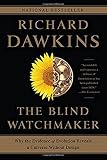
Consider The Blind Watchmaker by Richard Dawkins. Recommended by 12 sources.
“Reading feels brisk and combative: clear metaphors and thought experiments carry much of the book, making abstract evolutionary mechanics concrete for a general reader. The most useful material offers step-by-step dismantling of purposive explanations and replaces them with probabilistic accounts of variation and selection. Main limitation is tone and repetition—several chapters restate the same counterarguments at length—and occasional technical detours into probability and genetics that slow readers who prefer story over demonstration. No hands-on exercises.”
Similar books

The Blind Watchmaker
Richard Dawkins
The Code Breaker
Walter Isaacson
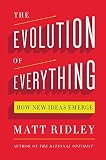
The Evolution of Everything
Matt Ridley
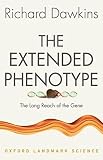
The Extended Phenotype
Richard Dawkins
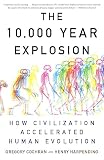
The 10,000 Year Explosion
Gregory Cochran
River Out of Eden
Richard Dawkins
Gene Machine
Venki Ramakrishnan
Scale
Geoffrey WestHow recommendation signals are reviewed
Each recommendation is collected from a public source — interviews, articles, or curated lists — and linked to its original URL. Books with many verifiable recommendations from respected people rank higher.