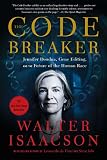
Jennifer Doudna, Gene Editing, and the Future of the Human Race
by Walter Isaacson
More Recommenders

American author, journalist and professor (born 1952)
Royal Navy officer and politician (1758-1834)
Recommended by 7 notable people, including Bill Gates and Terrance McArthur
Check price on AmazonRecommended by public sources
Amazon availability
See customer reviews on Amazon →Walter Isaacson delivers a readable, story-first account of modern gene-editing work, mixing lab scenes, competitive races, and ethical quarrels to make a complex field feel human and immediate. Its value is in narrative clarity and in framing the social and policy questions that follow big scientific steps. Its limitation is repeated anecdote and simplified technical explanation—readers looking for deep methods, data, or rigorous technical nuance will find the science treated at a popular level. Best for overview and conversation-starting, not laboratory instruction.
This summary and audience guidance are AI-generated from the book's description and its recommendation history, last updated May 2026. Recommendations, quotes and sources elsewhere on this page come from published material and are not generated.
The bestselling author of Leonardo da Vinci and Steve Jobs returns with a gripping account of how Nobel Prize winner Jennifer Doudna and her colleagues launched a revolution that will allow us to cure diseases, fend off viruses, and have healthier babies.When Jennifer Doudna was in sixth grade, she came home one day to find that her dad had left a ...
Difficulty:easy
Check formats, pricing, and availability options for Kindle, physical print, or audiobooks directly.
View available editions on AmazonWhy recommended
Recommended by 7 sources and appears in Biographies, Science, and History.
People and public figures who have recommended this book.
Recommendation proof is sourced from public posts, interviews, reading lists, and cited references.
Check formats, pricing, and availability options directly on Amazon.
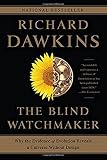
Consider The Blind Watchmaker by Richard Dawkins. Recommended by 12 sources.
“Reading feels brisk and combative: clear metaphors and thought experiments carry much of the book, making abstract evolutionary mechanics concrete for a general reader. The most useful material offers step-by-step dismantling of purposive explanations and replaces them with probabilistic accounts of variation and selection. Main limitation is tone and repetition—several chapters restate the same counterarguments at length—and occasional technical detours into probability and genetics that slow readers who prefer story over demonstration. No hands-on exercises.”

Each recommendation is collected from a public source — interviews, articles, or curated lists — and linked to its original URL. Books with many verifiable recommendations from respected people rank higher.