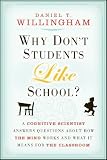
A Cognitive Scientist Answers Questions About How the Mind Works and What It Means for the Classroom
by Daniel T. Willingham
Proof-backed recommendation
Amazon availability
Daniel T. Willingham translates cognitive psychology into classroom-ready explanations for why students forget, tune out, or miss obvious answers. Memory, attention, and practice recur as anchors, and chapters give plain-language rationales for moves like spaced review and retrieval practice. The most useful material is the concise justification for pacing, frequent low-stakes checks, and clearer explanations. Limits: several chapters lean on lab summaries that read dense, examples sometimes repeat, and the book stops short of providing ready-made lesson plans.
This summary and audience guidance are AI-generated from the book's description and its recommendation history, last updated June 2026. Recommendations, quotes and sources elsewhere on this page come from published material and are not generated.
Kids are naturally curious, but when it comes to school it seems like their minds are turned off. Why is it that they can remember the smallest details from their favorite television program, yet miss the most obvious questions on their history testCognitive scientist Dan Willingham has focused his acclaimed research on the biological and cognitiv...
Difficulty:hard
Check formats, pricing, and availability options for Kindle, physical print, or audiobooks directly.
View available editions on AmazonWhy recommended
Recommended by 3 sources and appears in Most Recommended Books, Psychology, and Social Sciences.
People and public figures who have recommended this book.
Recommendation proof is sourced from public posts, interviews, reading lists, and cited references.
Sam Freedman
“It's probably the most influential book in terms of pedagogical thinking in England at the moment (which is pretty divergent from the rest of the world).”
Check formats, pricing, and availability options directly on Amazon.
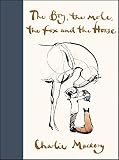
Consider The Boy, the Mole, the Fox and the Horse by Charlie Mackesy. Recommended by 8 sources.
“Soft-spoken, heavily illustrated fable built from short dialogues and watercolor sketches. Each spread pairs a spare line of text with a loose drawing, so the pleasure is visual and aphoristic rather than narrative; readers collect felt-true sentences more than plot. Most useful when you want quick consolations, a prompt for conversation with a child, or a pause during a rough day. Limiting if you want sustained argument, concrete advice, or tightly plotted storytelling: the repetition of gentleness can feel sentimental or thin after a while.”
Each recommendation is collected from a public source — interviews, articles, or curated lists — and linked to its original URL. Books with many verifiable recommendations from respected people rank higher.