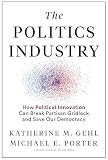
How Political Innovation Can Break Partisan Gridlock and Save Our Democracy
by Katherine M. Gehl

Recommended by Mark Cuban
Check price on AmazonProof-backed recommendation
Amazon availability
This is a readable, argument-driven critique that frames current U.S. politics as an industry shaped by money, gerrymandering, and party incentives. It’s strongest when translating complex incentives into business-style language and real-world examples that make the stakes plain. The main limitation is a persistent prescriptive tone and repetition: the same structural failures and solution pitches recur, so the middle stretches can feel long. Useful for people wanting clear reform arguments, less helpful for those seeking purely balanced academic nuance.
This summary and audience guidance are AI-generated from the book's description and its recommendation history, last updated June 2026. Recommendations, quotes and sources elsewhere on this page come from published material and are not generated.
Our political system has become big businessand business is boomingyet solutions to big problems seem impossible. Behold, the politicalindustrial complex. Rampant lobbying and gerrymandering. Election spending rising exponentially with each cycle. The Democratic and Republican parties competing furiously against each other for advantage, while...
Difficulty:hard
Check formats, pricing, and availability options for Kindle, physical print, or audiobooks directly.
View available editions on AmazonWhy recommended
Recommended by 4 sources and appears in Most Recommended Books, Politics, and Social Sciences.
People and public figures who have recommended this book.
Recommendation proof is sourced from public posts, interviews, reading lists, and cited references.
Mark Cuban
American investor and entrepreneur (born 1958)
“This is a great book about how the Duopoly has been used to shut out competition and polarize the country”
Check formats, pricing, and availability options directly on Amazon.
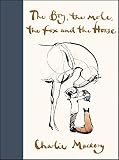
Consider The Boy, the Mole, the Fox and the Horse by Charlie Mackesy. Recommended by 8 sources.
“Soft-spoken, heavily illustrated fable built from short dialogues and watercolor sketches. Each spread pairs a spare line of text with a loose drawing, so the pleasure is visual and aphoristic rather than narrative; readers collect felt-true sentences more than plot. Most useful when you want quick consolations, a prompt for conversation with a child, or a pause during a rough day. Limiting if you want sustained argument, concrete advice, or tightly plotted storytelling: the repetition of gentleness can feel sentimental or thin after a while.”
Each recommendation is collected from a public source — interviews, articles, or curated lists — and linked to its original URL. Books with many verifiable recommendations from respected people rank higher.