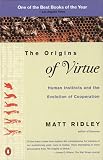
The Origins of Virtue
Human Instincts and The Evolution of Cooperation
by Matt Ridley
Recommended by Naval Ravikant and Nick Szabo
Check price on AmazonProof-backed recommendation
Amazon availability
Reading Profile
Should I read this?
Starts from Darwin’s puzzle about why cooperative societies emerge and walks through animal behaviour, game-theory-style studies, and human social patterns to argue that trust and virtue can follow from self-interested mechanisms. The useful part is readable linkage between concrete examples and a single explanatory thread tying biology to social life. The main limitation is a tendency to repeat similar evidence across chapters and to lean heavily on evolutionary interpretation, with technical detours that slow the pace for some readers.
Read this if...
- •an undergraduate or graduate student writing a term paper on the evolution of cooperation who needs a readable synthesis of animal studies and human examples to frame their argument
- •a policy analyst or community-program designer seeking background on naturalistic accounts of trust — useful as context when weighing why informal reciprocity can sustain cooperation in some settings
- •a philosophy seminar participant preparing to argue about moral origins who wants concrete biological counterpoints to cultural or normative explanations
Skip this if...
- •you'll likely put it down when the middle sections pile up with technical studies and repeated examples; if you need a brisk, tightly edited narrative, the book can feel draggy
- •annoying if you prefer prescriptive guidance or moral theory depth — this leans toward explanation, not actionable steps or philosophical rigor
- •you'll lose interest if you dislike biological reductionism or feel explanations that attribute social outcomes to evolutionary mechanisms oversimplify culture and institutions
If, as Darwin suggests, evolution relentlessly encourages the survival of the fittest, why are humans compelled to live in cooperative, complex societies In this fascinating examination of the roots of human trust and virtue, a zoologist and former American editor of the Economist reveals the results of recent studies that suggest that selfintere...
Before You Buy
Reading Specifications
Difficulty:hard
Audience Fit
- an undergraduate or graduate student writing a term paper on the evolution of cooperation who needs a readable synthesis of animal studies and human examples to frame their argument
- a policy analyst or community-program designer seeking background on naturalistic accounts of trust — useful as context when weighing why informal reciprocity can sustain cooperation in some settings
- a philosophy seminar participant preparing to argue about moral origins who wants concrete biological counterpoints to cultural or normative explanations
- you'll likely put it down when the middle sections pile up with technical studies and repeated examples; if you need a brisk, tightly edited narrative, the book can feel draggy
- annoying if you prefer prescriptive guidance or moral theory depth — this leans toward explanation, not actionable steps or philosophical rigor
- you'll lose interest if you dislike biological reductionism or feel explanations that attribute social outcomes to evolutionary mechanisms oversimplify culture and institutions
Check formats, pricing, and availability options for Kindle, physical print, or audiobooks directly.
View available editions on AmazonKey themes
Why recommended
Recommended by 4 sources and appears in Evolutionary Psychology, Most Recommended Books, and Philosophy.
Recommended by notable people
People and public figures who have recommended this book.
Recommendation Signals
Recommendation proof is sourced from public posts, interviews, reading lists, and cited references.
Nick Szabo
“@leonjohnstone And everything by @mattwridley is worth reading Genome, Red Queen, Origin of Virtue, etc. | I think three or four of my top 20 books of all time are all this author's.”
View sources (2) ▾80%
Appears In

Not sure if this is the right fit?
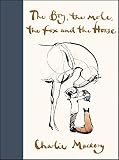
Consider The Boy, the Mole, the Fox and the Horse by Charlie Mackesy. Recommended by 8 sources.
“Soft-spoken, heavily illustrated fable built from short dialogues and watercolor sketches. Each spread pairs a spare line of text with a loose drawing, so the pleasure is visual and aphoristic rather than narrative; readers collect felt-true sentences more than plot. Most useful when you want quick consolations, a prompt for conversation with a child, or a pause during a rough day. Limiting if you want sustained argument, concrete advice, or tightly plotted storytelling: the repetition of gentleness can feel sentimental or thin after a while.”
Similar books

The Boy, the Mole, the Fox and the Horse
Charlie Mackesy
The World as It Is
Ben Rhodes
Out of Control
Kevin Kelly
The Bully Pulpit
Doris Kearns Goodwin
The Seven Spiritual Laws of Success
Deepak Chopra
Billions and Billions
Carl Sagan
Anger
Gary ChapmanFactfulness
Hans RoslingHow recommendation signals are reviewed
Each recommendation is collected from a public source — interviews, articles, or curated lists — and linked to its original URL. Books with many verifiable recommendations from respected people rank higher.