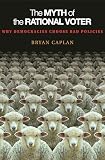
Why Democracies Choose Bad Policies New Edition
by Bryan Caplan
Recommended by 3 notable people, including Marc Andreessen and Ryan Shea
Check price on AmazonRecommended by public sources
Amazon availability
See customer reviews on Amazon →Bryan Caplan makes a forceful case that ordinary voters' misconceptions — not just interest groups — drive poor economic policy. The book feels like a sequence of pointed essays: data, thought experiments, and blunt assertions piled to shock and provoke. Its useful part is a compact set of contestable claims you can carry into classroom debates or policy conversations. Its main limitation is tone: polemical and repetitive, with many chapters restating the same core argument rather than offering nuanced case studies.
This summary and audience guidance are AI-generated from the book's description and its recommendation history, last updated June 2026. Recommendations, quotes and sources elsewhere on this page come from published material and are not generated.
The greatest obstacle to sound economic policy is not entrenched special interests or rampant lobbying, but the popular misconceptions, irrational beliefs, and personal biases held by ordinary voters. This is economist Bryan Caplan's sobering assessment in this provocative and eyeopening book. Caplan argues that voters continually elect politician...
Difficulty:easy
Check formats, pricing, and availability options for Kindle, physical print, or audiobooks directly.
View available editions on AmazonWhy recommended
Recommended by 5 sources and appears in Most Recommended Books, Finance, and Politics.
People and public figures who have recommended this book.
Recommendation proof is sourced from public posts, interviews, reading lists, and cited references.
Check formats, pricing, and availability options directly on Amazon.
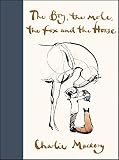
Consider The Boy, the Mole, the Fox and the Horse by Charlie Mackesy. Recommended by 8 sources.
“Soft-spoken, heavily illustrated fable built from short dialogues and watercolor sketches. Each spread pairs a spare line of text with a loose drawing, so the pleasure is visual and aphoristic rather than narrative; readers collect felt-true sentences more than plot. Most useful when you want quick consolations, a prompt for conversation with a child, or a pause during a rough day. Limiting if you want sustained argument, concrete advice, or tightly plotted storytelling: the repetition of gentleness can feel sentimental or thin after a while.”
Each recommendation is collected from a public source — interviews, articles, or curated lists — and linked to its original URL. Books with many verifiable recommendations from respected people rank higher.