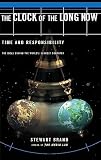
The Clock of the Long Now
Time and Responsibility
by Stewart Brand
1 more
More Recommenders
“"[Brand's] book is the first I know to explicitly explore what longterm thinking really is, or could be. He takes it as a concept and pulls it apart to examine it. That’s a real intellectual shift in the history of longterm thinking.... He’s an amazing, pithy prose stylist." | The most influential book on me.”
Source →Recommended by 3 notable people, including Stewart Brand and Bret Victor
Check price on AmazonProof-backed recommendation
Amazon availability
Reading Profile
Should I read this?
Brand uses the Clock of the Long Now project as a narrative anchor to press the case for making long-term thinking ordinary. The prose mixes practical design detail, cultural history, and plainspoken advocacy, so you'll get concrete examples alongside broad prescriptions. The main useful bit is tangible cases and shareable language to argue for longer horizons. The limiting side is periodic repetition and a tilt toward symbolic projects rather than step-by-step implementation guides, which can feel thin if you wanted granular roadmaps.
Read this if...
- •a city planner at a municipal government trying to justify multi-decade infrastructure choices to elected officials — useful for vivid examples and rhetorical frames that make long horizons relatable
- •a product manager responsible for critical infrastructure (energy, transit, data centers) pushing for longer maintenance and investment cycles — useful for design-minded case studies to bring leadership on board
- •a teacher or community organizer running workshops on intergenerational responsibility who needs evocative anecdotes and practical design ideas to spark discussion
Skip this if...
- •you'll likely put it down when the book moves into repeated technical descriptions or cycles back to the same calls for long-term thinking — that midbook technical/advocacy stretch is a common drop point
- •annoying if you prefer step-by-step policy plans or checklists — lacks hands-on exercises or operational templates
- •lose interest if you want tight political analysis or quick, detailed roadmaps for systems change — the book favors narrative and design thinking over policy nitty-gritty
Using the designing and building of the Clock of the Long Now as a framework, this is a book about the practical use of long time perspective: how to get it, how to use it, how to keep it in and out of sight. Here are the central questions it inspires: How do we make longterm thinking automatic and common instead of difficult and rare Discipline ...
Before You Buy
Reading Specifications
Difficulty:hard
Audience Fit
- a city planner at a municipal government trying to justify multi-decade infrastructure choices to elected officials — useful for vivid examples and rhetorical frames that make long horizons relatable
- a product manager responsible for critical infrastructure (energy, transit, data centers) pushing for longer maintenance and investment cycles — useful for design-minded case studies to bring leadership on board
- a teacher or community organizer running workshops on intergenerational responsibility who needs evocative anecdotes and practical design ideas to spark discussion
- you'll likely put it down when the book moves into repeated technical descriptions or cycles back to the same calls for long-term thinking — that midbook technical/advocacy stretch is a common drop point
- annoying if you prefer step-by-step policy plans or checklists — lacks hands-on exercises or operational templates
- lose interest if you want tight political analysis or quick, detailed roadmaps for systems change — the book favors narrative and design thinking over policy nitty-gritty
Check formats, pricing, and availability options for Kindle, physical print, or audiobooks directly.
View available editions on AmazonKey themes
Why recommended
Recommended by 4 sources and appears in Most Recommended Books, Technology, and Philosophy.
Recommended by notable people
People and public figures who have recommended this book.
Recommendation Signals
Recommendation proof is sourced from public posts, interviews, reading lists, and cited references.
Bret Victor
“"[Brand's] book is the first I know to explicitly explore what longterm thinking really is, or could be. He takes it as a concept and pulls it apart to examine it. That’s a real intellectual shift in the history of longterm thinking.... He’s an amazing, pithy prose stylist." | The most influential book on me.”
View sources (2) ▾80%
Appears In

Not sure if this is the right fit?
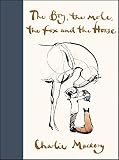
Consider The Boy, the Mole, the Fox and the Horse by Charlie Mackesy. Recommended by 8 sources.
“Soft-spoken, heavily illustrated fable built from short dialogues and watercolor sketches. Each spread pairs a spare line of text with a loose drawing, so the pleasure is visual and aphoristic rather than narrative; readers collect felt-true sentences more than plot. Most useful when you want quick consolations, a prompt for conversation with a child, or a pause during a rough day. Limiting if you want sustained argument, concrete advice, or tightly plotted storytelling: the repetition of gentleness can feel sentimental or thin after a while.”
Similar books

The Boy, the Mole, the Fox and the Horse
Charlie Mackesy
The World as It Is
Ben Rhodes
Out of Control
Kevin Kelly
The Bully Pulpit
Doris Kearns Goodwin
The Seven Spiritual Laws of Success
Deepak Chopra
Billions and Billions
Carl Sagan
Anger
Gary ChapmanFactfulness
Hans RoslingHow recommendation signals are reviewed
Each recommendation is collected from a public source — interviews, articles, or curated lists — and linked to its original URL. Books with many verifiable recommendations from respected people rank higher.