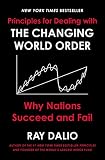
Why Nations Succeed and Fail
by Ray Dalio
More Recommenders
Recommended by 6 notable people, including Balaji S. Srinivasan and Changpeng Zhao
Check price on AmazonRecommended by public sources
Amazon availability
See customer reviews on Amazon →This is a wide-angled, investment-minded tour through history that argues long economic and political cycles shape rising and declining world orders. Expect data, repeated historical case studies, and a persistent effort to translate past patterns into signals for the future. What works best is its systematic, big-picture lens that forces you to test assumptions about risk and timing. Its main limitation is repetitiveness: long stretches rehearse similar examples and the investment slant narrows interpretation of messy historical complexity.
This summary and audience guidance are AI-generated from the book's description and its recommendation history, last updated May 2026. Recommendations, quotes and sources elsewhere on this page come from published material and are not generated.
From the #1 New York Times bestselling author of Principles and legendary investor Ray Dalio, who has spent half a century studying global markets, The Changing World Order examines history’s most turbulent economic and political periods to reveal why the times ahead will likely be radically different from those we’ve experienced in our lifetimes. ...
Difficulty:hard
Check formats, pricing, and availability options for Kindle, physical print, or audiobooks directly.
View available editions on AmazonWhy recommended
Recommended by 15 sources and appears in Most Recommended Books, Finance, and Nonfiction.
People and public figures who have recommended this book.
Recommendation proof is sourced from public posts, interviews, reading lists, and cited references.
Check formats, pricing, and availability options directly on Amazon.
Consider The Undoing Project by Michael Lewis. Recommended by 18 sources.
“Michael Lewis chronicles the friendship and intellectual partnership of Daniel Kahneman and Amos Tversky, who championed the idea that cognitive biases shape our choices. The narrative reads like a buddy story, weaving their discoveries into personal anecdotes and the drama of their collaboration. You'll grasp key ideas—loss aversion, framing—through their story, but the book focuses on biography, not application. Helpful for understanding behavioral economics' origins; less useful if you want actionable advice. The emotional arc of their relationship can overshadow the science.”


Each recommendation is collected from a public source — interviews, articles, or curated lists — and linked to its original URL. Books with many verifiable recommendations from respected people rank higher.