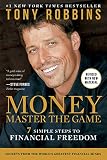
7 Simple Steps to Financial Freedom
by Tony Robbins
Recommended by 3 notable people, including Nat Eliason and Matt D’Avella
Check price on AmazonRecommended by public sources
Amazon availability
See customer reviews on Amazon →Reading the book feels like sitting through an extended financial pep talk that periodically hands you concrete action items. Its useful part is energetic motivation blended with a broad set of practical suggestions aimed at helping readers organize priorities around saving, investing, and fees. Main limitation: the tone can be sermon-like and repetitive, and the length means useful advice is interleaved with long motivational detours. Not a compact manual—better picked through selectively than read straight through.
This summary and audience guidance are AI-generated from the book's description and its recommendation history, last updated May 2026. Recommendations, quotes and sources elsewhere on this page come from published material and are not generated.
Tony Robbins has coached and inspired more than 50 million people from over 100 countries. More than 4 million people have attended his live events. Oprah Winfrey calls him superhuman. Now for the first time in his first book in two decades he's turned to the topic that vexes us all: How to secure financial freedom for ourselves and our famili...
Difficulty:hard
Check formats, pricing, and availability options for Kindle, physical print, or audiobooks directly.
View available editions on AmazonWhy recommended
Recommended by 7 sources and appears in Most Recommended Books, Finance, and Personal Development.
People and public figures who have recommended this book.
Recommendation proof is sourced from public posts, interviews, reading lists, and cited references.
Check formats, pricing, and availability options directly on Amazon.
Consider The Undoing Project by Michael Lewis. Recommended by 18 sources.
“Michael Lewis chronicles the friendship and intellectual partnership of Daniel Kahneman and Amos Tversky, who championed the idea that cognitive biases shape our choices. The narrative reads like a buddy story, weaving their discoveries into personal anecdotes and the drama of their collaboration. You'll grasp key ideas—loss aversion, framing—through their story, but the book focuses on biography, not application. Helpful for understanding behavioral economics' origins; less useful if you want actionable advice. The emotional arc of their relationship can overshadow the science.”


Each recommendation is collected from a public source — interviews, articles, or curated lists — and linked to its original URL. Books with many verifiable recommendations from respected people rank higher.