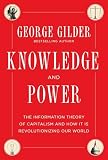
Knowledge and Power
The Information Theory of Capitalism and How it is Revolutionizing our World
by George Gilder
Recommended by Ben Shapiro and Peter Rex
Check price on AmazonProof-backed recommendation
Amazon availability
Reading Profile
Should I read this?
George Gilder lays out a combative, contrarian account of capitalism that prizes information, entrepreneurship, and speculative investment over mainstream macro prescriptions. Reading feels rhetorical and idea-driven, with frequent historical vignettes and polemical asides that aim to provoke policy debate rather than deliver step-by-step analysis. The useful payoff is ammunition for argument—phrases, reframings, and policy hooks—while the annoying side is repetition and a partisan tone that can make the middle feel circular rather than clarifying. Best read as provocation, not a neutral primer.
Read this if...
- •state-level economic policy advisor drafting alternative growth proposals — useful because the book supplies contrarian policy language and provocations you can use to open political conversations.
- •early-stage venture investor or partner testing narratives that attract capital — useful because the book reframes innovation and speculative finance in ways that can spark investment theses or pitch language.
- •seminar leader or graduate student in political economy preparing debate modules — useful because the book offers polemical claims and historical vignettes that provoke classroom pushback.
Skip this if...
- •you'll likely put it down when the central claim is restated through long anecdote sequences and rhetorical flourish — that mid-book repetition is the common drop-off point.
- •annoying if you prefer tightly sourced, empirical argumentation rather than polemic and broad theory; the prose leans toward rhetoric over technical evidence.
- •not a fit if you wanted practical, hands-on economic tools or step-by-step implementation advice — lacks hands-on exercises and reads like argumentative prose, not a how-to manual.
Ronald Reagan’s mostquoted living author—George Gilder—is back with an allnew paradigmshifting theory of capitalism that will upturn conventional wisdom, just when our economy desperately needs a new direction.America’s struggling economy needs a better philosophy than the college student's lament: "I can't be out of money, I still have checks i...
Before You Buy
Reading Specifications
Difficulty:hard
Audience Fit
- state-level economic policy advisor drafting alternative growth proposals — useful because the book supplies contrarian policy language and provocations you can use to open political conversations.
- early-stage venture investor or partner testing narratives that attract capital — useful because the book reframes innovation and speculative finance in ways that can spark investment theses or pitch language.
- seminar leader or graduate student in political economy preparing debate modules — useful because the book offers polemical claims and historical vignettes that provoke classroom pushback.
- you'll likely put it down when the central claim is restated through long anecdote sequences and rhetorical flourish — that mid-book repetition is the common drop-off point.
- annoying if you prefer tightly sourced, empirical argumentation rather than polemic and broad theory; the prose leans toward rhetoric over technical evidence.
- not a fit if you wanted practical, hands-on economic tools or step-by-step implementation advice — lacks hands-on exercises and reads like argumentative prose, not a how-to manual.
Check formats, pricing, and availability options for Kindle, physical print, or audiobooks directly.
View available editions on AmazonKey themes
Why recommended
Recommended by 3 sources and appears in Most Recommended Books, Finance, and Politics.
Recommended by notable people
People and public figures who have recommended this book.
Recommendation Signals
Recommendation proof is sourced from public posts, interviews, reading lists, and cited references.
Ben Shapiro
“15/ Knowledge and Power. @ScandalOfMoney shows how wealth flows from information, executed on by capable entrepreneurs who give first and then receive later. Many economists, and everyone stuck on pessimistic assumptions of scarcity, fail to appreciate this. @Regnery | A really good book.”
View sources (2) ▾80%
Appears In

Not sure if this is the right fit?
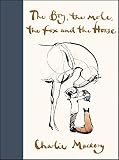
Consider The Boy, the Mole, the Fox and the Horse by Charlie Mackesy. Recommended by 8 sources.
“Soft-spoken, heavily illustrated fable built from short dialogues and watercolor sketches. Each spread pairs a spare line of text with a loose drawing, so the pleasure is visual and aphoristic rather than narrative; readers collect felt-true sentences more than plot. Most useful when you want quick consolations, a prompt for conversation with a child, or a pause during a rough day. Limiting if you want sustained argument, concrete advice, or tightly plotted storytelling: the repetition of gentleness can feel sentimental or thin after a while.”
Similar books

The Boy, the Mole, the Fox and the Horse
Charlie Mackesy
The World as It Is
Ben Rhodes
Out of Control
Kevin Kelly
The Bully Pulpit
Doris Kearns Goodwin
The Seven Spiritual Laws of Success
Deepak Chopra
Billions and Billions
Carl Sagan
Anger
Gary ChapmanFactfulness
Hans RoslingHow recommendation signals are reviewed
Each recommendation is collected from a public source — interviews, articles, or curated lists — and linked to its original URL. Books with many verifiable recommendations from respected people rank higher.